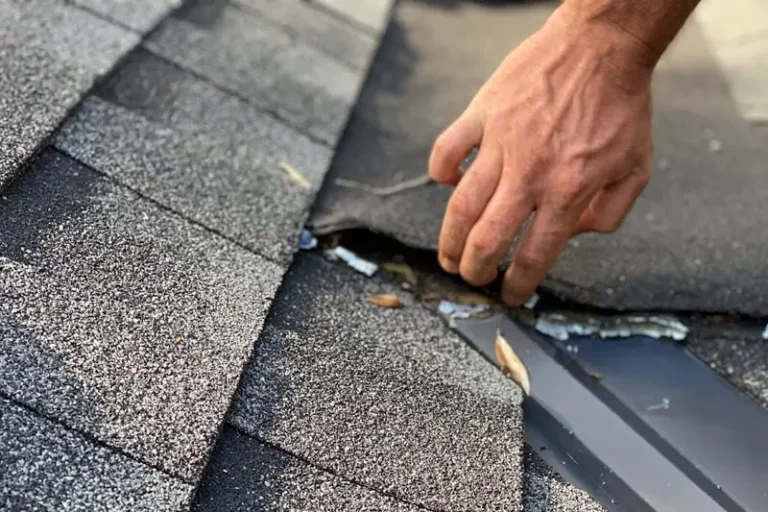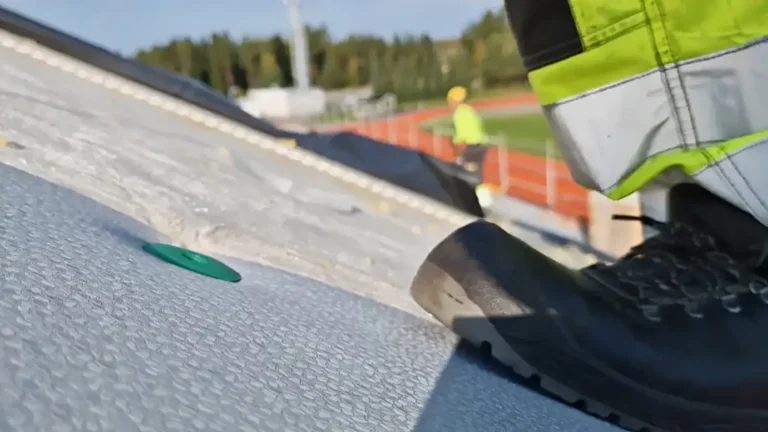

How to Fix a Hole in a Metal Roof in Austin: 5 Simple Steps
Fix a Hole in a Metal Roof Before Water Spreads in Wesley Chapel and Nearby Florida Communities
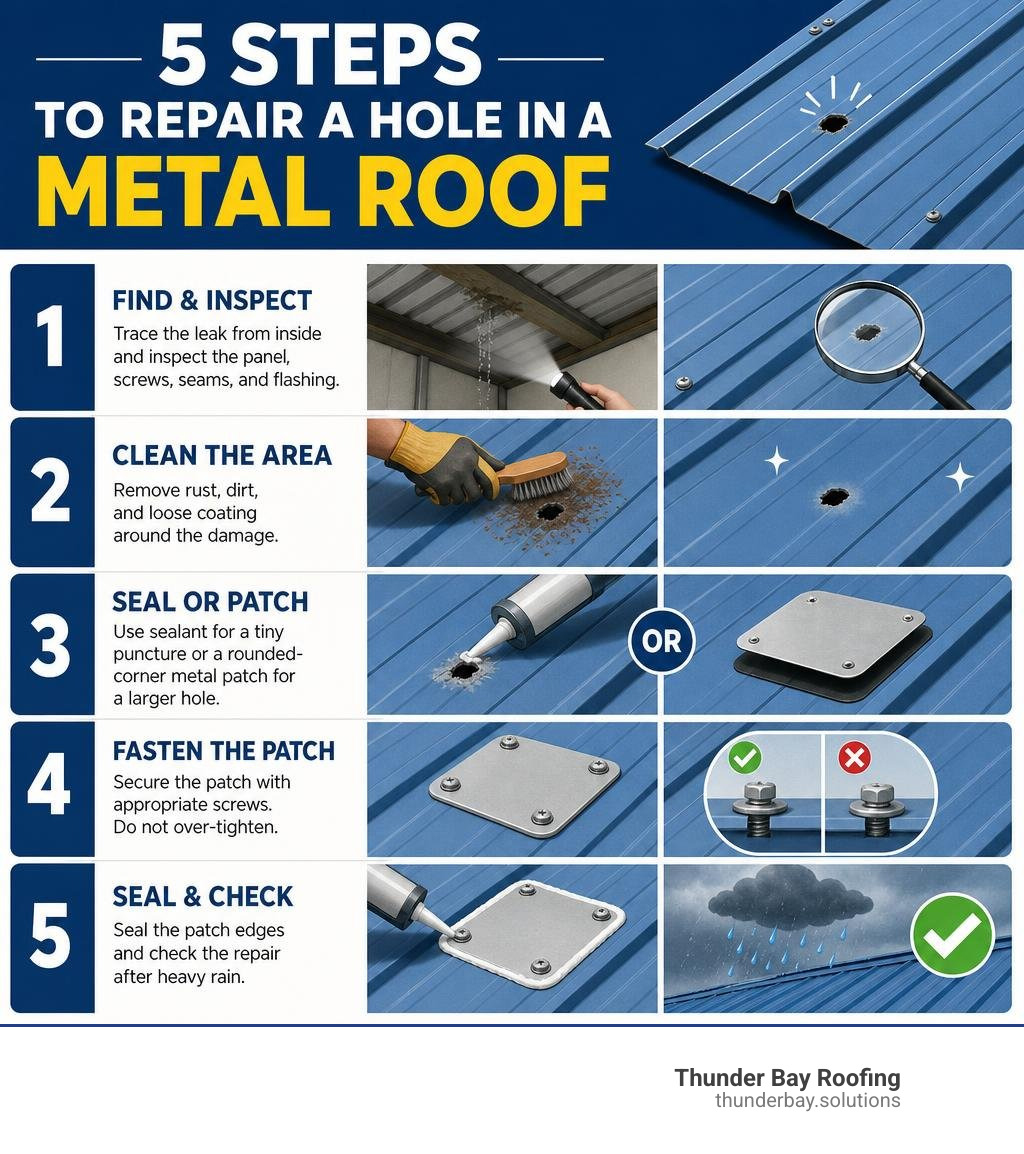
To fix hole in metal roof panels, professional roofing technicians identify the true water entry point, clean bare metal, and install an engineered metal patch using butyl tape, compatible fasteners, and polyurethane sealant. Professional repairs focus on five core technical standards:
- Tracing moisture paths along structural framing to locate the true exterior panel breach.
- Removing oxidation, surface debris, and degraded factory coatings around the damage.
- Selecting an elastomeric cap for minor punctures or an engineered floating patch for larger tears.
- Installing corrosion-resistant fasteners with calibrated torque to prevent over-compressing EPDM washers.
- Sealing perimeter margins and verifying structural integrity after heavy weather events.
Metal roofs can last 50 years or more, but heavy rain, intense UV exposure, wind-blown debris, corrosion, and failing screws can still create leaks across Wesley Chapel, Lutz, Land O’ Lakes, and Oldsmar. Thunder Bay Roofing’s roof repair team helps property owners identify whether a simple patch is enough or whether damaged metal, decking, or flashing needs professional attention.
I am Tyler Wood, owner of Thunder Bay Home Solutions and leader of Thunder Bay Roofing, where I focus on practical, code-conscious roofing solutions for harsh Florida weather. My work involves helping homeowners and commercial owners assess storm and leak damage, including when to fix hole in metal roof panels and when a larger repair is the safer choice.
Professional insights on how contractors fix hole in metal roof breaches:
Diagnosing Metal Roof Leaks and Hole Origins
A leaking metal roof is diagnosed by tracing interior water stains along attic framing uphill to the exterior entry point, followed by a close inspection of screws, seams, and metal sheets. Water rarely drops straight down from a puncture. Instead, gravity pulls water along roof trusses, purlins, and radiant barriers before it drips onto ceilings.
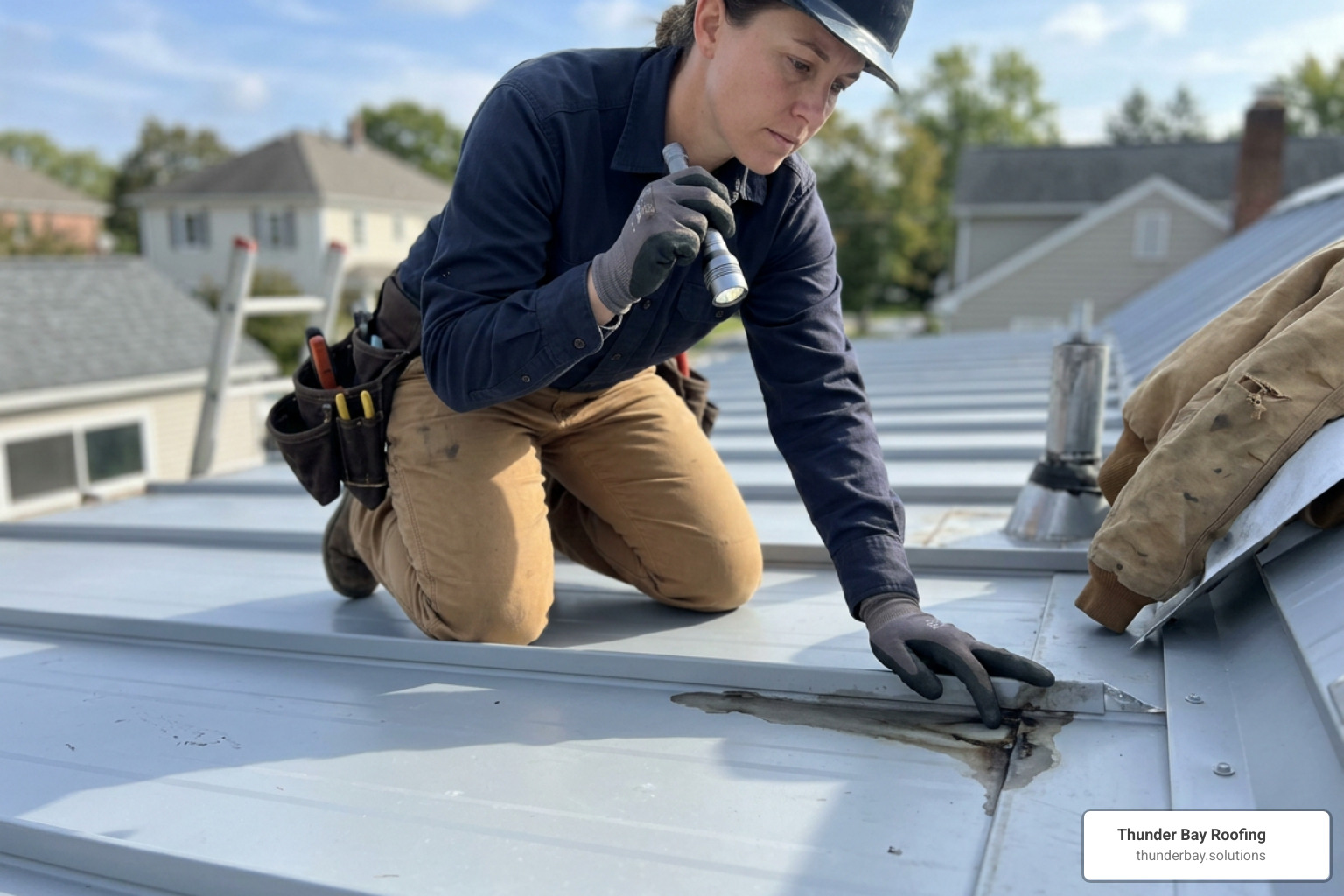
Pinholes and breaches in metal panels originate from several distinct environmental and mechanical triggers:
- Thermal Expansion and Contraction: Metal panels expand under daytime sun and contract during evening cooling. This continuous movement stresses fasteners, wallows out screw holes, and separates panel laps.
- Fastener Backout and Washer Breakdown: Exposed roofing screws experience washer dry rot within 7 to 15 years. Over-torqued screws crush neoprene gaskets, leaving open entry points for wind-driven rain.
- Corrosion Perforations: Scratches, stagnant debris pockets, or cut factory edges strip protective galvalume coatings, oxidizing bare steel into pinholes.
- Impact Punctures: Flying tree branches and airborne storm debris puncture flat panel pans during intense storms.
Accurate diagnosis requires comprehensive roof leak detection that evaluates both the exterior metal skin and the underlying wooden deck. A systematic upward zone hose test on dry days helps isolate elusive leaks around flashings, transitions, and standing seams, as outlined in detailed diagnostic resources like How to Repair a Hole in a Metal Roof: Finding and Fixing Leaks.
Professional Guide: How Contractors Fix Hole in Metal Roof Systems
Professional repair standards dictate that holes up to 12 inches across can often be securely patched using a structural floating metal patch, provided the panel’s primary ribs remain structurally sound. The repair is designed around adequate patch overlap, a hidden butyl tape gasket, mechanical stitch fasteners, and a continuous exterior bead of UV-stable polyurethane lap sealant. Property owners should treat this as a professional roofing repair because metal panels are slick, sharp, electrically conductive, and vulnerable to hidden deck rot beneath the leak.
The table below outlines how professional roofing technicians evaluate repair approaches based on the size of the roof breach:
| Defect Type | Damage Size | Recommended Professional Method | Expected Service Life | Typical Cost Range |
|---|---|---|---|---|
| Small Puncture / Pinhole | Under 1/4 inch | High-solids polyether or elastomeric sealant cap | 5-10 years | $150 – $300 |
| Stripped Screw Hole | 1/4 to 1/2 inch | Upsized #14 EPDM fastener + purlin realignment | 10-15 years | $150 – $375 |
| Medium Tear / Impact Hole | 1/2 to 6 inches | Floating gauge-matched metal patch with butyl gasket | 15-20+ years | $350 – $600 |
| Large Puncture | 6 to 12 inches | Heavy-gauge backing plate + structural stitch patch | 15-20+ years | $450 – $800 |
| Structural Tear / Rib Split | Over 12 inches | Full metal panel section replacement | 50+ years | $800 – $2,000+ |
Materials and Preparation to Fix Hole in Metal Roof Surfaces
A sound patch requires meticulous surface preparation down to bright, clean metal. Dirt, chalking paint, and surface oxidation act as bond breakers that cause sealants to peel.
Technicians clean the metal panel using residue-free degreasers like acetone or denatured alcohol, carefully scuffing the repair area with a wire brush or medium-grit abrasive pad without stripping surrounding factory finishes. Because our service region experiences high humidity, salt-tinged air, and frequent rainfall in communities like Lutz, exposed bare steel must receive a rust-inhibiting metal primer immediately to prevent corrosion cells beneath the patch.
Material compatibility is essential to prevent galvanic corrosion. Galvanic corrosion occurs when dissimilar metals, such as copper touching steel, or galvanized fasteners driven into aluminum, interact in the presence of rainwater electrolytes. The more active metal rapidly corrodes, creating structural failure within a few seasons. Roofing contractors always match the patch alloy, thickness, and finish to the existing roof system.
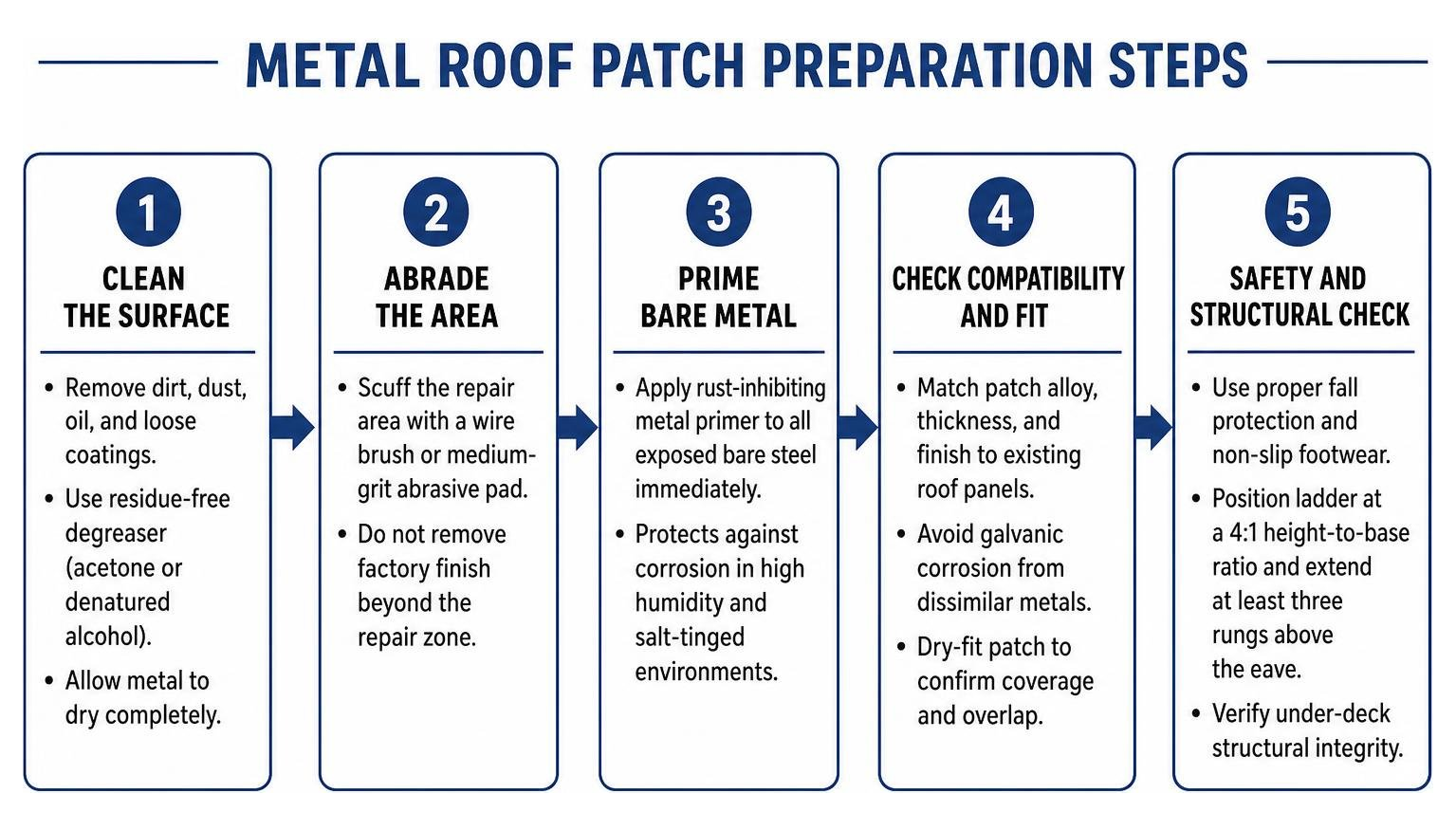
Roof work also demands stringent safety protocols. Metal roofs become slick with the slightest morning dew or fine dust. Certified roofing crews utilize commercial fall protection systems, non-marking high-traction footwear, and ladder positioning set at a strict 4:1 height-to-base ratio extending at least three rungs above the eave line. Under-deck structural integrity is verified beforehand to ensure roof decking has not rotted out beneath leaking seams.
Professional Floating Metal Patch Quality Checks
The floating metal patch method accommodates natural thermal expansion and contraction while maintaining a watertight barrier against driving rain. During a professional inspection and repair, the roofing technician confirms that the damaged panel, surrounding fasteners, and substrate can support a patch before any permanent repair is approved.
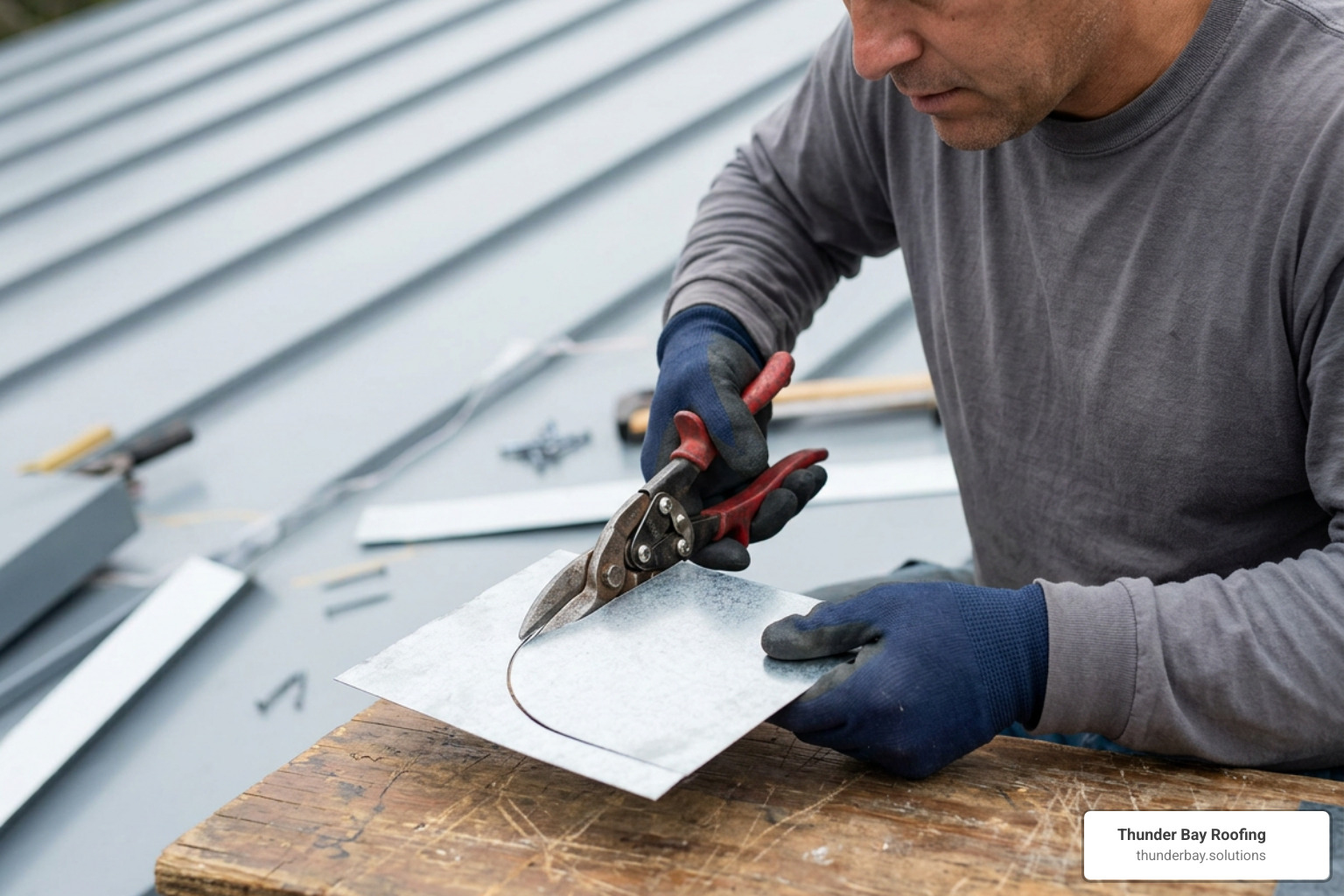
Professional contractors document several quality-control points when a structural floating patch is the correct repair:
- Custom Patch Fabrication: The replacement patch is cut from matching gauge sheet metal with enough coverage to shed water beyond the damaged area. Rounded corners reduce wind uplift and debris snags.
- Internal Gasket Barrier Placement: High-tack butyl tape forms a hidden gasket beneath the patch so the assembly remains pliable through years of thermal movement.
- Calibrated Mechanical Fastening: Self-drilling stitch screws with weather-resistant EPDM washers are seated with torque-controlled tools so the washers compress without being crushed or spun out.
- Perimeter Sealant Tooling: Exterior-grade polyurethane lap sealant is tooled around the patch perimeter to create a smooth transition that sheds water without voids.
- Cure Management and Final Coating: The assembly is protected during the initial cure window before a compatible UV-resistant finish coating is applied when appropriate, as detailed in technical building resources like How to Repair Large Hole in a Metal Buildings Roof [Pro Guide] – RapidRepair.blog.
Repairing Holes in Raised Seams and Stripped Fasteners
Holes located on raised seams, standing seams, or corrugated ribs present unique mechanical challenges. Because standing ribs act as the structural spine of the panel and channel the heaviest water volume during severe storms, rigid patches screwed across adjacent ribs can tear out as the building moves.
When a raised seam develops a puncture or split, technicians avoid bridging adjacent panels with rigid sheet metal. Instead, experienced roofers may reinforce the split with layered, flexible asphalt-impregnated or elastomeric glass membrane fabrics embedded in multi-sealant matrices. This preserves independent panel expansion while stopping moisture penetration. Seams are recrimped using dedicated standing seam hand tools to restore factory locking profiles.
How Professionals Address Metal Roof Fasteners and Stripped Screws
Fastener-related leaks represent the single most common service call on exposed-fastener metal roofing. When an original screw strips its wooden decking or purlin, simply retightening it will fail; over-torquing strips the remaining wood fibers and damages the washer.
Professional fastener repair decisions often include:
- Fastener Upsizing: Technicians remove the failed screw and select an oversized fastener, often stepping from a standard #9 or #10 fastener up to a #12 or #14 diameter screw with an enlarged EPDM sealing washer.
- Framing Relocation: If underlying purlins are compromised, the repair must be anchored into sound structural framing. The abandoned hole is sealed with compatible materials that bond to the metal roof system.
- Fastener Doming: Technicians encapsulate the newly seated screw head with a dome of polyurethane sealant extending onto the panel surface, preventing moisture from pooling on the fastener crown.
When to Replace Panels Instead of Patching
While localized punctures respond well to floating patches, patching is neither safe nor cost-effective when structural integrity is lost.
A metal roof panel requires full replacement rather than patching under the following conditions:
- Holes Exceeding 12 Inches: Large punctures or broad tears compromise the structural load capacity and wind resistance of the panel.
- Compromised Standing Ribs: Crushed, torn, or severely deformed vertical seams cannot be resealed to meet local building codes.
- Widespread Underside Corrosion: When rust perforates from the underside out due to trapped condensation, the entire panel has thinned and will continue opening new leaks.
- Extensive Storm and Wind Damage: High-velocity wind uplift that creases panels, pops rows of purlin fasteners, or tears panel laps requires complete panel replacement to maintain structural compliance.
- Rotted Substrate Decking: If moisture has degraded the underlying plywood or OSB deck, the metal panels must be removed to replace the rotted decking before new metal is secured.
During the intense Florida hurricane season, roofs face extreme wind uplift, intense UV degradation, and daily afternoon storms with driving rain. In Central Florida jurisdictions like Pasco and Hillsborough Counties, building departments enforce strict permit requirements and wind-mitigation uplift standards. Splicing or over-patching heavily damaged panels can violate building codes and void manufacturer warranties.
Frequently Asked Questions About Metal Roof Hole Repair
Can you use standard silicone or roof cement to fix a metal roof hole?
Standard household silicone and traditional asphalt roof cement should never be used to fix holes in a metal roof. Standard silicone cures using an acidic (acetoxy) mechanism that releases acetic acid, chemically etching and rusting steel panels. Furthermore, basic silicone exhibits poor long-term adhesion to factory metal finishes and cannot be painted.
Traditional asphalt roof cement dries out, shrinks, and cracks under intense solar UV exposure, losing its bond as metal panels expand and contract. Durable metal repairs require neutral-cure sealants, high-solids polyurethanes, or specialized butyl tapes engineered for thermal movement.
How long does a metal roof patch repair typically last?
A professionally installed floating metal patch secured with EPDM-washered screws, butyl tape, and polyurethane lap sealant typically lasts 15 to 20 years. The longevity depends on material compatibility, surface cleanliness during installation, and exposure to coastal salt spray or direct sunlight.
Exposed fastener washers and perimeter sealants should be visually inspected by a professional every 2 to 3 years to ensure the rubber remains flexible and the bond remains intact.
Why must patch corners be rounded before installation?
Patch corners are rounded to prevent wind uplift, reduce stress concentrations, and keep the patch from peeling over time. Sharp 90-degree corners create catch points that snag sliding tree branches, wind-driven debris, and intense wind uplift during severe storms. Rounding the corners allows high winds and runoff to glide smoothly over the repair edges without catching a sharp lip.
Conclusion
A hole in a metal roof requires prompt diagnostic and mechanical repair before water damages interior drywall, insulation, and underlying structural roof framing. While minor surface punctures can be resolved with localized professional patches, lasting repairs require an exact understanding of metal alloys, thermal movement, fastener engineering, and regional building codes.
If your Wesley Chapel, Lutz, Land O’ Lakes, or Oldsmar property has suffered a puncture, rusted panel, or storm penetration, trust the experienced team at Thunder Bay Roofing. We provide thorough leak detection, structural decking assessments, and warrantied metal roof repair tailored to withstand harsh Florida weather.
Contact Thunder Bay Roofing today or request your free roof inspection online to protect your home or business with proven, code-compliant roofing solutions.