
How to Fix a Roof Leak Temporarily in 5 Fast Steps
Stop a Roof Leak Fast and Limit Water Damage
For a temp fix for leaking roof damage, the safest first move is interior mitigation, documentation, and professional assessment rather than homeowner roof work. Florida hurricane season, intense UV, daily afternoon storms, and wind-driven rain can turn a small roof opening into wet insulation, damaged drywall, and hidden decking rot within a short weather window. In Pasco and Hillsborough County, permanent repairs also need permit and wind-mitigation awareness, so a licensed roofer should decide whether emergency tarping, temporary sealing, or structural repair is appropriate. If the leak is active, keep people away from wet ceilings, move valuables, document damage, and arrange Thunder Bay Roofing’s emergency roof repair guidance before anyone attempts exterior roof work.
Emergency priorities while waiting for professional help include:
- Keep occupants away from electrical fixtures, wet ceilings, and sagging drywall.
- Capture visible drips from floor level and protect flooring where it is safe to do so.
- Photograph interior stains, ceiling damage, and any visible exterior storm impact.
- Avoid walking on a wet, sagging, steep, or storm-damaged roof.
- Let a licensed roofing crew secure any exterior tarp or temporary weather barrier.
A professional tarp or temporary weather barrier can hold for days or weeks when installed correctly, but Florida rain, intense sun, and wind can shorten that window. I am Tyler Wood, owner of Thunder Bay Roofing, and I help property owners respond to roof leaks, storm damage, and harsh weather with practical, code-aware repair plans. A temp fix for leaking roof damage can reduce immediate water intrusion, but it should lead quickly to a professional inspection and permanent repair that stops the leak at its source.
Must-know temp fix for leaking roof terms:
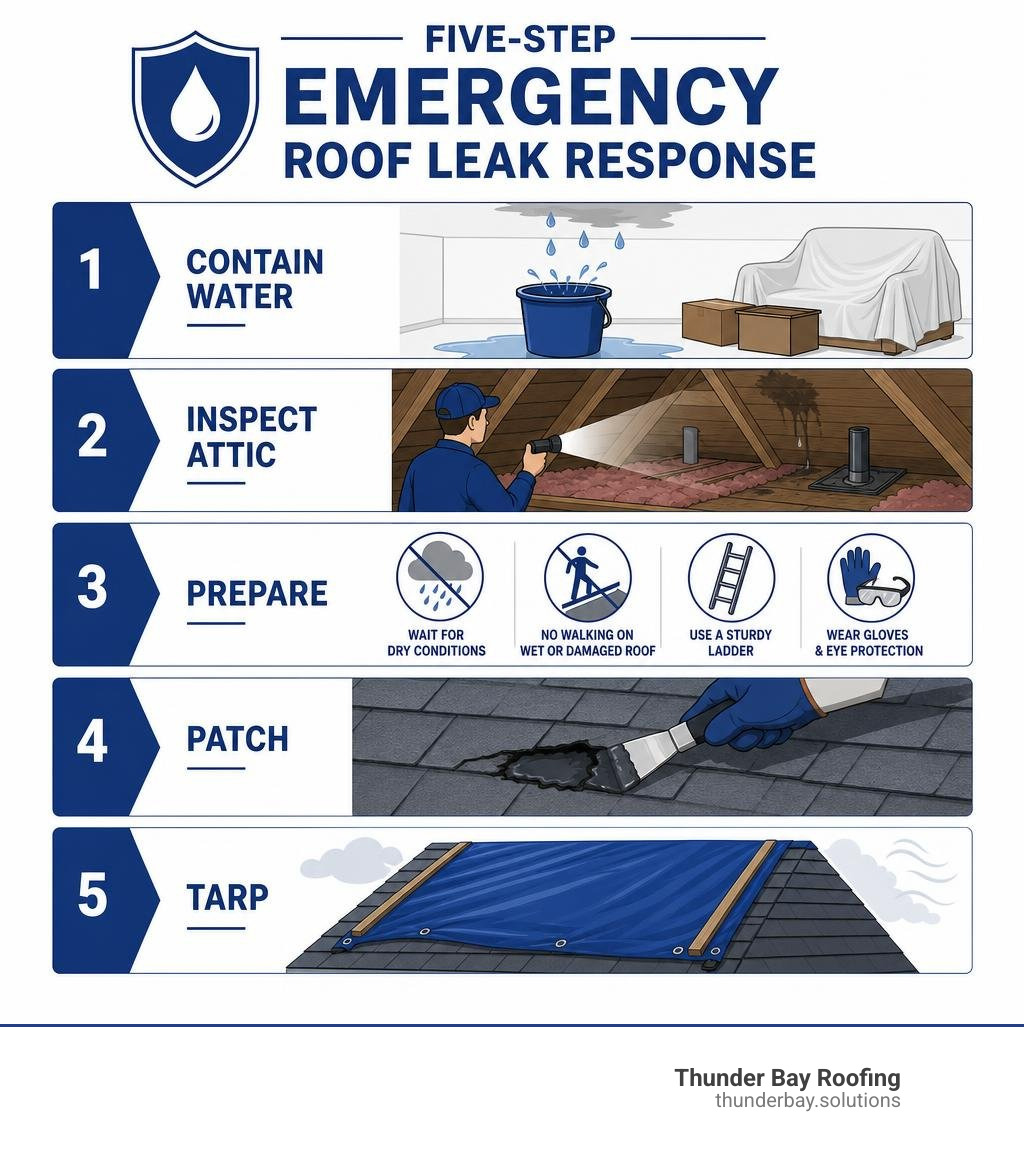
5 Fast Professional Priorities for a Temp Fix for Leaking Roof
The safest temp fix for leaking roof damage is a controlled emergency response: limit interior water damage, identify likely leak areas from safe access, assess storm hazards, use roof-compatible temporary materials, and install a secure exterior weather barrier when conditions allow. These are professional mitigation priorities, not a homeowner roof-work sequence. During Florida hurricane season and severe weather events, rapid response protects structural framing, drywall, insulation, and insurance claim value before secondary damage escalates.
Priority 1: Contain Interior Water and Reduce Occupancy Risks
Interior containment limits damage to flooring, cabinetry, drywall, and personal property while a roofing crew is being scheduled. Water pooling above drywall creates a heavy blister that can collapse without warning, and water near electrical fixtures creates shock and fire risks.
Key concerns during the first response include:
- Active dripping over wood floors, cabinets, furniture, rugs, and electronics.
- Water stains spreading across ceilings or down walls.
- Sagging drywall, bubbling paint, or soft ceiling areas that signal trapped water.
- Leaks near ceiling fans, light fixtures, breaker panels, or outlets.
- Photos and videos needed for insurance documentation before temporary covering begins.
A sagging or blistered ceiling should be treated as a collapse hazard. Property owners should keep people out of the affected room and avoid cutting, puncturing, or disturbing damaged drywall unless directed by an emergency professional. Relieving interior water pressure safely preserves framing and reduces structural ceiling collapse risks, as detailed in The Homeowner’s Guide to Ceiling Damage From Leaking Roofs.
Priority 2: Have the Leak Source Evaluated From Safe Access
Water follows the path of least resistance along rafters, trusses, and sheathing before dripping onto the ceiling, which means the water entry point on your roof is almost always uphill from where the water drips inside.

A professional roof leak evaluation looks for moisture paths, damaged penetrations, and hidden saturation without exposing occupants to unsafe attic or roof conditions. Common indicators include dark wood staining, rusted roofing nails, saturated insulation, daylight at decking gaps, and leaks near plumbing vent stacks, exhaust fans, chimneys, skylight curbs, valleys, or flashing transitions.
Pinpointing the likely entry point helps separate a small flashing failure from larger storm damage, underlayment failure, or decking deterioration. That distinction matters because a low-cost temporary cover can reduce active intrusion, while a missed structural leak can continue wetting the roof assembly after the visible drip slows.
Priority 3: Assess Storm Hazards and Exterior Drainage Conditions
Exterior breaches during Florida afternoon storms and wind-driven rain can quickly overwhelm compromised underlayment. However, climbing on a wet, steep, or storm-damaged roof presents extreme fall hazards and should be avoided by homeowners.
A roofing crew evaluates whether branches, wet leaves, clogged valleys, lifted shingles, displaced tiles, or impacted flashing are trapping water over a vulnerable area. Debris and blocked drainage can force water backward under the roof covering, especially during wind-driven rain. When access is unsafe, the correct response is professional stabilization rather than a homeowner attempt from a ladder or roof surface.
Priority 4: Match Temporary Protection to the Roof Material
Different roofing systems require specific temporary protection methods to avoid chemical incompatibility that can dissolve underlayment, damage membranes, or void manufacturer warranties.
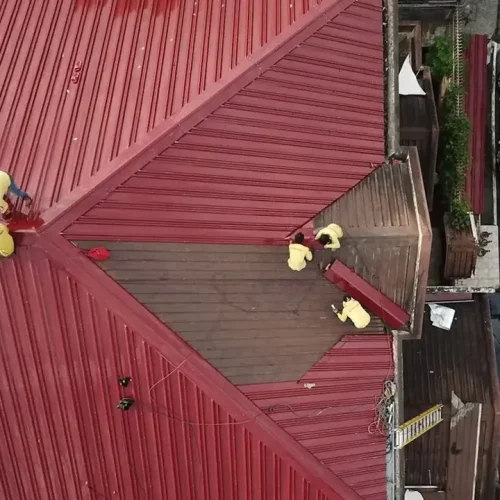
Temporary protection varies significantly by roofing substrate:
- Asphalt Shingles: Minor surface tears and lifted tabs require asphalt-compatible materials and careful evaluation of the surrounding underlayment, as outlined in Stop the Drip With These Simple Shingle Repair Tips.
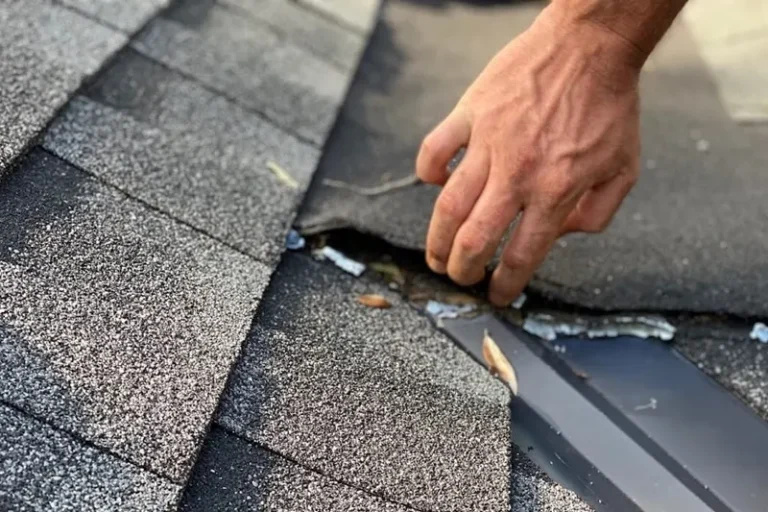
- Vent Boots and Flashing: Deteriorated rubber pipe collars, separated counterflashing, and failed sealant joints require compatibility checks before any temporary seal is used.
- Tile Roofs: Displaced or cracked clay and concrete tiles often indicate exposed underlayment, broken fasteners, or impact damage, as explained in our guide on Tile Trial: How to Temporarily Patch a Missing Roof Tile.
A professional inspection also addresses cost risk. A temporary material placed over the wrong substrate can trap moisture, hide continuing leakage, damage adjacent roof components, and increase the final repair scope.
Priority 5: Secure Professional Emergency Roof Tarping When Needed
When severe weather causes major shingle loss, tile displacement, or tree limb impact, an exterior heavy-duty tarp provides the primary temporary barrier against repeated storms.
Professional emergency tarping uses minimum 6-mil woven polyethylene tarps extended past damaged perimeters and secured to resist wind uplift. Crews account for ridge lines, roof pitch, attachment points, drainage paths, and the likelihood of daily afternoon storms before selecting the tarp layout. Proper fastening distributes mechanical tension and reduces the chance that wind will tear the cover during high-wind storms.
Homeowners can review established FEMA emergency mitigation guidelines to understand proper post-storm property protection standards. The practical goal is simple: reduce water intrusion now, preserve claim documentation, and schedule a code-compliant permanent repair before temporary protection reaches the end of its service life.
Choosing Temporary Patch Materials: Sealants, Tapes, and Coatings
Selecting the correct temporary patch material requires matching the chemical properties of the sealant to your specific roofing membrane. An incompatible chemical application can dissolve underlying asphalt, degrade single-ply membranes, and inflate permanent repair costs from a minor spot fix to extensive decking replacement.
| Patch Material | Typical Lifespan | Best Substrates | Major Pros | Major Cons |
|---|---|---|---|---|
| Roofing Cement (Plastic Cement) | 1 to 3 months | Asphalt shingles, modified bitumen | Low cost, heavy body fills deep gaps | Dries brittle under intense UV; difficult to scrape off |
| Butyl Sealant | 2 to 4 weeks | Metal roofing, flashing, wood | Excellent wet-surface adhesion | Degrades and rots when exposed to air/UV past 30 days |
| Silicone Sealant | 1 to 3 weeks | Glass, metal transitions | UV stable, easy to remove later | Fails to adhere long-term to bitumen, TPO, or PVC |
| Eternabond / Roof Tape | 6 to 9 months | Metal, TPO, EPDM, fiberglass | High puncture resistance, watertight seal | Can pull off coatings, leaves heavy residue, difficult removal |
| Ice & Water Shield (Bitumen) | Up to 90 days | Plywood decking, shingle underlayment | Self-sealing around fasteners | Rots out incompatible PVC/TPO single-ply membranes |
For flat roof surfaces, see The Simple Way to Patch a Leaky Flat Asphalt Roof to understand how contractors prevent water pooling around temporary seams under intense UV conditions.
Roofing Cement vs. Silicone and Butyl Sealants
Standard asphalt plastic cement creates a thick, trowel-grade barrier ideal for minor holes in asphalt shingle systems and bitumen bases. However, it cures rigid over time and cracks under intense thermal expansion.
Silicone sealants resist UV degradation but struggle to bond with bitumen-based products and single-ply membranes like TPO. Because silicone does not adhere permanently to asphalt, contractors can easily strip it off during permanent repairs without damaging surrounding materials.
Butyl sealants offer aggressive adhesion across virtually all building materials and can stick to damp surfaces. However, butyl is formulated as a hidden bedding sealant; when left exposed to open air and direct sunlight, it breaks down within 30 days, becoming a gooey, degrading mess that damages adjacent materials.
Tapes, Membranes, and Retail Fixes: What Actually Works?
Heavy-duty microsealant tapes like Eternabond create a durable moisture barrier that can hold for 6 to 9 months. However, their aggressive adhesive bonds so aggressively to asphalt and single-ply membranes that removing them during permanent repairs often tears the underlying roof covering, requiring a larger, more expensive area replacement.
Bitumen-based ice and water shield membranes are rated for up to 90 days of direct UV exposure, but putting bitumen products directly over synthetic membranes like TPO or PVC causes plasticizer migration, rotting the membrane. Duct tape fails rapidly outdoors; within a few days of direct heat and moisture, its adhesive turns into a brittle residue with zero waterproofing capability.
Retail aerosol rubber sprays marketed on television lack the mil thickness and structural body required to bridge shifting roof joints. They crack quickly under Florida heat and leave an oily film that interferes with professional bonding compounds later.
Safety Precautions, Insurance Rules, and Professional Limits
Working on a damaged roof presents severe physical and financial hazards. Professional standards require fall-arrest systems, proper ladder tie-offs, and compliance with local municipal codes.
Insurance Coverage and Mandatory Damage Mitigation
Standard homeowner insurance policies require policyholders to take reasonable steps to protect their property from further loss after a storm event. This is known as the duty to mitigate damages.
- Document Before Covering: Take clear, high-resolution photos and video of the interior water leaks, ceiling damage, and exterior roof damage before applying tarps or patches.
- Save Receipts: Keep all receipts for tarps, lumber, fasteners, and professional emergency services to submit with your insurance claim.
- Prevent Secondary Damage: Failing to secure a visible leak can allow insurance adjusters to deny coverage for subsequent drywall collapse, wood rot, or mold remediation.
For major storm impacts, understanding storm-damaged roofing mitigation protocols helps ensure emergency actions align with adjuster requirements.
When to Skip the Temp Fix for Leaking Roof and Call a Pro
A temporary DIY patch is unsafe and ineffective under severe structural conditions:
- Decking Sag or Soft Spots: If the roof deck flexes underfoot, the plywood has rotted through, creating an immediate collapse hazard.
- Electrical Penetrations: Leaks traveling through light fixtures, breaker panels, or ceiling fans present lethal shock and fire hazards.
- Widespread Storm Impact: Multiple penetration breaches, tree strikes, or missing sections across multiple roof slopes require commercial-grade shrink wrap or full structural stabilization.
- Low-Slope and Complex Geometry: Valleys, crickets, and low-slope additions (pitches below 4/12) channel massive volumes of water that overwhelm simple topical patches.
During the Florida hurricane season, intense UV exposure, daily afternoon storms, and wind-driven rain demand strict adherence to Pasco and Hillsborough County permit and wind-mitigation requirements. In communities like Lutz, FL, licensed contractors must handle permanent decking replacements and wind-resistant fastening schedules. When structural integrity is compromised, schedule professional roof repair immediately.
Frequently Asked Questions About Temporary Roof Fixes
How long can a temporary roof patch last before permanent replacement?
A temporary roof tarp secured with wood batten boards lasts between 30 and 90 days depending on weather and UV exposure. Topical sealants like roofing cement or butyl patches last between 2 and 4 weeks before heat degradation sets in. Specialized repair tapes can resist water for 6 to 9 months, but leaving any temporary patch past its rated window risks hidden water rot underneath.
Can I use duct tape or Flex Seal for an emergency roof leak?
Duct tape is not waterproof under prolonged outdoor exposure; sun and moisture break down its adhesive within 48 to 72 hours, leaving a dried residue that fails to stop water. Aerosol rubber sprays like Flex Seal lack the thickness to bridge gaps over 1/16 of an inch and degrade quickly under direct heat, making them unreliable for serious roof leaks.
Will a DIY temporary roof patch void my roof warranty or insurance?
Applying non-compatible chemicals (such as asphalt tar over TPO or solvent sealants over modified bitumen) can void manufacturer material warranties. However, installing a mechanically secured tarp over damaged areas does not void warranties and is explicitly required by insurance companies to fulfill your mandatory duty to mitigate property damage.
Conclusion
A temp fix for leaking roof damage is a vital emergency measure to stop active water intrusion and protect your home’s interior, but it is never a permanent substitute for a code-compliant repair. Leaving emergency tarps or sealants in place too long exposes your framing to hidden rot, mold growth, and denied insurance claims.
When severe weather impacts your home in Wesley Chapel, FL, Lutz, Land O’ Lakes, or Oldsmar, our team provides the Florida weather expertise, proper licensing, and wind-mitigation experience required to restore your roof safely. Contact Thunder Bay Roofing or book your inspection online to secure lasting protection for your property.