
Tile Trial: How to Temporarily Patch a Missing Roof Tile
One Missing Tile Can Flood Your Attic — Here’s What to Do Right Now
A temporary fix for a missing roof tile protects the exposed underlayment and roof deck until permanent repairs can be made. If water is already entering your attic after a storm in Wesley Chapel, contact a trusted Wesley Chapel roofing contractor before stepping onto wet or fragile tile.
The fastest answer is simple: use a ridge-secured heavy-duty tarp for large exposed areas, or slide a metal flashing patch under the upper tile course for a single dry tile gap. Every temporary patch should direct water downhill, prevent wind uplift, and remain in place only until a licensed roofer completes the permanent repair.
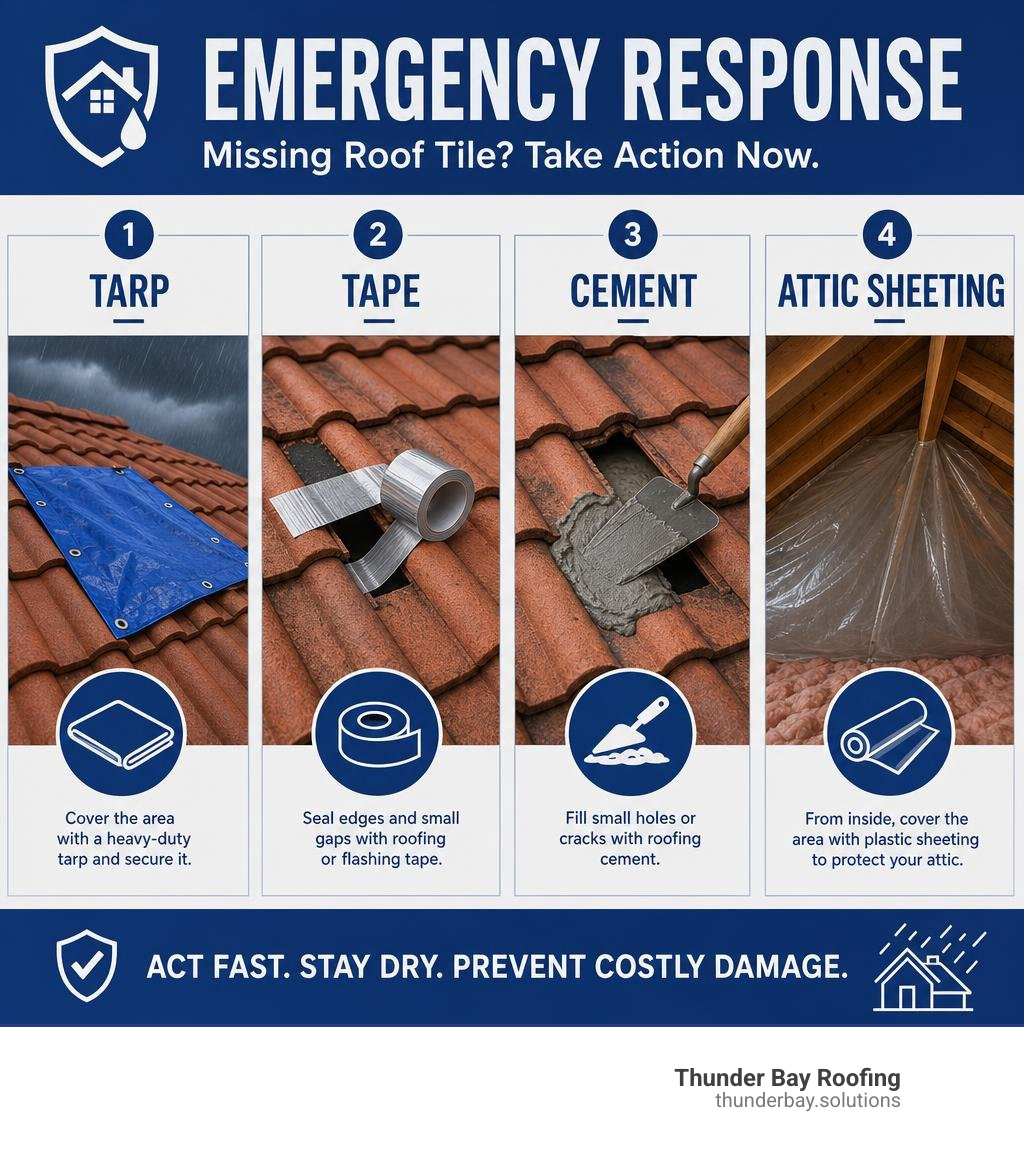
Here are the most effective temporary fixes, ranked by how long they last:
| Temporary Fix | Estimated Lifespan | Best For |
|---|---|---|
| Heavy-duty tarp | A few days to a few weeks | Large exposed areas after storm damage |
| Roofing tape / flashing tape | Up to 6–9 months | Minor dry gaps at tile edges |
| Roofing cement patch | 3–6 months | Small holes and cracks |
| Tar paper + roofing cement | 6–12 months | Medium-sized gaps |
| Sheet metal or plywood | 1 year or more | Larger missing tile areas |
| Interior plastic sheeting | Hours to days | Protecting attic insulation overnight |
A single missing tile may look minor from the ground. But it creates a direct path for water into your roof deck, attic insulation, and ceiling framing. Mold can begin forming in an attic cavity within 24 to 48 hours of moisture exposure. Wind-driven rain can also be forced sideways — beneath neighboring tiles — meaning a leak may not appear indoors until days after the tile went missing.
The good news: there are several proven stop-gap measures you can apply safely while you wait for a professional roof repair from a licensed contractor.
I’m Tyler Wood, owner of Thunder Bay Roofing in Wesley Chapel, Florida — and through hands-on work in Florida’s most demanding roofing conditions, I’ve seen how quickly a single missing tile can escalate into a costly structural problem. Knowing the right temporary fix for a missing roof tile can be the difference between a simple repair and a full roof replacement.
Quick look at temporary fix for missing roof tile:
Finding the Leak and Assessing Risks of a Missing Tile
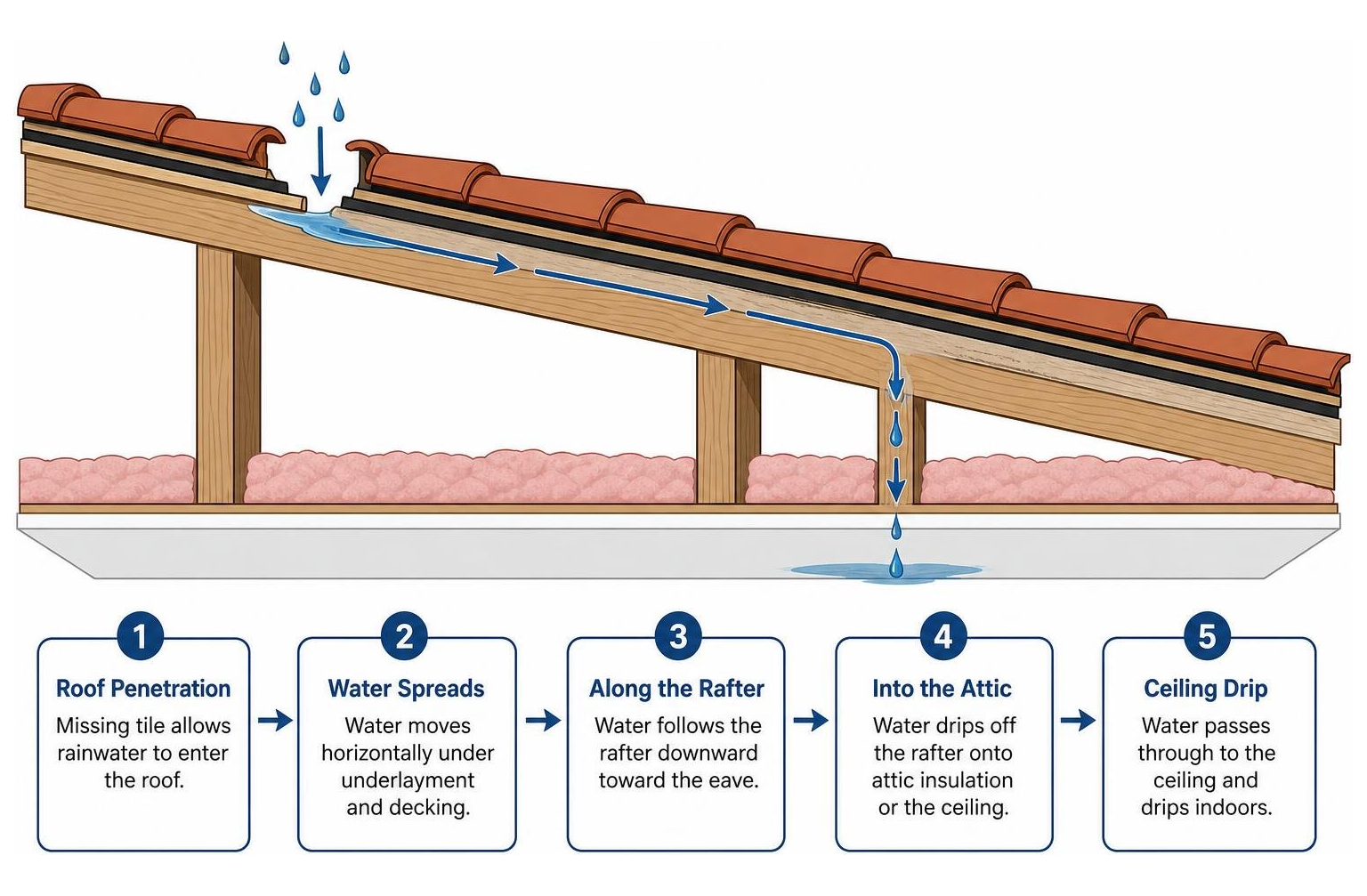
When a tile slips or blows off during a high-wind event in West Central Florida, water doesn’t strictly fall straight down. Gravity and roof slope force water to migrate horizontally along roof felt, plywood decking, and wooden rafters before finding an opening into your living quarters. Identifying where that moisture enters is step one before securing any temporary fix for missing roof tile setups.
If you suspect damage across homes in Lutz Roofing service areas or nearby Land O’ Lakes, matching interior damp spots directly to an exterior gap can be misleading. Professional Roof Leak Detection focuses on tracing the path of water uphill from the visible ceiling stain. To safeguard your home before severe weather hits, review our detailed guide on Blog: Missing Shingles and Roof Leaks What You Need to Know Before the Storm or connect directly with our team at Expert Roof Services.
Finding the Entry Point in the Attic
Tracing water infiltration safely starts inside your attic space rather than on top of a wet roof slope.
- Conduct a Sunny-Day Light Test: Head into the dark attic during daytime. Turn off artificial lights and inspect the underside of the roof deck. Look for pinpoints of bright daylight shining through the decking, which pinpoint exact missing tile areas.
- Trace Rafter Dampness Uphill: If water is actively dripping during rain, use a heavy-duty flashlight to locate wet streaks along rafters or roof sheathing. Always trace the dampness uphill toward the highest wet point; water frequently enters the roof higher up and runs down the rafters before dripping onto ceiling insulation.
- Inspect Roof Penetrations: Check areas near chimneys, valley flashings, and plumbing vent pipes. These locations are particularly prone to water entry when neighboring tiles dislodge.
Dangers of Unrepaired Missing Tiles
Leaving a gap in your tile system exposes the underlying underlayment felt directly to sunlight and severe rainfall. While high-grade underlayment acts as a temporary moisture barrier, it is not engineered for direct UV rays or pooled rain.
- Decking and Batten Decay: Wooden battens that support your clay or concrete tiles quickly absorb standing water, causing wood rot and batten detachment.
- Mold Growth: Mold spores propagate rapidly in warm, humid attic environments within 24 to 48 hours of initial water contact.
- Amplified Wind Uplift: An open gap allows heavy winds to scoop under surrounding tiles during a storm, peeling away adjacent units and multiplying overall structural damage.
Safe Methods for a Temporary Fix for Missing Roof Tile
Selecting the appropriate temporary fix for missing roof tile depends on the size of the gap, roof slope, accessible materials, and current weather conditions.
When performing short-term fixes, adhere to established industry guidance provided by the Tile Roofing Industry Alliance Standards. Below is a breakdown comparing common temporary patch materials:
| Material / Method | Est. Lifespan | Cost Range | Skill Level Required | Best Emergency Use Case |
|---|---|---|---|---|
| Heavy-Duty Tarp (Battened) | 2–4 Weeks | $20 – $60 | Intermediate | Broad storm damage across multi-tile spans |
| Aluminum Flashing Patch | 1–3 Months | $15 – $30 | Beginner-Intermediate | Single missing tile gap tucked under course |
| Tar Paper + Roof Cement | 3–6 Months | $25 – $50 | Beginner | Medium-sized deck exposure |
| Heavy Roofing Flashing Tape | 6–9 Months | $20 – $40 | Beginner | Minor tile edge fractures on dry surfaces |
| Interior Attic Sheeting | 1–3 Days | $10 – $20 | Beginner | Stop active drips from ruining ceilings overnight |
How to Install a Tarp as a Temporary Fix for Missing Roof Tile
Installing an emergency tarp is the most practical way to protect large exposed areas. However, thrown-over tarps pinned down with heavy bricks will quickly blow away in strong winds.
- Extend Over the Roof Ridge: Always drape the top edge of your heavy-duty tarp over the highest peak (roof ridge) and secure it on the opposite slope. If you fail to cross the ridge, wind-driven rain will blow straight underneath the upper edge.
- Anchor with 2×4 Wooden Battens: Wrap the edges of the tarp tightly around 2×4 wooden boards. Drive screws through the wood strips into sound roof framing to roll the tarp taut.
- Ensure Smooth Drainage: Keep the tarp completely smooth without dips or folds where water can pool.
For detailed step-by-step guidance on full-scale emergency tarp installations, explore our service options at Emergency Tarping or read our complete overview on Blog: Everything You Need to Know About Emergency Tarp Services.
Using Metal Flashing, Tar Paper, or Plywood
If you are replacing a single missing tile and do not wish to cover an entire roof section with a blue tarp, rigid metal or composite patches offer a lower-profile barrier.
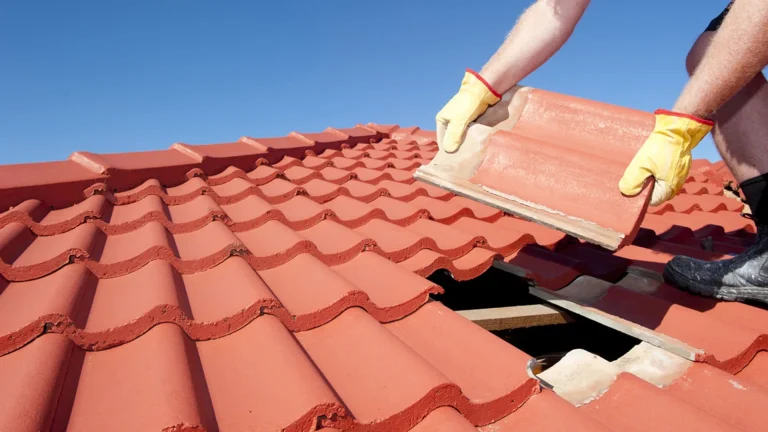
- Sheet Metal Flashing Patch: Cut a piece of aluminum or galvanized sheet metal slightly wider and longer than the missing tile gap. Slide the top edge of the metal sheet under the overlapping tile course directly above the gap, extending it over the lower tile course. Apply generous beads of roofing cement under all edges to seal it down flat.
- Tar Paper and Felt Layers: Cut commercial-grade 30 lb asphalt-saturated felt (tar paper) to size. Coat the exposed roof deck with asphalt roofing cement using a trowel, smooth the tar paper firmly into the cement, and apply a top layer of roof cement along all outer borders.
- Plywood Over Large Sheathing Holes: For extensive damage where the underlying wood sheathing is punctured, place exterior-grade CDX plywood over the opening. Secure it into structural rafters, coat it with asphalt roof cement, and cover it completely with tar paper before placing a protective tarp over the top.
If you are looking for additional techniques on handling missing roof coverings using basic hardware items, reference this How to Patch a Roof Without Shingles: Easy Repair Guide.
Sealants, Tapes, and Interior Attic Barriers
For small hair-line fractures, loose tile joints, or temporary water containment from inside your home, specialized sealants and tapes provide rapid relief.
- Roofing Sealants and Lap Joints: High-grade silicone or polyurethane roofing sealants can join cracked tile pieces together temporarily. However, applying sealant only to the visible crack usually fails because water flows beneath the overlapping tile lap joint. You must coat the entire hidden lap joint beneath the tile to stop moisture migration.
- Heavy-Duty Flashing Tapes: Butyl-based waterproof flashing tapes (like Eternabond) adhere strongly to clean, dry concrete and clay tiles. Wipe all dirt, algae, and grit from the tile surface prior to pressing the tape down firmly with a roller.
- Interior Plastic Sheeting Containment: When weather prevents you from climbing safely onto a high roof pitch, set up internal protections in your attic void. Drape heavy 6-mil plastic sheeting beneath the dripping rafter, angling it downwards into a 5-gallon bucket to collect water and shield underlying ceiling drywall.
Review standard installation practices outlined in the NRCA Technical Roofing Guidelines to ensure all sealants match your roof’s material makeup.
Essential Safety Rules and Mistakes to Avoid During DIY Fixes
Roof work presents significant safety risks — particularly on tile roofs, which are far slicker and more fragile than standard asphalt shingle roofs. Before attempting a temporary fix for missing roof tile, review our safety guidelines outlined in Blog: Emergency Roof Repair Guide for Leaky Situations.
If the roof is wet, steep, storm-damaged, or difficult to access, the safest temporary repair is to stay off the roof and schedule emergency roof tarping service. OSHA identifies falls as one of the leading hazards in construction work, and its fall protection guidance reinforces that roof access should be treated as a controlled safety task, not a casual home repair.
Walking on Fragile Roof Tiles
Clay and concrete roof tiles break easily under human weight. Stepping incorrectly can shatter surrounding tiles, converting a single-tile issue into a massive repair job.
- Never Walk in the Center of a Tile: Concrete and clay tiles are hollow underneath their middle arches. If you must step on tiles, place your feet gently across the lower third of overlapping tiles, where structural support is highest.
- Use Duckboards or Roof Ladders: Distribute your body weight evenly across tile rows using padded roof ladders or specialized duckboards.
- Beware of Slippery Wet Tiles: Algae, morning dew, and light rain turn smooth tile surfaces into extreme slip hazards. Never step onto a tile roof while it is wet.
Improper Fasteners and Overstaying Temporary Fixes
Well-intentioned DIY repairs frequently cause permanent damage when improper tools or fasteners are used.
- Avoid Nails or Screws Through Tiles: Never drive nails or construction screws directly through concrete or clay tiles or directly into exposed roof battens. Fasteners split underlying wood framing, create new leak paths, and shatter brittle tile bodies.
- Avoid Long-Term Tarping: Standard tarps degrade quickly under direct sunlight and high heat. Leaving emergency tarps or temporary patches in place beyond 30 to 60 days risks extensive sub-floor dry rot and voids many homeowner insurance policies.
When a Temporary Fix for Missing Roof Tile Isn’t Enough: Emergency Signals
Temporary patches are emergency stop-gaps designed solely to protect your home while scheduling permanent repairs. Certain severe conditions demand immediate assistance from licensed roofing specialists.
If your roof sustained severe weather damage, schedule a professional assessment through Storm Damaged Roofing. You can also learn more about insurance claim requirements by reading Missing Shingles After a Storm? Temp Fix + Insurance (2026) and review basic single-component replacement costs in How to Fix a Blown-Off Roof Shingle Before It Leaks ($15–$30 DIY, No Roofer Needed).
Spotting Emergency Structural Damage
If you observe any of the following warning signs, stay off the roof and contact emergency services or a professional roofing contractor immediately:
- Visible Sagging Along the Roof Line: Indicates severe wooden rafter or roof deck failure under heavy water load.
- Ceiling Drywall Bulging or Collapsing: Suggests large quantities of water have collected above living areas.
- Multiple Consecutive Missing Tiles: Exposes large areas of wood framing to wind uplift and structural collapse.
- Persistent Indoor Water Flows: Indicates active, uncontrolled flooding through main electrical or living spaces.
Coordinating Professional Inspections and Insurance
Restoring a tile roof properly requires precise tile matching, underlayment repairs, and alignment with original structural specifications.

- Document Damage Thoroughly: Take clear wide-angle and close-up photographs of the missing tile gap, surrounding roof condition, and any interior water stains prior to applying temporary patches.
- Schedule a Professional Inspection: Arrange a comprehensive evaluation through Roof Inspections to confirm whether underlying decking or flashing sustained hidden moisture damage.
- Coordinate with Insurance Adjusters: Provide your insurance provider with full photo documentation and contractor estimates. For helpful advice on managing leaks and insurance claims, review Blog: The Ultimate Guide to Roof Leak Repair.
Frequently Asked Questions About Temporary Roof Tile Patching
How long can a temporary patch remain on a tile roof?
A standard emergency tarp secured with wooden battens should not remain in place for longer than 2 to 4 weeks. While specialized metal flashing patches or roofing cement applications can hold up for several months, temporary patches degrade under intense UV radiation and heat. They should be replaced with permanent tiles as soon as possible.
Can I fix a broken roof tile with silicone without removing it?
While applying silicone to a visible surface crack may seem effective, it rarely stops a leak long-term if applied without removing the tile. Roof tiles overlap on hidden drainage joints. To seal a tile correctly with silicone, remove the tile, apply sealant across the entire concealed lap joint, and reinstall it flat.
Is interior plastic sheeting in the attic enough to stop a leak?
No. Interior plastic sheeting set up in an attic space is strictly a short-term risk management measure designed to protect interior drywall and insulation overnight. It does not stop rain from rotting roof battens, degrading decking, or swelling wooden rafters. An exterior barrier must be applied as soon as conditions are safe.
Conclusion
Finding a missing roof tile can be stressful, but taking prompt action protects your home from severe water intrusion and structural repairs. Whether you install a heavy-duty tarp over a broad storm-damaged area or slide a sheet metal patch under an upper tile course, securing a reliable temporary fix for a missing roof tile gives you the time needed to coordinate permanent professional repairs.
Temporary fixes are short-term emergency solutions. Restoring the watertight integrity, beauty, and long-term value of your tile roof requires experienced craftsmanship.
If you suspect storm damage, missing tiles, or hidden attic leaks across Wesley Chapel, Land O’ Lakes, or Lutz, our team at Thunder Bay Roofing is here to help. Visit our Roof Repair page to schedule a professional inspection and secure long-term protection for your home.