
Missing Shingles and Roof Leaks: What You Need to Know Before the Storm
Why a Missing Shingles Roof Leak Is More Serious Than It Looks
A missing shingles roof leak can go from a small gap to thousands of dollars in water damage faster than most homeowners expect. If you suspect storm damage, securing reliable professional roofing services immediately is the best way to protect your property. Here is what you need to know right away:
Quick Answer: Missing Shingles and Roof Leaks
- A single missing shingle can cause a leak — sometimes with the very next rain
- High-risk spots include roof valleys, eaves, chimneys, and skylights
- Leaks often do not appear indoors for days or weeks, but damage is already happening
- Exposed underlayment degrades quickly under Florida’s UV and rain conditions
- Any missing shingle should be treated as urgent, not a “wait and see” situation
Most homeowners assume a roof leak requires obvious, large-scale damage. In reality, one missing shingle is enough to expose the underlayment, nail heads, and decking seams beneath — all of which are vulnerable to Florida’s heavy rain and wind-driven storms. And because water travels along rafters and roof decking before dripping into your living space, you may not see a ceiling stain until significant hidden damage has already occurred.
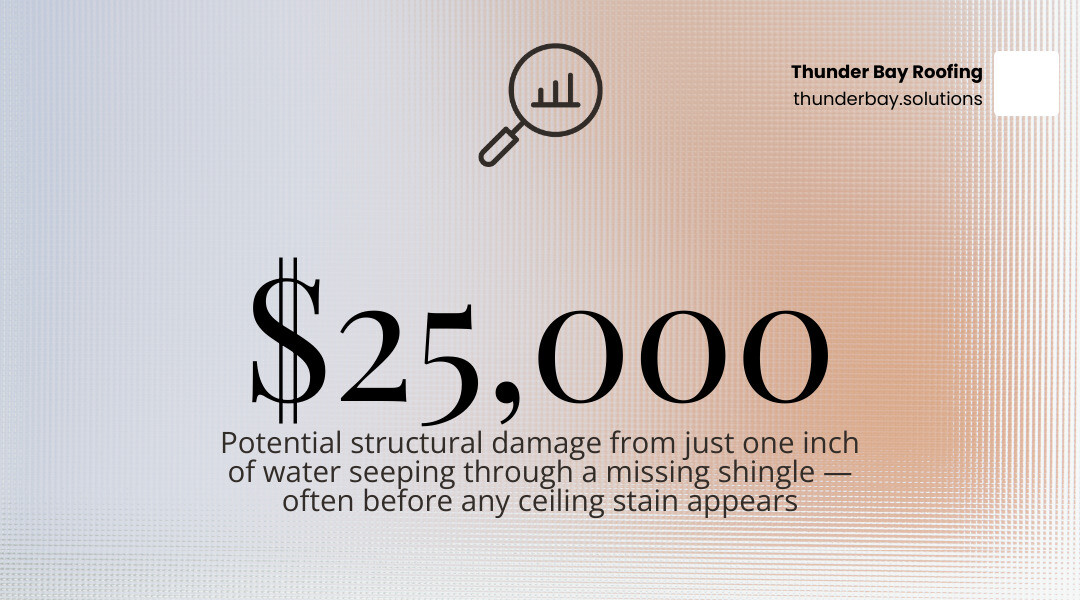
That gap in your roofline is not just a cosmetic problem. According to roofing industry data, just a few missing shingles combined with water intrusion can lead to up to $25,000 in structural damage from as little as one inch of water. In Wesley Chapel and across the Tampa Bay area, where storms can roll in fast and hit hard, that window between “missing shingle” and “serious water damage” can close within 24 hours.
I’m Tyler Wood, owner of Thunder Bay Roofing in Wesley Chapel, Florida — and through years of inspecting and repairing storm-damaged roofs across the Tampa Bay area, I have seen how a missing shingles roof leak that looks minor from the ground can hide rot, mold, and structural damage above the ceiling. If you need local assistance, our specialized Wesley Chapel roofing services are designed to address these vulnerabilities quickly. This guide will walk you through exactly what to check, what to fix, and when to call a professional before the next storm hits.
Simple missing shingles roof leak word guide:
Can a Single Missing Shingle Cause a Roof Leak?
Yes, a single missing shingle can cause a roof leak. Asphalt shingle roofs rely on overlapping layers to shed water using gravity. When even one shingle or tab is torn away, that overlapping defense is broken, exposing the underlying materials directly to rain and wind.
To understand why this is such a critical vulnerability, you have to look at how modern asphalt shingle roofing is engineered. Shingles are installed from the bottom of the roof upward, overlapping each other so water flows seamlessly from one layer to the next. According to the Asphalt Roofing Manufacturers Association (ARMA), this overlapping design is the roof’s primary defense against water intrusion.
When a shingle goes missing, the system fails in three major ways:
- The 1-in-3 Stat with 3-Tab Shingles: If you have traditional 3-tab shingles, there is a 1 in 3 statistical chance that a missing tab was sitting directly over an open vertical seam in the shingle row below it. When that tab blows off, rainwater has a direct, unobstructed path straight to the underlayment.
- Exposed Fasteners: Shingles are held down by roofing nails. These nails are driven into the “nailing strip,” which is supposed to be covered by the overlapping shingle above it. When a shingle is lost, these nail heads are exposed. Water can pool around the unsealed nail heads, seep down the shank of the nail, and penetrate the roof decking.
- Wind-Driven Rain: Standard gravity-based runoff designs only work when water flows downward. During West Central Florida summer storms, wind gusts frequently exceed 60 mph. These winds push rainwater sideways and even uphill, forcing moisture under the surrounding, still-attached shingles.
For more detailed technical insights on how minor damage escalates, check out this diagnostic breakdown: Can One Missing Shingle Cause a Roof Leak? | Beemer KangaRoof .
High-Risk Locations for a Missing Shingles Roof Leak
Not all roof real estate is created equal. While a missing shingle on a wide, steep slope is serious, a missing shingle in a high-flow water area is an immediate emergency.
- Roof Valleys: Valleys are the v-shaped channels where two roof planes meet. They carry the highest volume of water on your entire roof. If a shingle is missing in or near a valley, water will rush under the surrounding materials like a river, bypassing the underlayment almost instantly.
- Eaves and Rakes: The edges of your roof (the eaves along the gutters and the rakes on the gables) are highly vulnerable to wind uplift. Missing shingles here allow wind-driven rain to push directly under the starter strip, rotting out the fascia boards and roof decking.
- Around Chimneys and Skylights: Penetrations require metal flashing to redirect water. Shingles overlap this flashing to keep the seal tight. If a shingle is lost next to a chimney or skylight, water will pool against the metal flashing and find its way into your home.
If you suspect water is entering your home but cannot find the entry point, our specialized roof leak detection services can pinpoint the exact source before the damage spreads.
Why a Missing Shingles Roof Leak May Not Appear Immediately
A common mistake homeowners make is assuming their roof is fine because they do not see water dripping from the ceiling after a storm. This is a dangerous misconception.
Your roof system has a secondary defense layer: the underlayment (typically felt paper or synthetic underlayment) installed directly over the plywood sheathing. When a shingle blows off, the underlayment temporarily blocks water. However, underlayment is not designed for direct exposure to the elements.
- UV Degradation: Florida’s intense summer sun degrades exposed underlayment within days. The UV rays dry out felt paper, causing it to crack, bubble, and tear.
- Slow Water Travel: Water rarely drips straight down. It enters through the missing shingle gap, hits the underlayment, and travels horizontally along the plywood decking or rafters until it finds a seam, joint, or nail hole. This means the water stain on your ceiling could be 15 feet away from the actual missing shingle.
- Progressive Wood Rot: The plywood decking absorbs water like a sponge. It will swell and rot long before the moisture fully saturates your attic insulation and breaks through your drywall ceiling.
For a deeper dive into tracing hidden water paths, read our ultimate guide to roof leak repair. To ensure your roof meets top-tier moisture protection standards, we always install underlayment according to CertainTeed roofing standards.
Assessing the Urgency: Why You Cannot Wait to Repair Your Roof
You should treat a missing shingle as a high-priority repair that needs to be addressed within 24 to 48 hours. Waiting weeks or months to schedule a repair virtually guarantees secondary water damage, wood rot, and mold growth.
According to the Environmental Protection Agency (EPA), mold can establish and begin growing on damp organic surfaces (like attic insulation, plywood decking, and drywall) within 24 to 48 hours of moisture exposure. Once mold takes root in your attic, remediation costs can easily double or triple the price of a simple roof repair.
Furthermore, ignoring a small gap can lead to catastrophic financial consequences. As noted in storm safety resources, a few missing shingles can let in enough water during a heavy rainstorm to cause up to $25,000 in interior and structural damage from just one inch of accumulated water.
In Land O’ Lakes, Lutz, and Wesley Chapel, summer storms frequently bring wind gusts over 60 mph. These winds are strong enough to break the adhesive seals of adjacent shingles that still look perfectly fine from the ground. Once those seals are broken, the next storm will rip them away, turning a minor spot repair into a major structural failure.
Post-Storm Ground Inspections and Interior Warning Signs
To protect your home, you must know how to safely spot damage after a storm. Never climb onto a wet or storm-damaged roof yourself. Instead, perform a systematic ground inspection and check your home’s interior.
- Grab a Pair of Binoculars: Stand in your yard, across the street, or in a neighbor’s yard (with permission) and scan your roof. Look for dark, rectangular patches where shingles should be, or shingles that look crooked, lifted, or loose.
- Check the Yard and Landscaping: Walk around your property. Finding torn shingle tabs, whole shingles, or pieces of black underlayment in your landscaping is a clear sign your roof has suffered wind damage.
- Inspect Your Gutters: Look for heavy accumulations of mineral granules in your downspouts and gutters. Loss of granules indicates your shingles are wearing thin and are highly susceptible to blowing off in the next storm.
- Go into the Attic with a Flashlight: During or immediately after a heavy rain, inspect your attic. Look for damp insulation, dark water staining on the underside of the roof decking, water tracks running down the rafters, or tiny pinpricks of daylight shining through the roof.
- Watch for Interior Warning Signs: Check your living spaces for bubbling wall paint, yellow or brown ceiling stains, sagging drywall, or a persistent musty odor in upstairs rooms.
If you notice any of these signs, scheduling a professional roof inspection is the safest and most reliable way to assess the damage. For some quick DIY diagnostic tips you can use from the safety of the ground, check out our simple shingle repair tips.
Temporary Fixes vs. Permanent Repairs for a Missing Shingles Roof Leak
When dealing with a missing shingles roof leak, it is vital to understand the difference between a temporary “band-aid” and a permanent, code-compliant repair.
| Feature | Temporary Tarping | Professional Shingle Replacement |
|---|---|---|
| Primary Purpose | Prevent immediate water entry during a storm | Restore the roof’s structural and shedding integrity |
| Materials Used | Heavy-duty plastic tarp, wooden furring strips, cap nails | Matching asphalt shingles, roofing nails, starter strips, sealant |
| Lifespan | 30 to 90 days maximum | 15 to 30 years (matching the remaining roof lifespan) |
| Warranty Impact | None (does not affect or protect manufacturer warranty) | Preserves manufacturer and workmanship warranties |
| Cost | Low ($100 – $300 or covered by emergency service) | Moderate ($150 – $500 for minor spot repairs) |
Relying on temporary fixes like slathering roofing tar, caulk, or silicone over a gap is a recipe for disaster. These materials shrink, crack under Florida’s intense heat, and trap moisture beneath the shingles, accelerating wood rot. Furthermore, improper DIY repairs can void your shingle manufacturer’s warranty.
The Insurance Information Institute (III) emphasizes that homeowners have a legal responsibility to mitigate further damage after a storm. Installing an emergency tarp is an excellent way to protect your home while waiting for an insurance adjuster, but it must be followed by a permanent, professional repair that meets GAF or CertainTeed manufacturer standards.
When to Choose Spot Repair vs. Full Roof Replacement
Not every missing shingle requires a completely new roof. However, several factors dictate whether a simple repair is sufficient or if a full roof replacement is necessary:
- Roof Age: If your asphalt roof is under 15 years old and in otherwise good condition, a spot repair is usually the best and most cost-effective choice. If your roof is older than 15–20 years, the shingles will be brittle. Attempting to lift and nail down new shingles can damage the surrounding brittle shingles, making a full replacement a smarter long-term investment.
- Discontinued Shingles: Shingle manufacturers frequently update their product lines. If your existing shingles are discontinued, it may be impossible to find an exact match. In Florida, matching laws often require insurance companies to replace the entire slope—or the entire roof—if a matching shingle cannot be sourced to maintain your home’s aesthetic value.
- Extent of Damage: If you are only missing 1 to 5 shingles in a concentrated area, a spot repair is perfect. If you have widespread shingle loss across multiple slopes, the structural integrity of the roof has been compromised, and a replacement is required.
To help you calculate the financial differences, read our shingle replacement costs guide. You can also read more about this issue here: Missing Shingles: Will Your Roof Leak? .
Typical Costs for Shingle Repairs and Replacements
Understanding the typical costs of roof repairs can help you budget and avoid getting overcharged after a storm:
- Minor Spot Repairs (1-5 Shingles): Typically ranges from $150 to $500. This covers the cost of labor, matching materials, and sealing the surrounding shingles.
- Moderate Slope Repair: Typically ranges from $1,000 to $3,500 depending on the pitch and height of the roof.
- Extensive Storm Repair: If a storm has damaged multiple areas, professional repairs can range from $5,000 to $12,000 or more.
For a detailed breakdown of what goes into these pricing structures, check out our article on shingle repair costs explained.
Navigating Storm Damage and Insurance Claims
Wind and hail damage are responsible for over 50% of all residential property insurance claims. If a recent storm in Lutz, Land O’ Lakes, or Wesley Chapel blew off your shingles, you may be eligible to have your repair or replacement covered by your homeowners insurance policy.
When filing a claim for a missing shingles roof leak, documentation is your most powerful tool. Insurance adjusters require clear, undeniable proof that the damage was caused by a specific weather event rather than normal wear and tear.
Our teams specialize in storm damaged roofing and wind damage repair. We can document the damage, provide a comprehensive digital roof report, and meet directly with your insurance adjuster on-site to ensure all damage is properly accounted for.
For more advice on handling storm damage and navigating the temporary repair process, check out this excellent industry guide: Missing Shingles After a Storm? Temp Fix + Insurance (2026) .
Step-by-Step Insurance Documentation Guide
If you notice missing shingles after a storm, follow these steps to protect your claim:
- Record the Date and Time: Note exactly when the storm occurred. Insurance companies will verify your claim against local meteorological data.
- Take Photos from the Ground: Take wide-angle and close-up photos of your roof from the ground. Document any fallen shingles or debris in your yard.
- Check and Document the Interior: Take photos of any ceiling stains, wet insulation, or drywall damage inside your home.
- Schedule a Professional Inspection: Get a detailed written repair estimate and inspection report from a licensed Florida roofer.
- Mitigate Further Damage: If there is an active leak, have a professional install a temporary tarp. Save the receipts, as insurance companies typically reimburse the cost of emergency mitigation.
- File Your Claim: Submit your photos, the roofer’s inspection report, and the exact storm date to your insurance provider.
Frequently Asked Questions About Missing Shingles
To help you better understand your options, we have compiled answers to some of the most common questions we receive from West Central Florida homeowners. For even more helpful tips on managing minor roof issues, read What Homeowners Should Know About Missing Shingles | Greenawalt Roofing .
Can I replace missing shingles myself?
While DIY repairs are technically possible, we highly recommend hiring a licensed professional. Climbing ladders and walking on roofs carries significant personal safety risks. Furthermore, improper fastening, using the wrong nail length, or damaging surrounding shingles during a DIY attempt can void your manufacturer warranty and lead to worse leaks down the road.
Will homeowners insurance pay for missing shingles?
Generally, yes. If your shingles were lost due to a sudden, covered peril—such as a severe windstorm, tropical storm, hurricane, or hailstorm—your homeowners insurance policy should cover the cost of repairs or replacement. However, insurance will not pay for repairs if the shingle loss is due to lack of maintenance, rot, or normal wear and tear on an old, neglected roof.
How long can a roof go with a missing shingle before leaking?
There is no safe window of time. Depending on the location of the missing shingle, your roof could leak during the very next rainstorm. Even if the underlayment temporarily blocks water, Florida’s intense UV rays and high humidity will degrade the exposed materials within days, leading to wood rot and mold. You should address any missing shingles immediately.
Conclusion
A missing shingles roof leak might start out as a minor blemish on your roofline, but under Florida’s harsh weather conditions, it can quickly escalate into a structural and financial nightmare. From exposed nail heads to degraded underlayment, leaving your roof’s underlying layers unprotected is a gamble you cannot afford to take.
At Thunder Bay Roofing, we bring years of specialized Florida weather expertise to every job. Whether you are in Wesley Chapel, Land O’ Lakes, or Lutz, our licensed and insured teams are ready to provide customized, high-quality roofing solutions to keep your home dry and secure.
Do not wait for the next summer storm to turn a minor shingle gap into a major ceiling leak. Schedule a professional roof repair with us today for a fast, honest, and reliable inspection.