
Don’t Let the Rain In: Wesley Chapel Emergency Tarping and Storm Protection
When the Storm Hits Wesley Chapel, Every Minute Counts
Wesley Chapel emergency tarping is the fastest way to stop water from entering your home or business after a storm tears open your roof. If you need help right now, call Thunder Bay Roofing at (813) 392-3313 — we respond 24/7.
Here’s what you need to know at a glance:
- Who needs it: Any Wesley Chapel homeowner or business owner with a storm-breached roof
- When to act: Immediately — mold can start growing in as little as 24 hours
- Who to call: A licensed, insured roofing contractor like Thunder Bay Roofing
- Why it matters for insurance: Most Florida policies require you to tarp a damaged roof or risk having interior damage claims denied
- How long it lasts: A professionally installed tarp holds for 30 to 90 days under Florida conditions
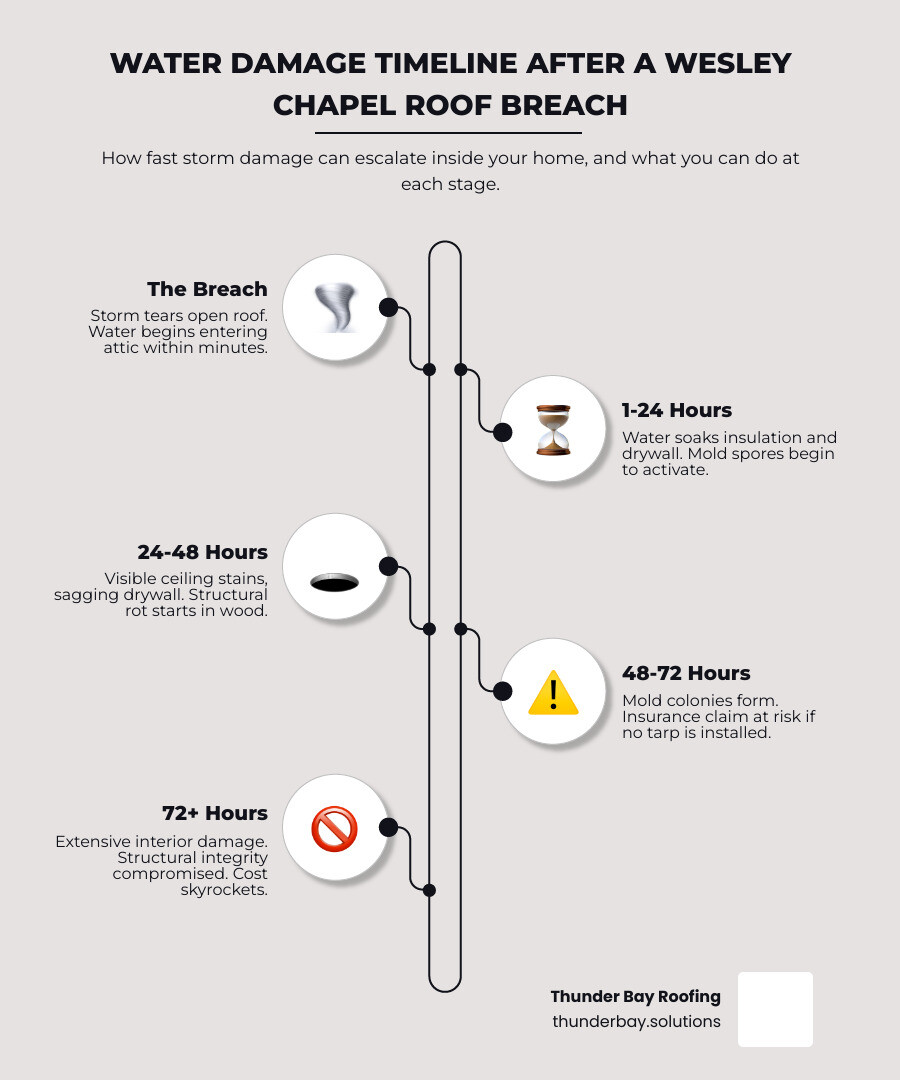
In Florida, a storm doesn’t just damage your roof — it starts a countdown. The moment wind or a falling tree punches through your shingles, water begins working its way into your attic, insulation, and walls. What starts as a small breach can turn into thousands of dollars in secondary damage within hours. The roof isn’t the only thing at risk. Your ceiling, your structure, and your insurance claim are all on the line.
I’m Tyler Wood, owner of Thunder Bay Roofing in Wesley Chapel, and through years of leading emergency tarping and storm response across West Central Florida, I’ve seen how fast a small roof breach turns into a major interior disaster. This guide covers everything Wesley Chapel property owners need to know to act fast, stay protected, and keep their insurance claims intact.
Learn more about Wesley Chapel emergency tarping:
Why Wesley Chapel Emergency Tarping Is Critical After a Storm
When a severe thunderstorm or hurricane rolls through Pasco County, the immediate aftermath can be chaotic. However, waiting to address storm damaged roofing is one of the costliest mistakes a property owner can make.
Without a secure physical barrier, a small hole can lead to thousands of dollars in secondary damage within hours. Emergency roof tarping acts as a temporary structural shield. It is designed to keep out the elements while you navigate the insurance claims process and schedule permanent repairs.
Fulfilling Your Insurance “Duty to Mitigate”
Most Florida homeowners are surprised to learn that their insurance policy is not an open-ended safety net. Almost every standard property insurance policy in Florida contains a “duty to mitigate” clause. This clause legally obligates the property owner to take immediate, reasonable steps to prevent further damage after a loss occurs.
If you fail to secure a temporary tarp after a storm breach, your insurance carrier can legally deny coverage for any secondary interior damage—such as ruined drywall, destroyed personal belongings, or mold growth.
By installing a professional tarp, you directly fulfill this policy requirement. According to the FEMA mitigation guidelines, taking swift, documented steps to secure your property is the single best way to protect both your physical home and your financial claim. For a deeper dive into how temporary protection impacts your claim, check out our blog everything you need to know about emergency tarp services.
The Risks of Delaying Wesley Chapel Emergency Tarping
In West Central Florida’s hot and humid climate, water damage doesn’t stay quiet for long. Hidden water damage can start a mold colony in as little as 24 hours in wet insulation, drywall, and wood.
Once mold spores establish a foothold in your attic space, remediation costs can easily skyrocket into tens of thousands of dollars. Beyond mold, structural rot begins quickly as water saturates your wooden roof decking, rafters, and ceiling joists.
A delayed response can turn a straightforward shingle replacement into a massive structural rebuild. To understand how to handle these stressful situations safely, read our blog emergency roof repair guide for leaky situations.
Warning Signs Your Roof Needs Immediate Tarping
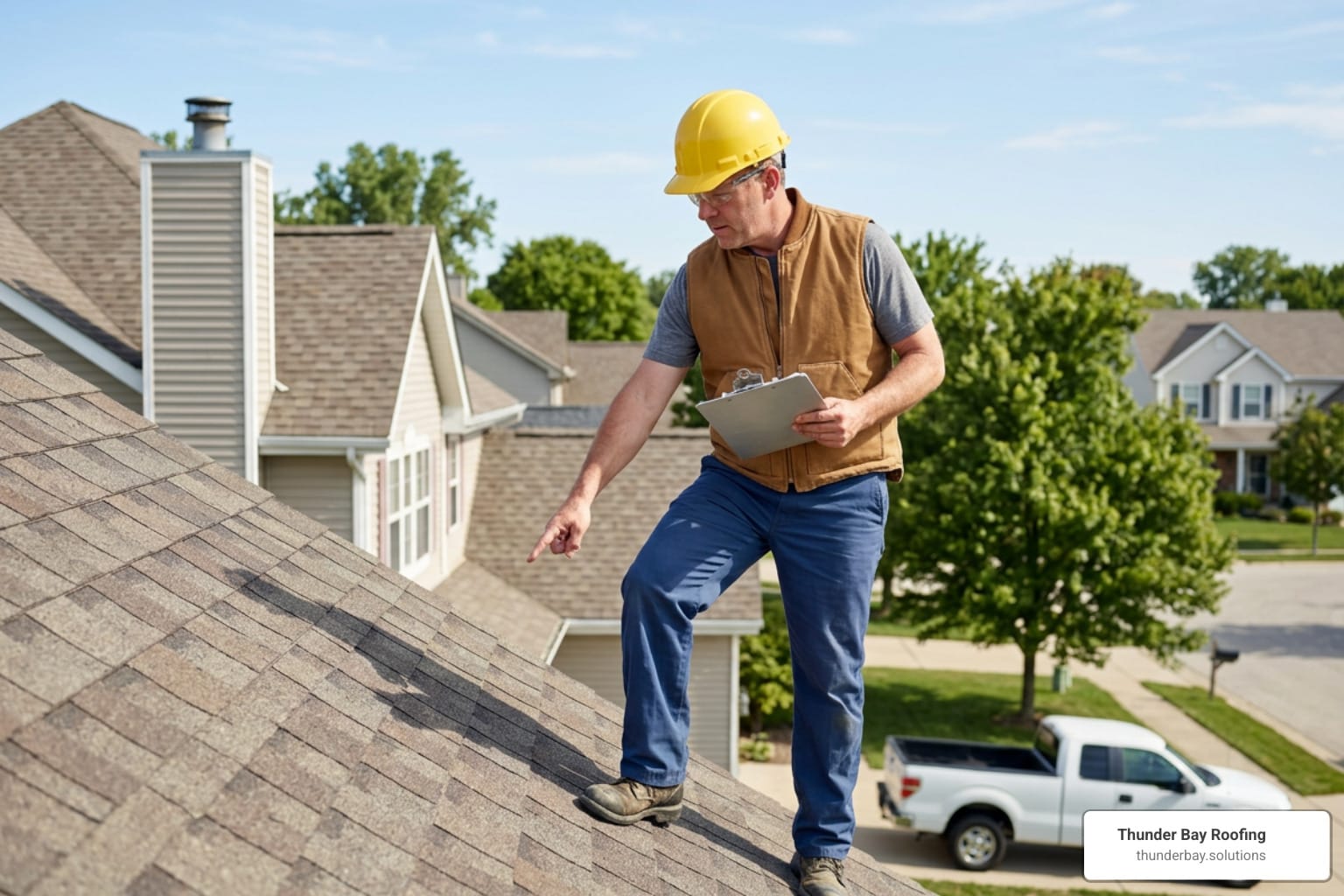
After a storm, you should always conduct a safe visual inspection from the ground. Never climb onto a wet, storm-damaged roof yourself. High winds and falling debris can compromise the structural integrity of your roof deck, creating severe fall hazards.
Professional roof inspections are the safest and most reliable way to identify hidden damage, but there are several clear warning signs you can look for from ground level. If you spot any of these indicators, you should seek professional emergency tarping immediately. For a complete walkthrough of post-storm visual checks, see our blog the ultimate storm damage repair checklist.
Identifying Active Leaks and Ceiling Damage
The most obvious sign of a compromised roof is water inside your living space. Look closely at your ceilings and walls in every room, including the garage.
- Yellow or brown stains: Water pooling on the upper side of your drywall will quickly seep through, leaving discolored rings.
- Sagging drywall: If your ceiling looks warped or bowed, it is holding water and is at risk of collapsing.
- Active dripping: If you hear or see water dripping, the roof’s water barrier is completely breached.
If you notice any of these signs, read our comprehensive blog the homeowners guide to ceiling damage from leaking roofs to learn how to minimize interior damage until help arrives.
Spotting Missing Shingles and Wind Damage
High winds can easily peel back asphalt shingles, exposing the highly vulnerable underlayment or the raw wood roof deck underneath.
- Missing shingles: Look for dark spots or “shadows” on your roof slope from the ground, which indicate missing shingles.
- Lawn debris: Finding shingle tabs, metal flashing, or roofing nails scattered across your yard is a surefire sign your roof has lost its seal.
- Wind uplift: Strong gusts can break the adhesive seal of shingles without ripping them off completely, allowing wind-driven rain to blow directly underneath.
If your property has suffered wind damage, securing a tarp over the exposed areas is critical to preventing water from pooling on the raw wood deck. You can learn more about how wind affects your home’s exterior in our guide to wind damage repair and our blog wind damage roofing 101.
Professional vs. DIY Roof Tarping Solutions
When a storm hits, it can be tempting to grab a blue utility tarp from a local hardware store and try to fix the problem yourself. However, DIY roof tarping is highly dangerous, frequently fails within days, and can even jeopardize your insurance claim.
Climbing a ladder onto a steep, wet roof with a large piece of plastic that acts like a sail in the wind is a recipe for disaster. Furthermore, if a DIY tarp is improperly secured, it can blow away during the next rain shower, leading to severe water damage that your insurance company may refuse to cover due to improper mitigation.
| Feature | DIY Tarping | Professional Tarping |
|---|---|---|
| Material Thickness | 5 mil standard utility poly | 10–12 mil UV-resistant polyethylene |
| Lifespan | 48 to 72 hours | 30 to 90 days |
| Wind Resistance | Easily tears or blows away | Rated for 40 to 50 mph gusts |
| Fastening Method | Bricks, sandbags, or staples | Wood furring strips & ring-shank nails |
| Insurance Validity | Often questioned or rejected | Fully documented, accepted mitigation |
| Safety Risk | High fall and injury hazard | Safe, fully insured crew execution |
Professional vs. DIY Wesley Chapel Emergency Tarping Solutions
The methods used to anchor a tarp make all the difference in whether it survives the next thunderstorm. Homeowners often attempt to secure tarps using bricks, sandbags, or heavy stones. In a high-wind event, these objects quickly turn into highly dangerous airborne projectiles that can smash windows or injure neighbors. Others use staple guns, which easily tear through thin plastic under the slightest wind load.
Professional installers use wood furring strips and ring-shank nails anchored directly into the roof rafters. The furring strips distribute the holding pressure evenly across the tarp’s perimeter, preventing wind from getting underneath and lifting the edges.
We also wrap the tarp over the peak of the roof (the ridge) whenever possible to prevent water from running behind the top edge. For a detailed look at safe roof sealing techniques, read our blog how to seal your roof during a storm without getting soaked.
Material Grade and Wind Resistance Differences
The quality of the material itself is another massive differentiator. Standard retail tarps are usually only 5 mil thick and lack UV protection, meaning they quickly degrade and tear under the harsh Florida sun.
In contrast, professional tarp installations utilize heavy-duty 10 to 12 mil UV-resistant polyethylene material. Because of this structural thickness and professional anchoring, these installations are rated to withstand 40 to 50 mph wind gusts.
This level of wind resistance is crucial in Wesley Chapel, where afternoon summer storms can bring sudden, violent wind gusts. Major manufacturers like GAF emphasize that proper temporary protection is vital to preserving the remaining roof structure until permanent repairs can be made.
The Step-by-Step Emergency Roof Tarping Process
At Thunder Bay Roofing, we treat every emergency call with the utmost urgency. Our team follows a strict, standardized mitigation process to ensure your home is secured safely, thoroughly, and in a way that aligns perfectly with insurance requirements.
If you are dealing with a compromised roof, read our blog when the levee breaks finding fast emergency roof repair in florida for immediate action steps.
Step 1: Safety Evaluation and Debris Removal
Before anyone steps onto your roof, our crew conducts a comprehensive hazard assessment. We inspect the perimeter for downed power lines, structural instability, and overhead hazards.
Once it is deemed safe to proceed, we carefully remove tree limbs, loose shingles, and other storm debris from the damaged area. Clearing the surface ensures the tarp can lay completely flat against the roof deck, preventing pockets where water could pool or wind could catch. If your roof has suffered severe structural impact, we integrate this step with our specialized hurricane damage roof repair protocols.
Step 2: Needs Analysis and Measurement
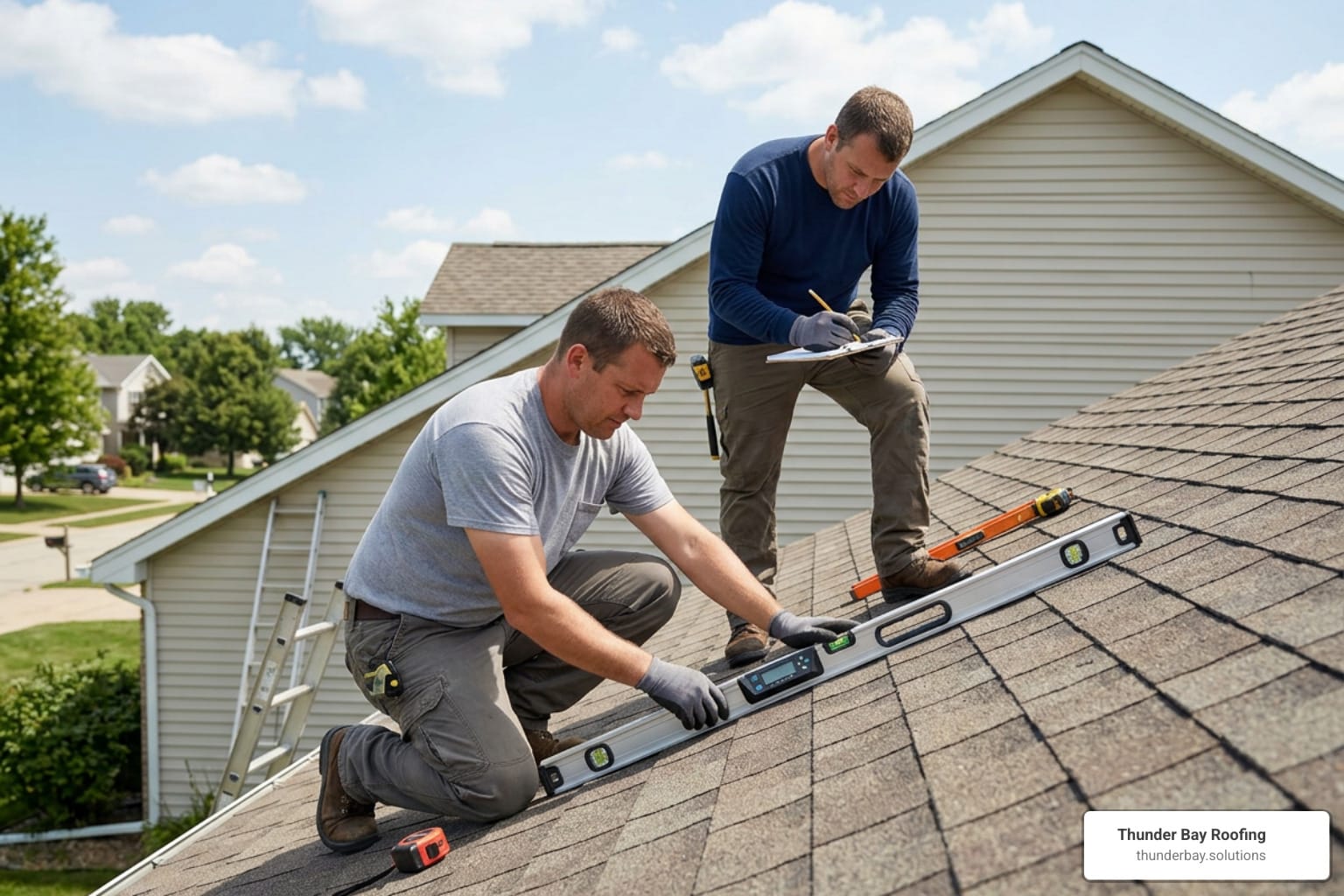
Next, we map the exact boundaries of the damage. A tarp cannot simply cover the hole; it must extend at least four feet past the damaged area on all sides to prevent wind-driven rain from creeping under the edges.
We measure the area carefully to select the correct tarp size. If the damage is located near the peak of the roof, we run the tarp completely over the ridge line. This is a critical step because if a tarp stops short of the ridge, water running down the slope will slide right underneath the plastic. For more details on locating and measuring roof leaks, check out our blog the ultimate guide to roof leak repair.
Step 3: Professional Fastening and Perimeter Sealing
With the tarp positioned correctly, we lay wood furring strips along the perimeter. We roll the edges of the heavy-duty tarp around these wooden strips to create a tight, reinforced hem.
Using professional-grade ring-shank nails, we secure the furring strips directly into the roof rafters. This creates a highly secure anchor that will not pull free under wind load.
While this process does create small nail holes in your shingles, these shingles are already within the damaged zone and will be replaced during permanent repairs. The trade-off is absolutely necessary to prevent catastrophic interior water damage. For additional shingle maintenance tips, check out our blog stop the drip with these simple shingle repair tips.
Specialized Emergency Protection for Commercial Roofs
Commercial buildings in Wesley Chapel often feature flat or low-slope roof designs utilizing advanced membrane systems. Standard tarping techniques used on residential shingle roofs do not work on these commercial structures.
Nailing wood furring strips into a flat commercial roof deck can puncture underlying insulation, vapor barriers, and structural decking, creating even larger leaks. To learn more about selecting the right commercial partner, see our blog how to pick a commercial roof repair company without losing your shingle.
TPO Membrane Emergency Solutions
Thermoplastic Polyolefin (TPO) is a highly popular single-ply roofing membrane known for its heat-reflective properties. When a storm punctures a TPO roof, standard blue tarps will not bond to the slick surface.
Instead, we utilize specialized heat-welded TPO patches for emergency mitigation. Using a hand-held hot-air welder, we fuse a temporary TPO patch directly to the existing membrane. This creates an immediate, 100% watertight seal without using mechanical fasteners that would damage the deck.
To learn more about the long-term benefits of these commercial systems, read our blog tpo single ply roofing membrane costs and benefits explained.
EPDM Rubber Roof Mitigation
Ethylene Propylene Diene Monomer (EPDM) is a synthetic rubber roofing membrane used on many commercial properties in West Central Florida. EPDM naturally moves, expands, and contracts with temperature fluctuations.
For emergency repairs on EPDM roofs, we use specialized pressure-sensitive flashing tapes and rubber primers. We clean the damaged area, apply a professional primer to ensure maximum adhesion, and apply the heavy-duty rubberized tape.
We always leave a small amount of “play” or slack in the temporary patch material to accommodate the natural expansion and contraction of the roof without tearing. You can explore the differences between these flat roof systems in our blog the ultimate breakdown of flat roof membrane types and systems.
Frequently Asked Questions About Emergency Roof Tarping
Navigating storm damage can feel overwhelming. Here are direct answers to the most common questions we receive from Wesley Chapel property owners. You can also explore our main faq page for additional resources.
Does insurance pay for emergency tarping in West Central Florida?
Yes. Because emergency tarping is classified as a necessary temporary repair to mitigate further damage, almost all major insurance companies in West Central Florida cover the cost of professional installation.
The invoice is typically submitted as part of your overall storm damage claim, and the cost is reimbursed. In many cases, this work is covered directly without you having to pay your deductible upfront for the emergency service. For a professional guide on managing storm claims, read our blog how to handle hurricane roof repair like a pro.
How long can a professionally installed roof tarp stay on a house?
A professional tarp is designed to be a temporary shield, not a permanent roof. While our heavy-duty, 10 to 12 mil UV-resistant tarps can last up to 90 days under Florida conditions, we highly recommend moving toward permanent repairs as soon as your insurance adjuster approves the claim.
Over time, intense Florida heat and UV rays will eventually degrade even the strongest polyethylene materials. To learn more about transition planning from tarping to permanent repairs, see our blog how to keep your roof over your head without it falling down.
Can you tarp a roof while it is still raining?
Safety is always our absolute top priority. We cannot deploy crews onto a roof during active lightning, torrential downpours, or high, hurricane-force winds.
However, our crews are trained to deploy in light rain or immediately after a severe storm band passes. We work quickly to secure the structure before the next heavy weather system arrives. For practical tips on temporary storm preparation, see our blog how to seal your roof during a storm without getting soaked.
Conclusion
When a storm breaches your roof in Wesley Chapel, Land O’ Lakes, or Lutz, you cannot afford to wait. Securing your home or commercial building with a professional, heavy-duty tarp is the single most important step you can take to prevent mold growth, protect your structural framing, and keep your insurance claim valid.
At Thunder Bay Roofing, we have years of local Florida weather expertise. We provide rapid, 24/7 storm damage response to protect your property when you need it most. Once your home is secure, we will work with you through the entire process, from the initial inspection to a complete roof replacement if necessary.
Don’t let the rain ruin your home. Contact Thunder Bay Roofing right now for immediate, professional emergency tarping and storm protection services. We are available 24 hours a day, 7 days a week, to keep you dry and protected.