
TPO Single Ply Roofing Membrane Costs and Benefits Explained
What is a TPO Single Ply Roofing Membrane?
TPO single ply roofing membrane is a high-performance, heat-weldable sheet composed of thermoplastic polyolefin — a specialized blend of ethylene-propylene rubber and polypropylene — reinforced with a polyester scrim. As of May 2026, it remains the fastest-growing segment in the commercial roofing industry. Thunder Bay Home Solutions provides expert roofing services in West Central Florida, specializing in these durable, energy-efficient systems for both commercial and residential properties.
Key Specifications:
| Feature | Details |
|---|---|
| Material | Thermoplastic polyolefin (rubber + plastic blend) |
| Reinforcement | Polyester scrim encapsulated between layers |
| Best for | Low-slope and flat roofs, commercial and residential |
| Installation | Mechanically attached, fully adhered, induction welded |
| Key benefits | High reflectivity, energy savings, heat-weldable seams |
| Typical lifespan | 20-30 years depending on thickness |
| Common thicknesses | 45 mil, 60 mil, 80 mil |
TPO was introduced in the 1990s to provide the flexibility of EPDM with the superior seam strength of PVC. For Florida property owners, TPO’s reflective white surface is a critical asset, significantly reducing cooling loads under intense UV exposure. Leading manufacturers like GAF have refined these membranes to withstand extreme weather conditions, making them a smart choice for markets like Wesley Chapel.
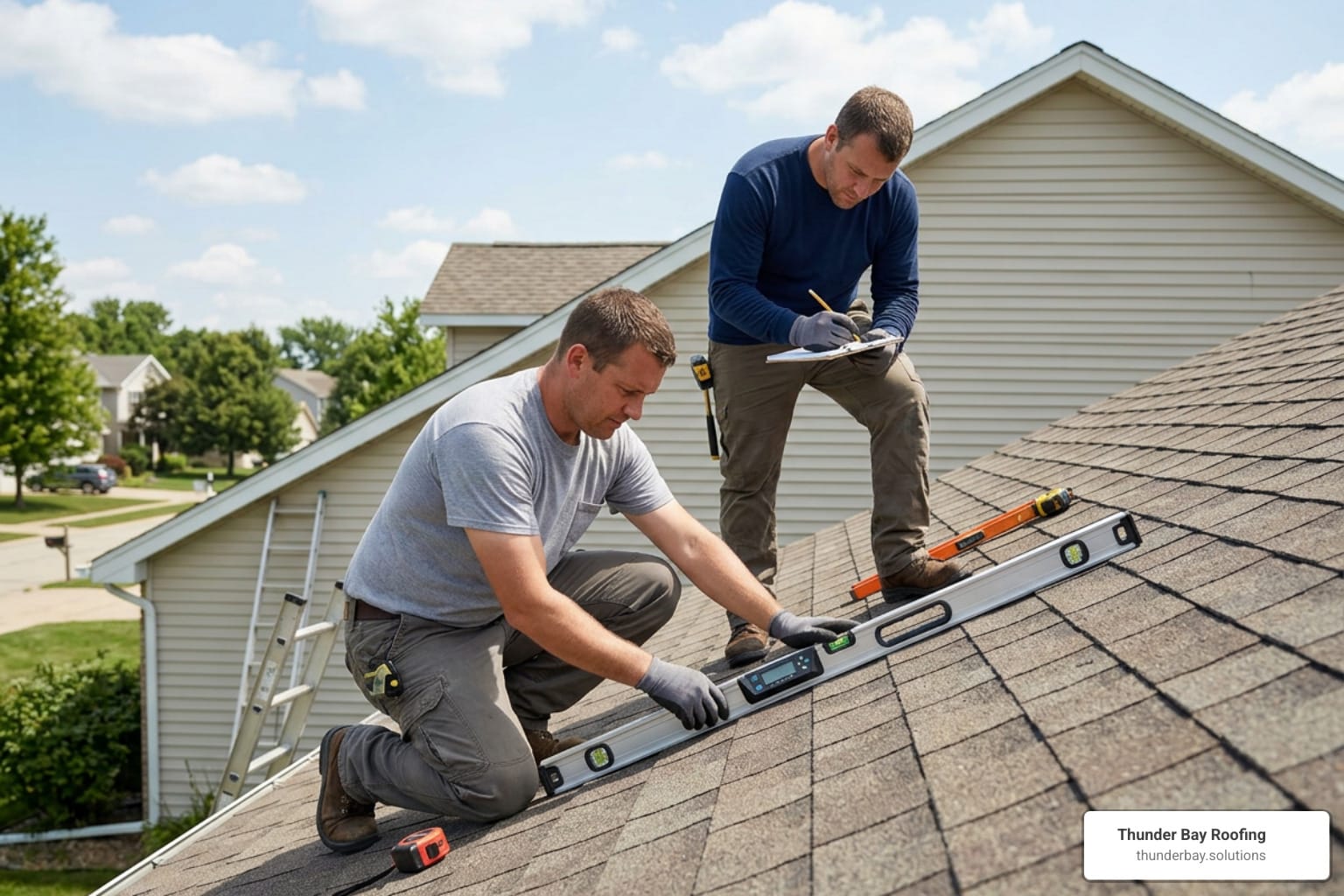
I’m Tyler Wood, owner of Thunder Bay Home Solutions in Wesley Chapel, Florida. I have extensive experience specifying and installing tpo single ply roofing membrane systems across the Tampa Bay area, ensuring every project meets the rigorous demands of our local climate.
Unlike traditional built-up roofs that use multiple layers of felt and hot asphalt, TPO is a single-layered system designed for total waterproofing. It utilizes advanced polymerization technology to combine chemical stability with high-performance welding. At Thunder Bay Home Solutions, we recommend this for commercial roofing because it accommodates natural building movement without cracking. For technical details, refer to this Comprehensive Guide to TPO.
Material Composition and Manufacturing
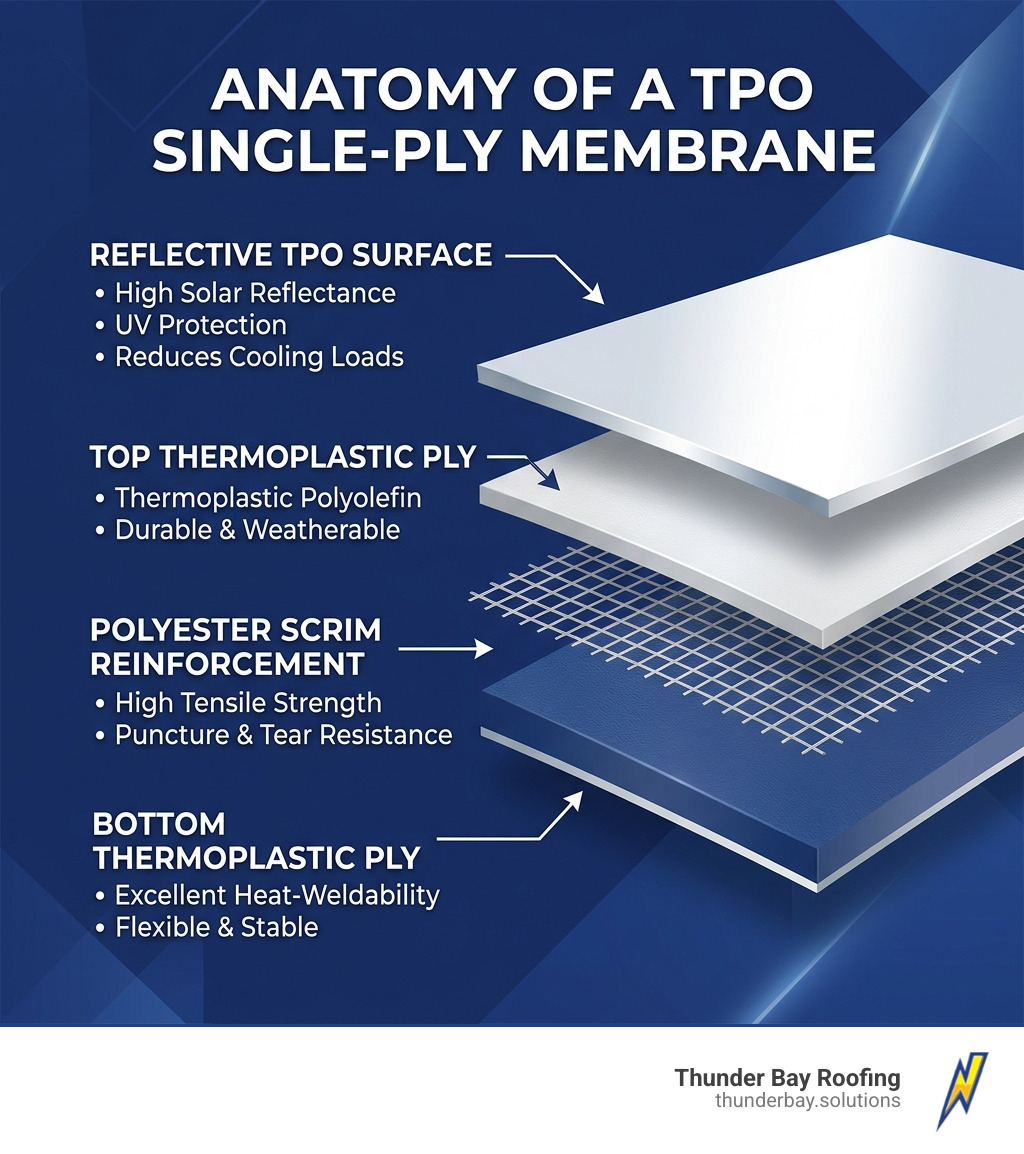
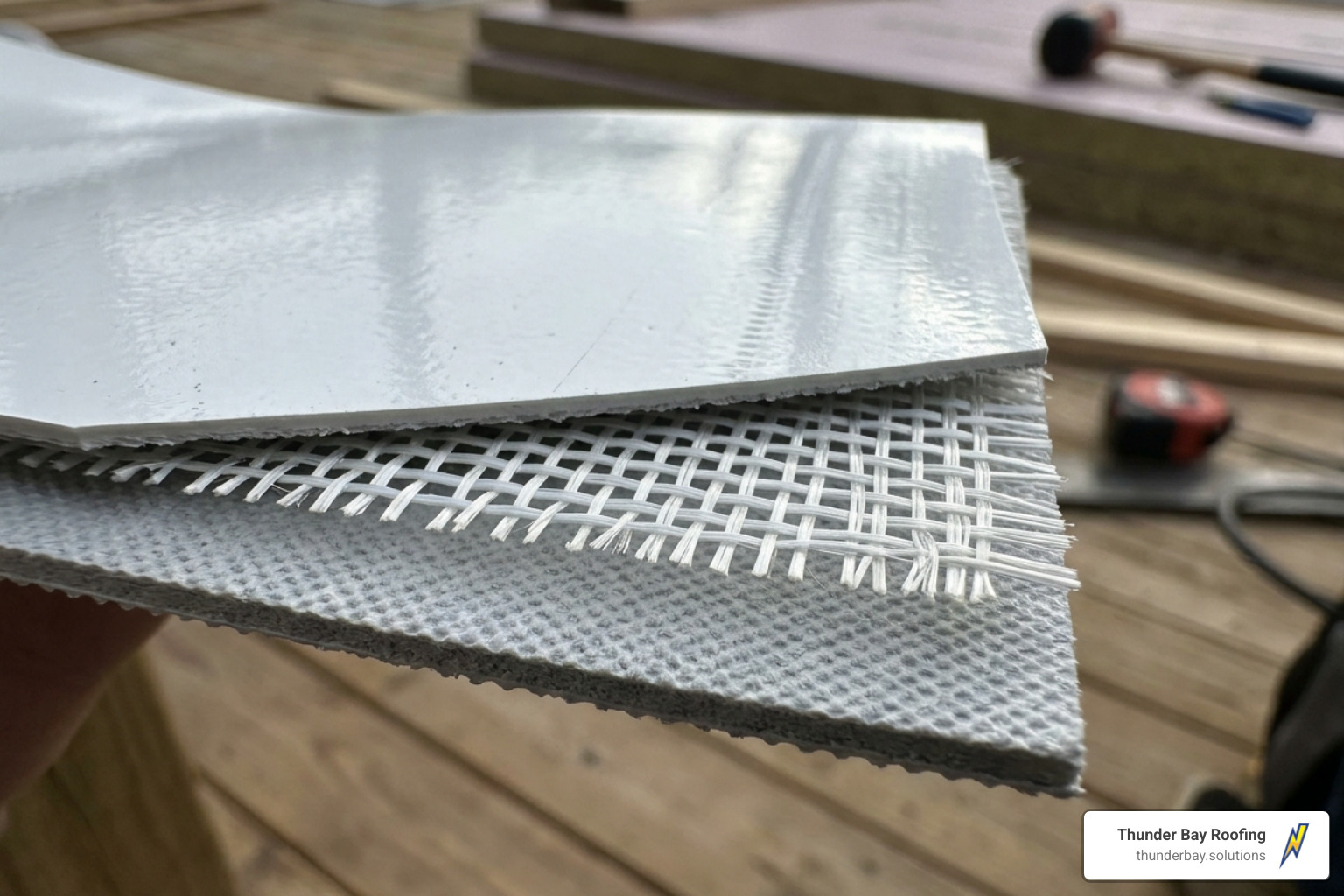
Modern TPO membranes are produced via hot-melt extrusion, ensuring the internal polyester scrim is fully encapsulated between the top and bottom plies.
- Polypropylene: Provides structural strength and heat-welding capability.
- Ethylene-propylene rubber: Enhances flexibility and weather resistance.
- Polyester Scrim: High-strength fabric reinforcement that provides tearing strength.
- Weathering Package: Includes proprietary UV stabilizers and flame retardants to ensure stability under the Florida sun.
Why TPO is the Industry Standard in 2026
TPO dominates the market because of its heat-welded seams. Unlike adhesive-based systems, TPO seams are fused with hot air, creating a physical bond stronger than the membrane itself. This makes it exceptionally resistant to punctures and chemical exposure, providing a monolithic waterproofing layer.
Key Benefits and Energy Efficiency of TPO Systems
One of the most compelling reasons we install so many TPO roofs in West Central Florida is the immediate impact on energy bills. TPO is a “cool roof” technology. By reflecting sunlight rather than absorbing it, the membrane keeps the building’s interior cooler and reduces the strain on HVAC systems. For more on how these systems perform on various structures, see our page on flat roof systems.
Cost-Effectiveness and Labor Savings
TPO is often the most cost-effective single-ply solution because it is relatively fast to install. Modern innovations like self-adhered technology (peel-and-stick) allow crews to install the membrane up to three times faster than traditional glue-down methods. This labor savings is passed directly to the building owner.
According to industry data from IKO Commercial, the combination of lower installation costs and reduced cooling loads provides an exceptional lifecycle value that few other materials can match.
Durability in Extreme Climates
In Florida, “extreme” means heat, humidity, and torrential rain. TPO is naturally resistant to fungal growth and mold, which is a major plus in our humid environment. It also handles thermal expansion—the way a building grows and shrinks as it heats up and cools down—without losing its structural integrity. This makes it the premier choice for low slope roofing where water might linger longer than on a pitched roof.
Types and Installation of TPO Single Ply Roofing Membrane
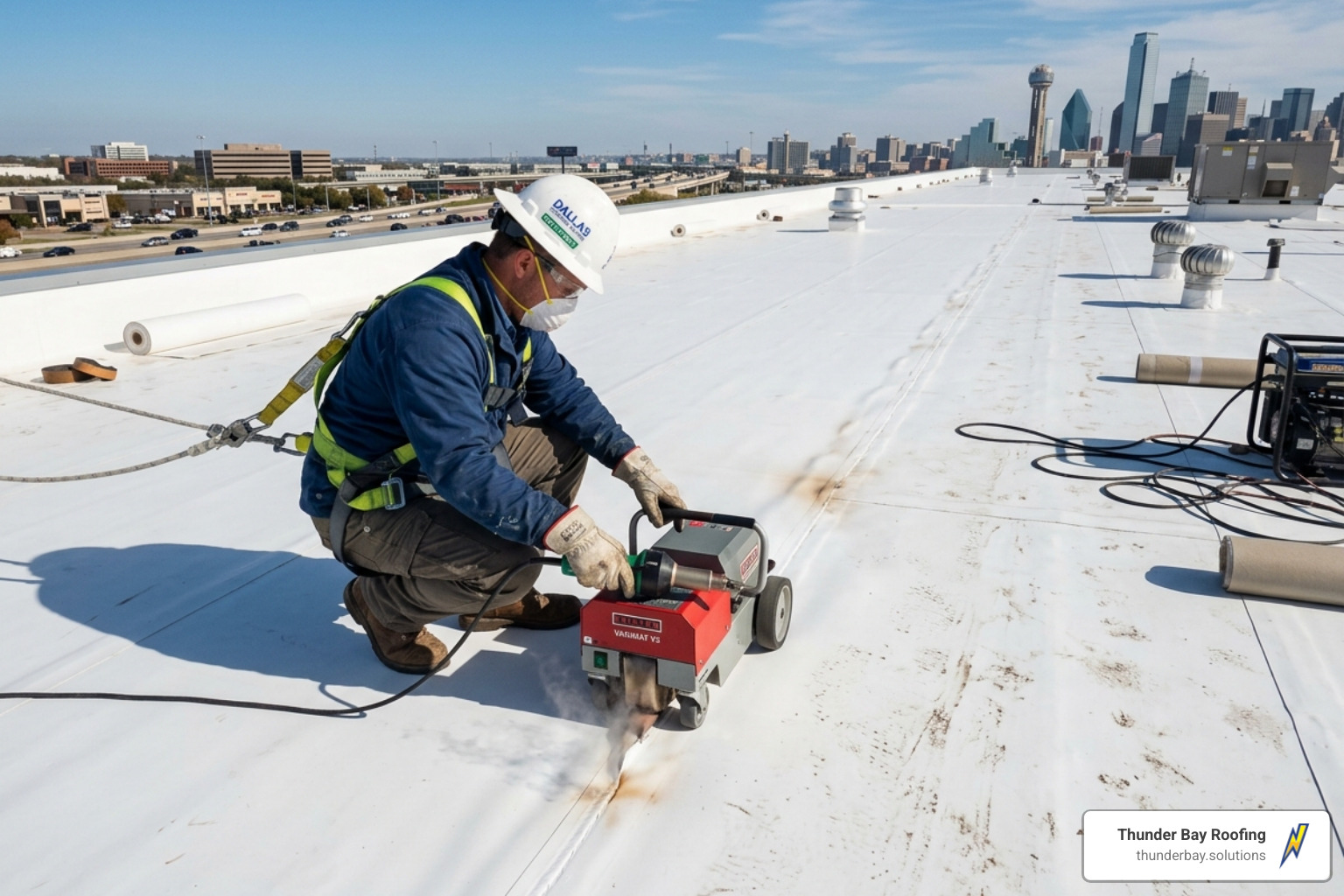
How a tpo single ply roofing membrane is attached to your building is just as important as the material itself. We customize the installation method based on the building’s height, wind exposure, and the type of deck (metal, concrete, or wood). Whether you need a simple roof installation or a complex multi-layer system, the method matters.
Standard vs. Fleece-Backed TPO Single Ply Roofing Membrane
Standard TPO is smooth on both sides. However, many of our clients opt for fleece-backed TPO.
- Standard TPO: Best for new construction where the substrate is perfectly clean.
- Fleece-Backed: Features a thick polyester fleece on the underside. This acts as a cushion and a separation layer, making it ideal for “re-roofing” or “recover” projects where we are installing over an existing roof.
- AC Fleece: Specifically designed for multi-ply systems to provide redundant protection and extra puncture resistance.
For residential applications, brands like Henry TPO provide excellent options for shed roofs or flat home extensions.
Specialized TPO Single Ply Roofing Membrane Options
Beyond the standard rolls, we utilize several specialized components to ensure a watertight finish:
- Self-Adhered (SA): A peel-and-stick version that eliminates the smell of heavy solvents—perfect for schools or hospitals.
- Vapor Barriers: Essential for preventing moisture from the building interior from reaching the insulation.
- Cover Boards: High-density boards (like HD ISO) placed under the TPO to protect against hail and foot traffic.
If your current roof is failing, these specialized options can often be integrated into a roof replacement plan that exceeds original building codes.
TPO vs. EPDM and PVC: Choosing the Right Solution
Choosing between the “Big Three” of single-ply can be confusing. Here is how they stack up in the current 2026 market:
| Feature | TPO | EPDM | PVC |
|---|---|---|---|
| Seam Method | Heat-Welded (Strongest) | Tape/Adhesive | Heat-Welded |
| Reflectivity | Excellent | Poor (unless coated) | Excellent |
| Chemical Resistance | Good | Poor | Excellent (Best for grease) |
| Cost | Mid-Range | Lowest Material Cost | Highest |
| Environmental | Recyclable, No Plasticizers | Hard to Recycle | Contains Chlorine |
We have extensive experience with EPDM roofing, and while it is a great material, TPO’s heat-welded seams generally offer better long-term security against leaks in the Florida rainy season.
Advantages Over EPDM
The biggest advantage of TPO over EPDM is the seam. EPDM seams are a “glue” joint. Over 20 years, that glue can dry out. TPO seams are physically fused. Additionally, TPO is naturally white, whereas EPDM is naturally black. In Wesley Chapel, a black roof can reach 170°F, while a white TPO roof stays closer to 110°F.
Advantages Over PVC
PVC is a fantastic material, but it relies on “plasticizers” to stay flexible. Over many years, these chemicals can “migrate” out, leaving the roof brittle. TPO is inherently flexible without these additives. TPO also generally comes in at a lower price point while offering similar energy-saving benefits.
Florida Performance: Hurricanes, UV, and Maintenance
In West Central Florida, our roofs have to be tougher than anywhere else. We operate in a High-Velocity Hurricane Zone (HVHZ), which means every tpo single ply roofing membrane we install must meet strict wind uplift ratings. If you’ve suffered from storm damage, you know that the “uplift” is what tears a roof off. TPO’s reinforced scrim and welded seams are specifically designed to resist these forces.
Maintenance and Warranty Requirements
To keep your warranty valid—especially a 20-year “No Dollar Limit” (NDL) warranty—you must perform regular maintenance.
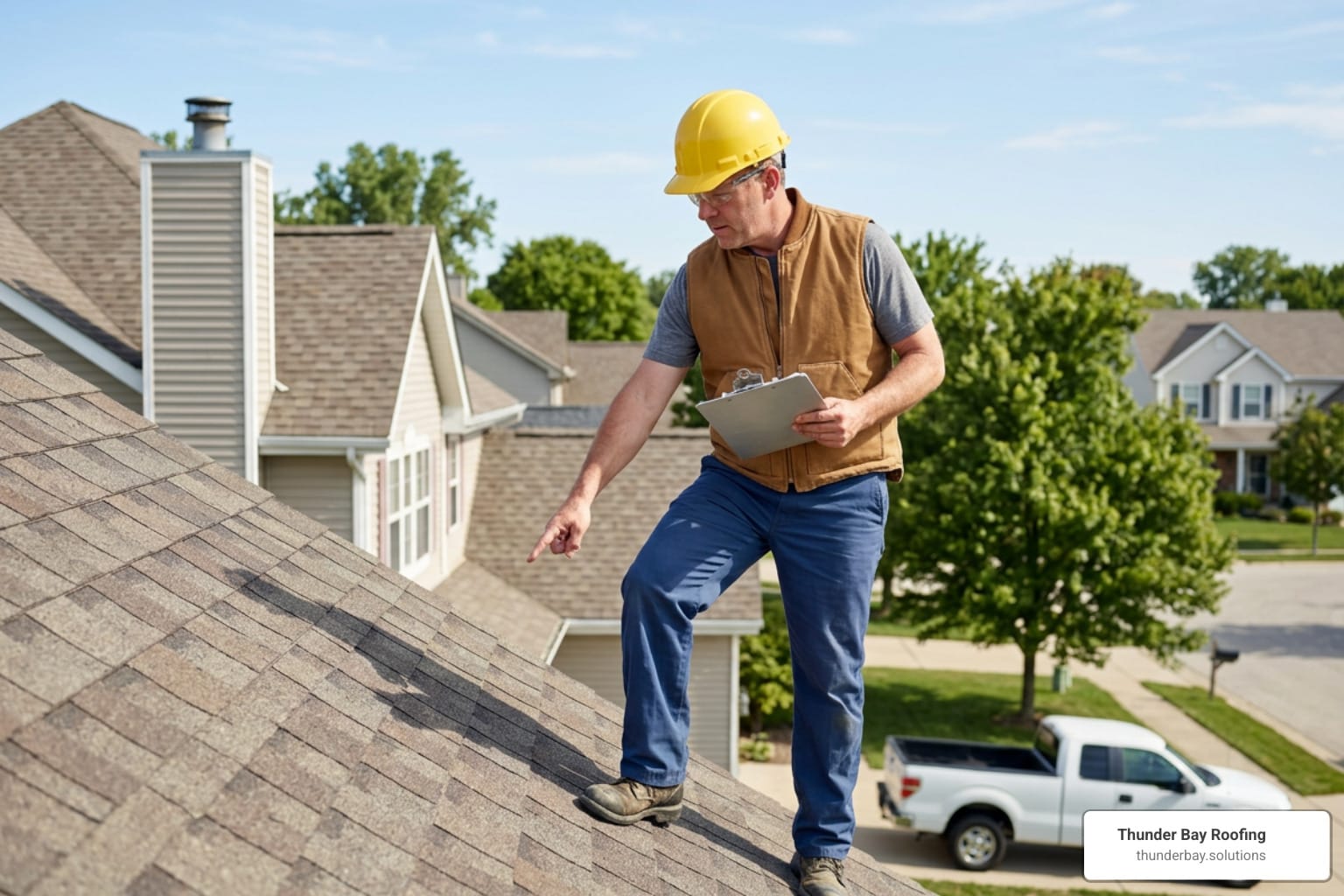
- Annual Inspections: We look for debris that could clog drains or sharp objects that could cause punctures. Check our roof repair services for more on how we handle minor fixes.
- Cleaning: Keeping the surface white is key to maintaining reflectivity. Dirt buildup can reduce your energy savings.
- Flashings: We check the base tie-ins and terminations at walls to ensure no building movement has stressed the details.
Local Expertise in Wesley Chapel
Thunder Bay Home Solutions isn’t just a contractor; we are your neighbors. We understand the specific building codes in Lutz, Land O’ Lakes, and Wesley Chapel. Being licensed and insured in Florida means we know how to navigate the permitting process and ensure your low-slope solution is fully compliant with local law. For more localized information, see TPO Roofing in Wesley Chapel.
Frequently Asked Questions about TPO Roofing
How long does a TPO single ply roofing membrane last?
A properly installed TPO membrane typically lasts between 20 and 30 years. The lifespan depends heavily on the thickness of the membrane (80 mil lasts longer than 45 mil) and whether the roof receives regular professional inspections to catch minor issues before they become leaks.
Is TPO roofing better than PVC?
“Better” depends on the use case. TPO is generally more cost-effective and environmentally friendly because it lacks chlorine and plasticizers. However, for a restaurant roof where grease and oils are pumped out of exhaust fans, PVC or a specialized Tri-Polymer Alloy (TPA) might be a better choice due to superior chemical resistance.
Can TPO be installed over an existing roof?
Yes. This is called a “recover.” We can often install a new TPO membrane over an existing modified bitumen or built-up roof. We typically use a fleece-backed membrane or a thin “fan-fold” insulation layer between the old and new roof to ensure a smooth, puncture-resistant finish. This saves you the cost of a full tear-off and reduces landfill waste.
Conclusion
Choosing a tpo single ply roofing membrane is one of the smartest investments a property owner in Florida can make in 2026. Between the massive energy savings, the strength of heat-welded seams, and the ability to withstand our intense storm seasons, it is a system built for the long haul.
At Thunder Bay Home Solutions, we bring years of Florida-specific expertise to every project. We don’t believe in one-size-fits-all; we provide customized solutions for every roof we touch.
Ready to protect your building with a high-performance TPO system?
Contact us for a TPO roofing consultation to schedule a free, no-obligation inspection. We are licensed, insured, and ready to serve Wesley Chapel, Lutz, and all of West Central Florida.