
How to Keep Your Roof Over Your Head Without It Falling Down
The Critical Importance of Residential Roof Maintenance
When we talk about residential roof maintenance, we aren’t just talking about aesthetic curb appeal; we are talking about asset protection. Think of your roof like your car’s engine – you wouldn’t drive 50,000 miles without an oil change and expect the vehicle to survive. Similarly, your roof requires consistent attention to perform its primary function: keeping the Florida elements out of your living room. For homeowners seeking the best roofing solutions in Florida, proactive care is the only way to ensure long-term structural integrity.
The numbers tell a compelling story. Routine upkeep can reduce overall repair costs by 30-50% over the life of the system. Even more impressive, consistent care can add 5 to 10 years to your roof’s functional lifespan. For an asphalt shingle roof that typically lasts 20 years, a dedicated maintenance routine could push that longevity closer to 25 or 30 years.
Beyond the structure itself, proactive care is often a requirement for Residential Roofing insurance eligibility. Many modern policies exclude coverage for damage resulting from a “failure to maintain,” meaning a preventable leak could lead to a denied claim when you need it most. Furthermore, a well-maintained roof contributes to home energy efficiency by ensuring that your attic stays dry and your insulation remains uncompressed.
| Maintenance Type | Average Cost | Potential Savings/Benefit |
|---|---|---|
| Preventive Maintenance | $300 – $1,500/year | Extends life by 5-10 years; prevents $15k+ replacement |
| Reactive Repair | $800 – $3,000+ per event | Only fixes the immediate symptom; doesn’t stop aging |
| Full Replacement | $15,000 – $30,000+ | Necessary eventually, but premature without maintenance |
Financial Benefits and Asset Protection
The most immediate benefit of residential roof maintenance is the avoidance of the “emergency replacement” bill. In May 2026, the average cost for a full Roof Replacement can easily exceed $15,000. By spending a fraction of that on annual inspections and minor shingle or flashing fixes, you keep that money in your bank account longer.
This is especially critical if you plan to sell your home. As noted in our research, 31% of home inspection failures are attributed to roof issues. A documented history of maintenance not only passes the inspection but can also be used as a negotiation lever to maintain your asking price.
Impact on Home Insurance and Warranties
Your roof’s warranty is a legal contract, and almost every manufacturer (including giants like GAF and Owens Corning) requires proof of maintenance to honor a claim. If a leak occurs because debris was allowed to rot on the surface for three years, the manufacturer may void your warranty.
We recommend keeping a dedicated “Roof Log.” Save receipts from professional cleanings, take photos during your DIY inspections, and keep copies of all Annual Roof Maintenance Checklist reports. This documentation is your best friend when dealing with insurance adjusters after a storm.
Seasonal Residential Roof Maintenance: A Year-Round Strategy

In Florida, we don’t have traditional “seasons” in the snowy sense, but we definitely have weather cycles. We recommend a biannual schedule: once in the Spring to prepare for hurricane season, and once in the Fall to clear out the debris left behind by summer storms.
Spring and Summer: Combating UV Rays and Humidity
As we head into May 2026, the Florida sun is already at full strength. High UV levels cause shingles to become brittle and “cook” from the outside in. During these months, we focus on attic ventilation and biological growth.
If you see dark streaks on your roof, it’s likely Gloeocapsa magma, a type of blue-green algae that thrives in our humidity. While it looks like dirt, it’s actually eating the limestone filler in your shingles. Removing this (gently!) is a core part of residential roof maintenance. You should also check your attic ventilation; the International Residential Code (IRC) suggests a minimum net free ventilation area ratio of 1:150 of attic floor space to prevent heat buildup.
If you suspect the summer rains have already found a way in, don’t wait. Early Roof Leak Detection can save your drywall and your health from mold. For more tips, check out this Roof Maintenance Checklist: 11 Chores.
How to Perform a Safe Residential Roof Maintenance Inspection
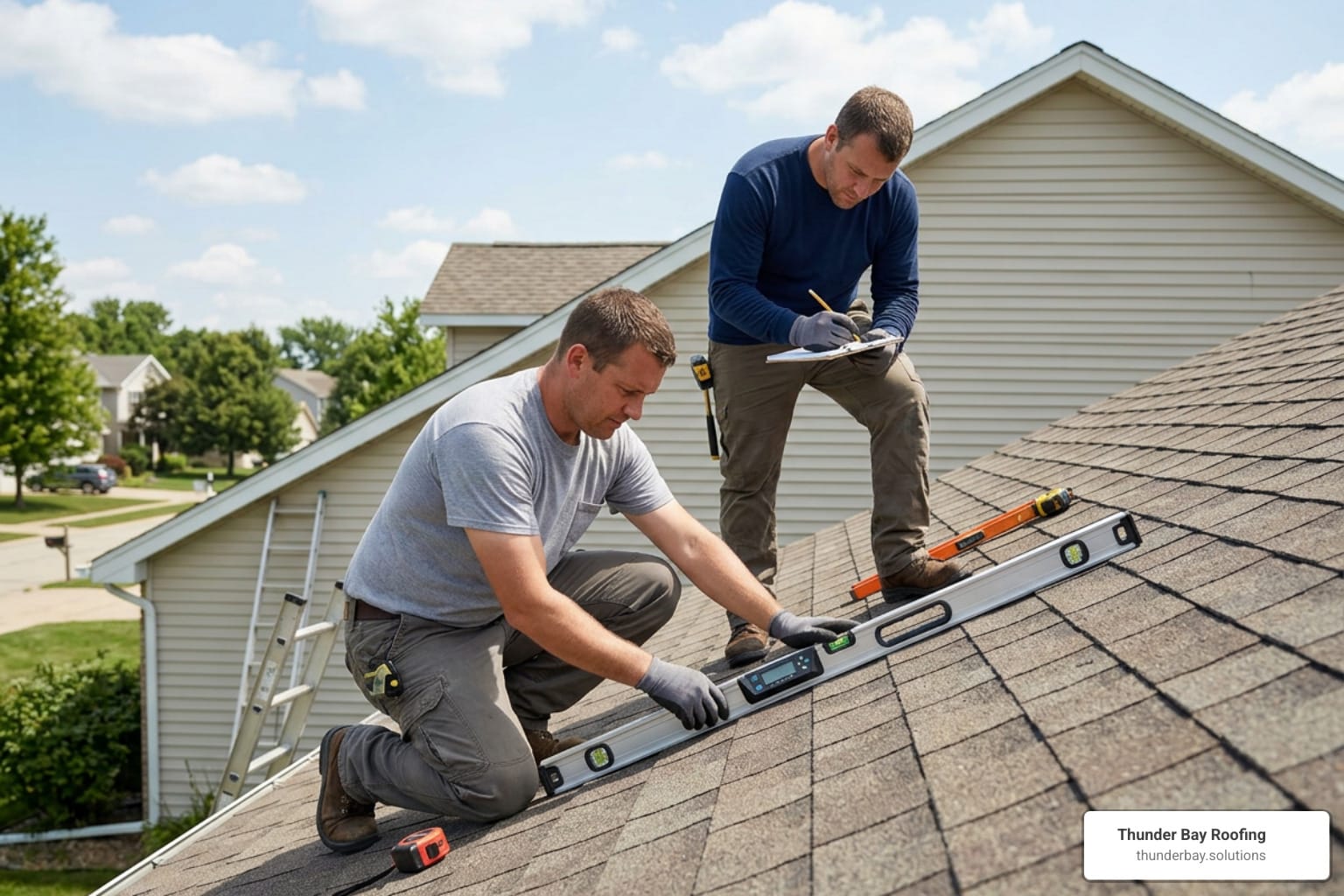
Safety is our number one priority. Falls are a leading cause of residential construction injuries, and we don’t want you becoming a statistic. You can perform a highly effective Roof Inspection without ever leaving the ground.
- Use Binoculars: Walk around your property and look for “shingle shadows” (curled edges), missing granules, or cracked tiles.
- Check the Perimeter: Look for sagging gutters or water stains on your fascia boards.
- The Attic Check: Go inside with a flashlight during a heavy rain. Look for damp rafters, wet insulation, or “daylight” peeking through the roof deck.
If you are in Lutz, FL or surrounding areas, and you see something that looks “off,” it’s time to call in the pros. We follow OSHA’s 6-foot fall protection rules and have the specialized equipment to get a closer look safely.
Critical Components: Gutters, Flashing, and Ventilation
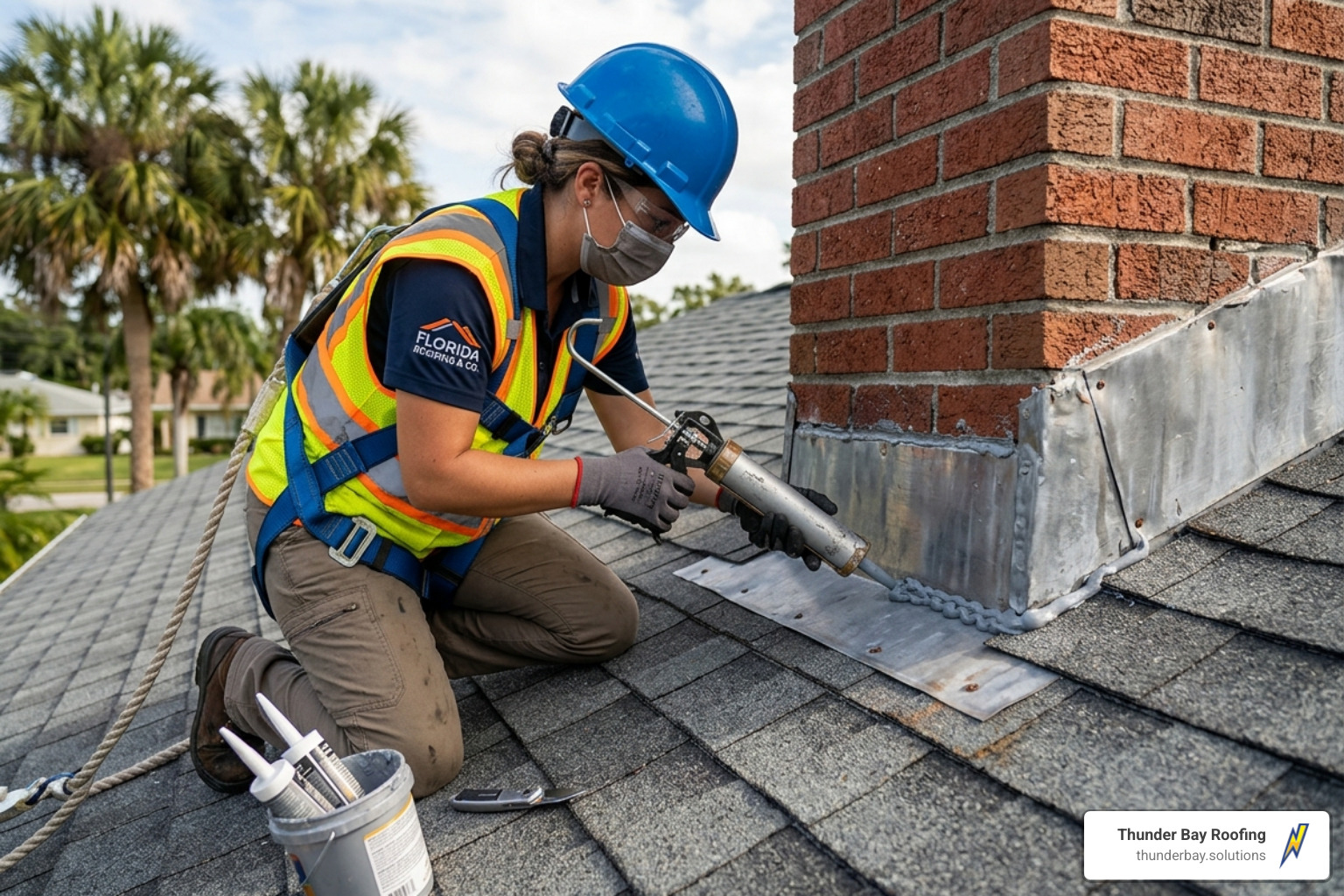
A roof is a system, not just a layer of shingles. The “weak points” are usually where the roof meets something else—like a chimney, a vent pipe, or a wall.
Gutters: These are your roof’s drainage system. For them to work, they need a minimum pitch of 1/4 inch per 10 feet of run. If they are clogged, water backs up under the eaves, leading to rot. Flashing: This is the metal (usually galvanized steel or aluminum) that seals the gaps around chimneys and skylights. Sealants around these penetrations typically only last 5 to 10 years before UV exposure causes them to crack. Part of our Roof Repair service involves re-sealing these areas with high-grade polyurethane sealant to prevent “mystery leaks.”
For a comprehensive look at how these parts work together, see this Residential Roof Maintenance Guide.
Maintaining Flashing and Roof Penetrations
In West Central Florida, our “liquid sunshine” can dump inches of rain in minutes. If your chimney masonry is cracked or your vent pipe gaskets (the rubber boots) are dry-rotted, that water is going straight into your attic. During Hurricane Damage Roof Repair, we often find that the flashing was the first thing to fail. Inspect these areas annually for rust, dents, or gaps.
The Role of Attic Health in Residential Roof Maintenance
Your attic’s temperature and moisture levels directly impact the shingles above them. We look for attic insulation with a value of at least R-38. Proper insulation prevents heat from “baking” your roof deck from underneath. We also ensure that your soffit vents (intake) and ridge vents (exhaust) are balanced. If your bathroom fan or dryer vents into the attic instead of outside, you are pumping gallons of moisture into your roof structure—a recipe for rot. This is a common issue we see when inspecting Asphalt Shingle Roofing.
Material-Specific Maintenance Requirements
Different materials have different “enemies.” What works for a shingle roof might actually damage a metal one.
Asphalt Shingle Upkeep
Asphalt is the most common material we see in Land O’ Lakes and Wesley Chapel. The “granules”—those little pebbles on the surface—are there to protect the asphalt from UV rays. If you see a lot of these in your gutters, your shingles are reaching the end of their life. Look for curling, “cupping,” or missing pieces. If you only have a few damaged spots, a Missing Shingle Replacement can buy you several more years. For more DIY-friendly advice, check out Stop the Drip with These Simple Shingle Repair Tips.
Metal and Tile Roof Care
Metal Roofs: While incredibly durable, they require checks for “bimetallic corrosion” (when two different types of metal touch and cause a chemical reaction). We also check fastener tension to ensure the Florida winds haven’t loosened the panels. Tile Roofs: These are beautiful but fragile. Never walk on them yourself, as you will likely crack the tiles. Maintenance involves checking the “clay plugs” at the roofline (to keep out pests) and ensuring the heavy tiles haven’t shifted out of alignment. Whether it’s Metal Roofing or tile, the underlying waterproof membrane is what’s really doing the work, so any surface crack needs immediate attention.
Professional Intervention and Storm Response
Sometimes, residential roof maintenance requires a professional touch—especially after a Florida storm. If a hurricane or severe thunderstorm rolls through, a visual check isn’t enough. You need to look for “bruising” from hail or lifted shingles from high winds.
We also highly recommend keeping your trees in check. Overhanging branches should be kept at least 6 feet away from the roof line. Not only do they drop debris that traps moisture, but they also act as a bridge for squirrels and raccoons to enter your attic.
In the event of a sudden breach, Emergency Tarping is your first line of defense to stop interior damage. From there, we can move into Hail Damage Repair, Wind Damage Repair, or specialized Storm Damaged Roofing services.
When to Transition from Maintenance to Replacement
There comes a point where maintenance is no longer cost-effective. If you are experiencing widespread leaks, if more than 25% of your roof requires repair, or if you notice structural sagging, it is time to consider a Roof Replacement. A new Roof Installation using modern, code-compliant materials will often pay for itself through lower insurance premiums and increased home value.
Frequently Asked Questions about Roof Upkeep
How often should I inspect my roof?
As a best practice, you should perform a visual inspection twice a year (Spring and Fall) and after every major storm event. Professional inspections are recommended annually to catch “hidden” issues like moisture in the decking.
Can I power wash my asphalt shingles?
No. We strongly advise against this. High-pressure water dislodges the protective granules and can force water underneath the shingles. Use a soft-wash solution of water and bleach if you need to remove algae.
What are the signs of a hidden roof leak?
Look for water stains on ceilings, peeling wallpaper, a musty odor in the attic, or a sudden, unexplained spike in your cooling bills (which can indicate wet, compressed insulation).
Conclusion
At Thunder Bay Home Solutions, we live and breathe Florida roofing. We know that a little bit of residential roof maintenance today prevents a massive headache tomorrow. Whether you are in Wesley Chapel, Land O’ Lakes, or Lutz, our team is here to provide the local expertise and customized solutions your home deserves.
Don’t wait for the next storm to test your roof’s integrity. Schedule your Residential Roofing Consultation online today. Let’s make sure your roof stays exactly where it belongs – over your head.