
X Practical Ways to Find Reliable Roof Repair
Why Finding Reliable Roof Repair Matters for Florida Homeowners
Roof repair in Florida should be evaluated immediately when shingles, flashing, vents, or interior ceilings show active damage because water intrusion can cause mold, rot, and insulation failure quickly. For Wesley Chapel and Tampa Bay homeowners, working with dependable professional roofing services is the most reliable way to protect a home from storm damage, heavy rain, high humidity, and year-round UV exposure. Florida roofs face more weather stress than roofs in mild climates, so small leaks, missing shingles, and failed vent boots should be inspected before the next storm system arrives.
Here is a quick answer to what most homeowners need to know about roof repair:
| Question | Quick Answer |
|---|---|
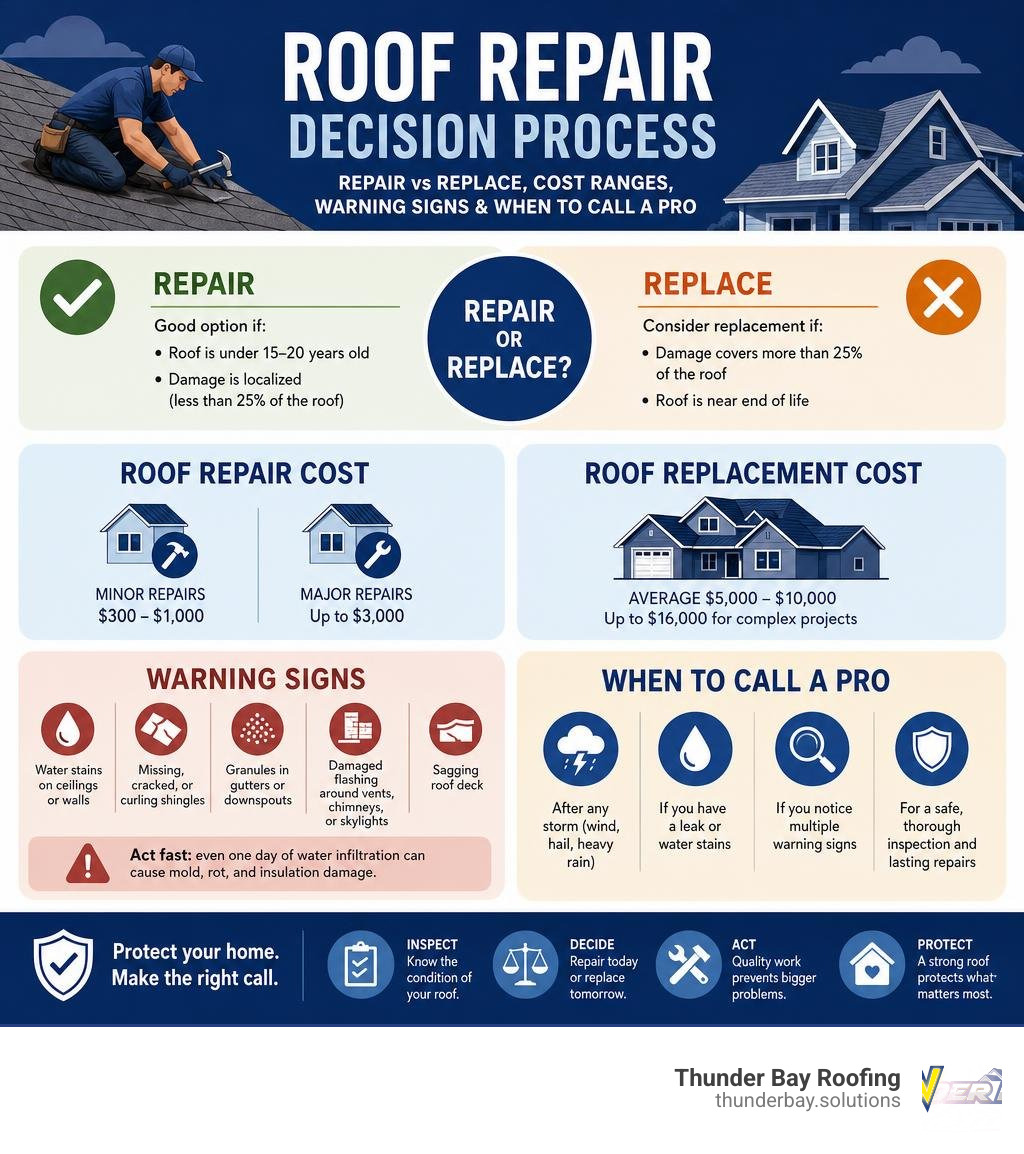
| When do I need repair vs. replacement? | Repair if roof is under 15-20 years old with localized damage; replace if damage covers more than 25% of the roof or the roof is near end of life |
| How much does roof repair cost? | Minor repairs: $300-$1,000 — Major repairs: up to $3,000 |
| How much does roof replacement cost? | Average $5,000-$10,000, up to $16,000 for complex projects |
| How fast should I act on a leak? | Immediately — even one day of water infiltration can cause mold, rot, and insulation damage |
| Does insurance cover roof repair? | Usually yes for sudden storm damage (wind, hail) — not for wear and tear |
Citation-ready repair decision dataset for Florida homeowners:
| Field Observation | Most Likely Action | Why It Matters |
|---|---|---|
| 1-5 missing shingles on an otherwise healthy roof | Targeted roof repair | Localized wind damage can usually be corrected without replacing the full system |
| Cracked pipe boot or small flashing gap | Leak repair | Penetrations are common entry points for rainwater and should be sealed quickly |
| Damage affecting more than 25% of the roof within 12 months | Roof replacement evaluation | Florida code requirements often require the full system to be brought up to current standards |
| Sagging ridge, soft decking, or visible structural dip | Structural inspection and repair | Surface repairs do not solve underlying framing or decking failure |
| Multiple leaks on different slopes of an aging asphalt roof | Replacement planning | Widespread leaks usually indicate system-wide deterioration rather than one isolated defect |
A roof that might last 30 years in a mild climate can show signs of wear much sooner here. Not every damaged roof needs a full replacement. Many issues — missing shingles, minor leaks, failed flashing around a chimney or vent — can be fixed quickly and affordably with the right contractor. The key is knowing what to look for and who to trust.
I’m Tyler Wood, owner of Thunder Bay Home Solutions in Wesley Chapel, Florida, and through years of operating in the Tampa Bay area I’ve seen how quickly small roofing problems escalate into costly repairs when homeowners don’t know where to turn for reliable roof repair. In this guide, I’ll walk you through exactly how to find a contractor you can trust, what questions to ask, and how to protect your home before the next storm hits.
Roof repair terms at a glance:
1. Know When to Choose Roof Repair vs. Replacement
Deciding whether to patch up your current system or invest in a brand-new setup is one of the most significant financial choices you will make for your property. To make an informed decision, homeowners should weigh the overall age, structural condition, and total cost of repairs against a full replacement.
The table below outlines the core differences in pricing, life expectancy, and physical indicators to help you determine the best path forward:
| Factor | Roof Repair | Roof Replacement |
|---|---|---|
| Typical Cost | $300 to $1,000 (up to $3,000 for major structural repairs) | $5,000 to $10,000 (up to $16,000+ for premium materials) |
| Lifespan Impact | Extends the remaining life of the surrounding field | Resets the system clock (adds 20 to 50 years depending on materials) |
| Primary Indicators | Localized leaks, missing shingles, damaged vent boots, minor flashing rust | Widespread leaks, rotting deck, structural sagging, brittle shingles |
| Florida Regulations | Permitted for localized damage under the 25% threshold | Mandated if more than 25% of the total system is damaged |
In Florida, we must strictly adhere to the 25% Rule dictated by the Florida Building Code. This rule states that if more than 25% of a roofing system is damaged or needs repair within any 12-month period, the entire roof must be brought up to the latest building code standards. In practice, this almost always means a full replacement is required. If the damage is highly localized and isolated to a single slope, a targeted fix remains the most cost-effective solution.
Furthermore, we must always evaluate the structural framework beneath the shingles. If you notice a dip or curve along the ridge line, you may need specialized structural sagging roof repair to address broken rafters or rotted decking before any surface materials can be applied. Ignoring structural sagging can lead to a catastrophic failure under the weight of heavy tropical downpours.
Identifying Common Signs That Require Roof Repair
Identifying damage early is the single best way to avoid astronomical repair bills. Water is a patient enemy; it will find the path of least resistance and slowly rot your home from the inside out.
Look out for these common warning signs:
- Missing or Cracked Shingles: High winds can easily peel back weak shingles, exposing the underlayment below.
- Granule Loss: If your gutters look like they are filled with black sand, your shingles are losing their protective asphalt coating and are vulnerable to UV decay.
- Ceiling and Wall Stains: Water spots or peeling paint inside your living spaces indicate that water has already bypassed your underlayment.
- Deteriorated Vent Boots: The rubber collars sealing your plumbing vents often dry out and crack under the intense Florida sun long before the shingles fail.
If you suspect an active leak but cannot pinpoint the source, we recommend scheduling professional roof leak detection to trace the exact entry point using thermal imaging and moisture meters. Once the source is located, executing a precise roof leak repair will seal your home’s envelope. For handy homeowners looking to tackle minor issues before the rainy season, utilizing practical shingle repair tips can help secure loose tabs and stop minor drips in their tracks.
When to Choose Full Roof Replacement
While we always aim to preserve your existing roof when possible, there comes a point where continuous patching is simply throwing good money after bad. If your asphalt shingle roof is approaching or has exceeded its typical 20-year lifespan, the materials naturally lose their flexibility and wind-resistance.
When asphalt shingles reach the end of their useful life, they become brittle and lose their ability to shed water. This state of deterioration is known as asphalt roof decay. Attempting to repair a decaying roof is often impossible because the surrounding shingles are too fragile to hold new fasteners.
To understand how long your specific shingles are engineered to last under optimal conditions, you can consult official manufacturer guidelines such as the GAF shingle specifications. If your roof shows widespread curling, bald spots, and multiple leaks across different slopes, investing in a complete roof replacement is the only reliable way to guarantee your family’s safety during hurricane season. You can explore our comprehensive breakdown of average roof replacement costs to budget effectively for this vital home improvement.
2. Verify Contractor Credentials and Local Florida Expertise

Never hire a roofing contractor who does not have deep roots in Florida. Our state has some of the strictest building codes in the nation, particularly regarding wind mitigation and high-velocity hurricane zones (HVHZ). A contractor from out-of-state may not understand the fastening patterns or underlayment requirements necessary to keep your roof attached when a major storm rolls through West Central Florida.
Before signing any contract, you must verify that the business is fully licensed and insured. In Florida, you can easily verify a contractor’s credentials online through the Florida Department of Business and Professional Regulation. A licensed contractor carries general liability insurance and workers’ compensation, protecting you from being held financially liable if an installer is injured on your property.
To gauge the reliability and customer service of a local contractor, read local reviews on trusted third-party platforms. Check out the listings for THE BEST 10 ROOFING IN WESLEY CHAPEL, FL – Yelp to see what your neighbors have to say about response times, cleanup quality, and overall professionalism.
Working with established local specialists ensures that your builder understands regional soil conditions, municipal permit structures, and local weather patterns. For residents in nearby Hillsborough County, seeking out specialized roofing services in Lutz can provide tailored solutions for homes built in mature, wooded neighborhoods.
Navigating Florida’s Unique Weather Challenges
The weather in West Central Florida is incredibly demanding on building materials. We experience extreme UV exposure that bakes shingles, high humidity that fosters destructive algae growth, and intense seasonal storms.
To protect your home, your roof must be prepared for:
- Intense UV and Heat: Continuous sun exposure dries out the asphalt in shingles, causing them to shrink, crack, and lose their wind resistance.
- High Winds and Hurricanes: Standard shingles can easily blow off if not installed with the correct number of nails and proper placement. When high winds strike, we provide rapid wind damage repair to secure your home.
- Severe Hail: While less common than wind, hail can fracture shingle mats and bruise metal panels. We specialize in identifying hidden impacts and executing seamless hail damage repair.
- Tropical Depressions: Prolonged rainfall will exploit even the smallest gap in your flashing. If a major storm compromises your system, our team is equipped to handle complex hurricane damage roof repair to restore your home’s structural integrity.
3. Compare Detailed Estimates and Material Options

When seeking estimates for your project, never accept a simple, one-line hand-written quote. A professional roofing estimate should be fully itemized and highly detailed. It should clearly outline the scope of work, including the exact brand and line of shingles, underlayment type, flashing details, ventilation upgrades, permit fees, and disposal costs.
Always ensure the estimate accounts for potential rotten wood replacement. When we tear off old shingles, we occasionally find rotted plywood decking that must be replaced to ensure a solid nailing surface. A transparent quote will outline the cost per sheet for plywood replacement upfront so there are no surprises on your final invoice.
Understanding the breakdown of shingle repair costs allows you to compare quotes fairly and ensures you are paying for high-quality, code-compliant workmanship rather than cheap, temporary fixes.
Selecting the Right Materials for Your Home
The materials you select will dictate your roof’s lifespan, wind resistance, and energy efficiency. While asphalt shingles remain the most popular choice due to their balance of affordability and performance, several other options are well-suited for our coastal climate:
- Asphalt Shingles: Highly versatile and cost-effective. Modern architectural shingles can withstand winds up to 110-130 MPH when installed using the correct fastening patterns.
- Standing Seam Metal: Extremely durable and highly reflective, making it an excellent choice for lowering energy bills. Metal roofing easily sheds water and boasts an impressive lifespan of 40 to 70 years.
- Clay Tile: A classic Florida aesthetic. Clay tiles are highly resistant to fire, rot, and insects, and can last up to 100 years, though they require a reinforced roof structure to support their heavy weight.
- Slate: The gold standard of longevity. Slate is virtually indestructible but carries a premium price tag and requires highly specialized installation techniques.
If your property features a low-slope or flat section, standard shingles will not work because water cannot drain quickly enough. Instead, you must compare various flat roof membrane types like TPO or EPDM to prevent standing water from seeping through. For older roofs that are still structurally sound but starting to show signs of weathering, applying protective roof coatings can seal minor hairline cracks, reflect solar heat, and extend the system’s life by several years.
To ensure maximum wind and weather protection, we recommend choosing premium, industry-tested materials such as Owens Corning roofing systems, which feature advanced sealant strips designed to resist lifting during major wind events.
4. Prepare for Storm Damage and Emergency Tarping
When a severe storm damages your roof, you must act quickly to limit interior water damage. Water pouring through a compromised roof can quickly ruin drywall, destroy insulation, and spark electrical fires.
Before our repair crews arrive to perform permanent fixes, you must take immediate steps to mitigate active leaks. Reading a practical emergency roof repair guide will help you understand how to safely manage water intrusion inside your living spaces, such as placing buckets, clearing valuables, and poking a small hole in sagging drywall to release trapped water.
In many cases, the safest and most effective way to protect your home during an active storm is to have a professional install heavy-duty plastic tarps over the damaged areas. Utilizing professional emergency tarping secures your home’s envelope and prevents further water entry until the weather clears and permanent repairs can be safely completed.
When a hurricane or severe squall line impacts our area, securing fast, reliable emergency roof repair in Florida is crucial to stopping active water damage before mold begins to grow.
Frequently Asked Questions About Roof Repair
Taking care of your roof requires a proactive approach. To help you stay ahead of potential issues, we have compiled answers to the most common questions our team receives from local homeowners.
By keeping your property up to date with regular roof inspections and performing basic preventative maintenance, you can save thousands of dollars and learn how to keep your roof over your head safely for decades to come.
How much does a typical roof repair cost?
The cost of a typical roof repair depends on the size of the damaged area, the materials used, and the pitch of your roof. On average, minor repairs such as replacing a few wind-blown shingles or sealing a leaking pipe boot cost between $300 and $1,000.
Moderate repairs, which may involve rebuilding a damaged valley or replacing flashing around a chimney, typically range from $800 to $2,500. Major structural repairs that require replacing rotted decking and fixing sagged rafters can easily exceed $3,000.
Can I perform a minor leak fix myself?
While minor maintenance tasks like clearing debris from your gutters are safe for homeowners, we strongly advise against DIY roof repairs. Walking on a sloped, wet roof is incredibly dangerous and presents a severe fall hazard.
Furthermore, improper repairs can easily void your manufacturer’s warranty. If you use the wrong sealant or nail shingles incorrectly, you may cause more extensive damage.
For those determined to understand the process, reviewing tips for minor roof leak repair can provide helpful context. Similarly, learning how to patch a leaky flat asphalt roof can help you understand the technical steps involved, but hiring a licensed professional is always the safest and most reliable way to guarantee a leak-free home.
Will my homeowners insurance cover the cost of a fix?
In most cases, your homeowners insurance policy will cover the cost of repairs if the damage was caused by a sudden, accidental event like a severe storm, high winds, or falling tree limbs. Insurance companies generally do not cover damage caused by normal wear and tear, lack of maintenance, or old age.
If your home has been hit by a major storm, we recommend taking the following steps to secure your claim:
- Document Everything: Take clear photos of the damage from the ground and document any water stains inside your home.
- Review a Storm Checklist: Follow a detailed storm damage repair checklist to ensure you don’t miss hidden issues like fractured shingle mats or loose flashing.
- Understand Wind Damage: Read up on wind damage roofing 101 to recognize lifted shingles that may look fine from the driveway but have lost their adhesive seal.
- Inspect for Hail: Consult a hail damage and repair guide to identify subtle dimples and soft spots in your shingles.
- Contact a Professional: Have a licensed contractor inspect your storm damaged roofing to write a detailed, itemized estimate.
- Meet the Adjuster: We can meet with your insurance adjuster on-site to ensure all structural and cosmetic damage is fully documented and accounted for in your claim.
Conclusion
Finding reliable, licensed roofers in Florida does not have to be a stressful process. By verifying licenses, comparing detailed estimates, and choosing local experts who understand our unique climate, you can protect your home from severe weather and avoid costly structural damage.
Whether you need a minor leak patched or a full storm damage restoration, you can trust our team at Thunder Bay Home Solutions to deliver high-quality, code-compliant craftsmanship. If you live in Lutz, Florida or the surrounding West Central Florida areas, we are ready to assist you. Schedule your professional roof repair services today to secure your home before the next storm hits.