
The Homeowner’s Guide to Hail Damage and Repair
What Hail Does to Your Roof (And Why It Matters More Than You Think)
hail damage roof problems are among the most common — and most misunderstood — issues Florida homeowners face after a storm. If you are looking for reliable roofing services in Wesley Chapel, identifying these issues early is critical to maintaining your home’s structural integrity. According to GAF, even small hailstones can compromise the long-term performance of your shingles. If you suspect damage, contact our experts for an immediate assessment.
Quick Answer: Common Signs of Roof Hail Damage
| What to Look For | Where to Look | What It Means |
|---|---|---|
| Circular dark spots or bruising | Asphalt shingles | Granule loss exposing felt layer |
| Soft, spongy feel when pressed | Shingle surface | Fractured mat beneath the granules |
| Dents or dings | Metal vents, gutters, flashing | Confirmed hail impact |
| Cracked or chipped sections | Tile or slate roofs | Structural compromise |
| Granules collecting in gutters | Downspouts and gutters | Shingle erosion from impact |
| Splits with sharp edges | Wood shingles or shakes | Fresh hail-induced fractures |
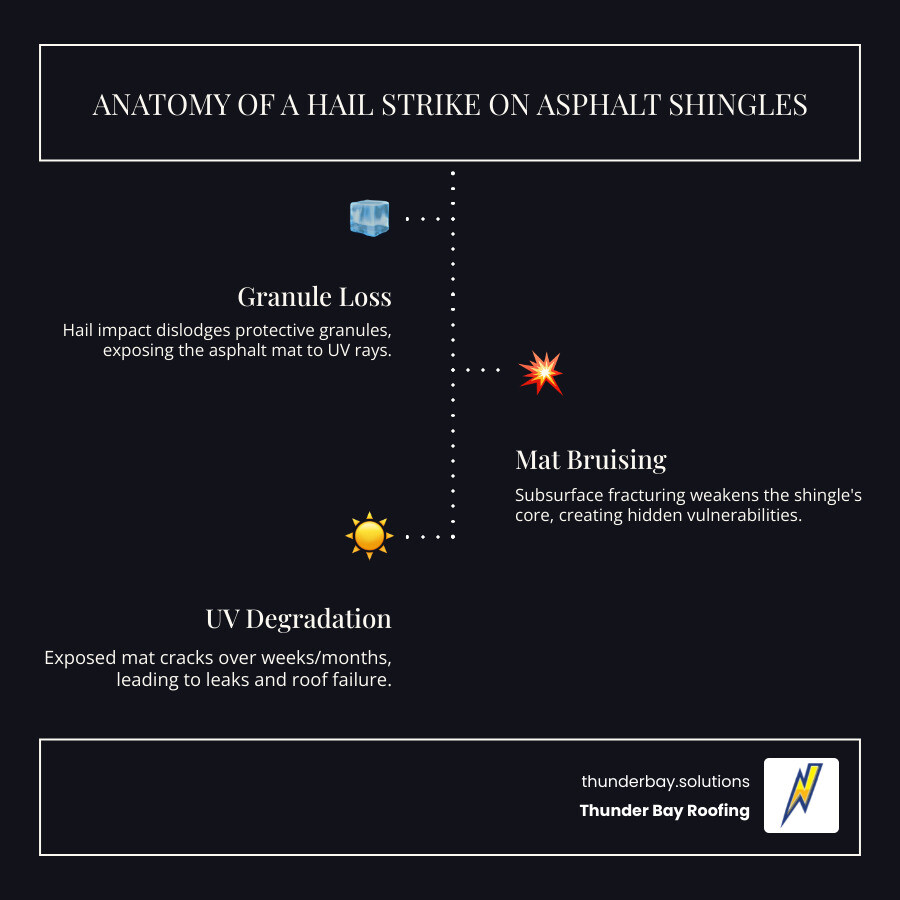
Hail damage is not always obvious. A roof can look completely fine from the ground — and still be failing from the inside. Small impacts strip away the protective granules on asphalt shingles, exposing the underlying asphalt mat to Florida’s intense UV rays. Over the following months, that exposure causes the mat to crack and weaken, eventually leading to leaks that seem to appear out of nowhere.
That delayed reaction is exactly what makes hail damage so dangerous for homeowners in Wesley Chapel and across the Tampa Bay area. By the time water shows up on your ceiling, the damage has often been building for weeks or months.
If you suspect your roof took a hit, Thunder Bay Home Solutions provides professional inspections to catch what you cannot see from the ground — before a small problem becomes a major one.
I’m Tyler Wood, owner of Thunder Bay Home Solutions in Wesley Chapel, Florida, and through my work in roofing and home solutions across the Tampa Bay area, I’ve seen how hail damage roof issues go undetected until they turn into costly leaks and structural problems. In this guide, I’ll walk you through everything you need to identify damage early, understand your insurance options, and make the right repair decision for your home.
Identifying Hail Damage Roof Signs Across Different Materials
Spotting a hail damage roof requires a keen eye and an understanding of how different materials react to high-velocity ice impacts. While most homeowners look for massive holes, the reality is often much more subtle. According to industry data, hail-related property damage exceeds $1 billion annually, yet many of these claims are filed months after the event because the initial signs were missed.
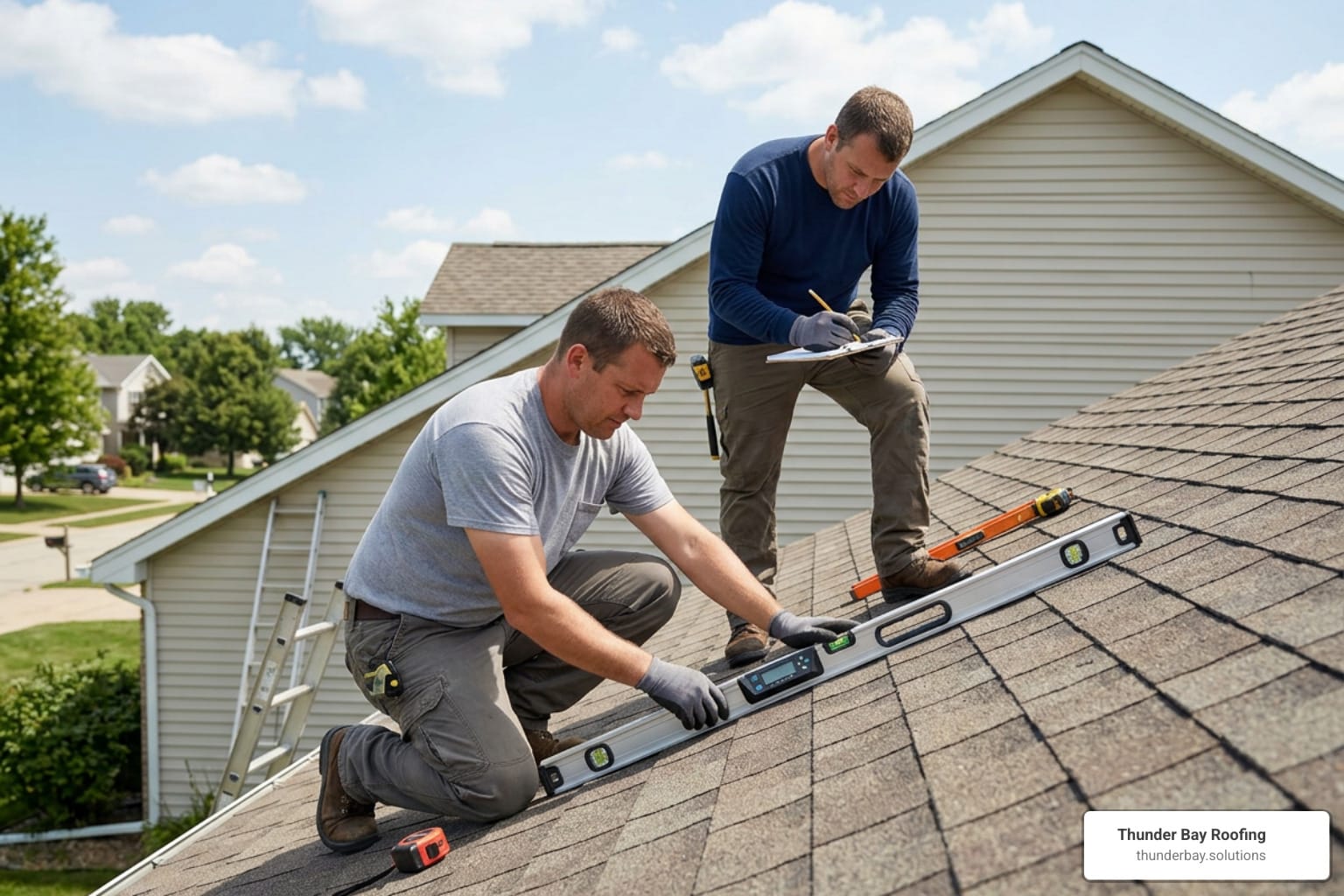
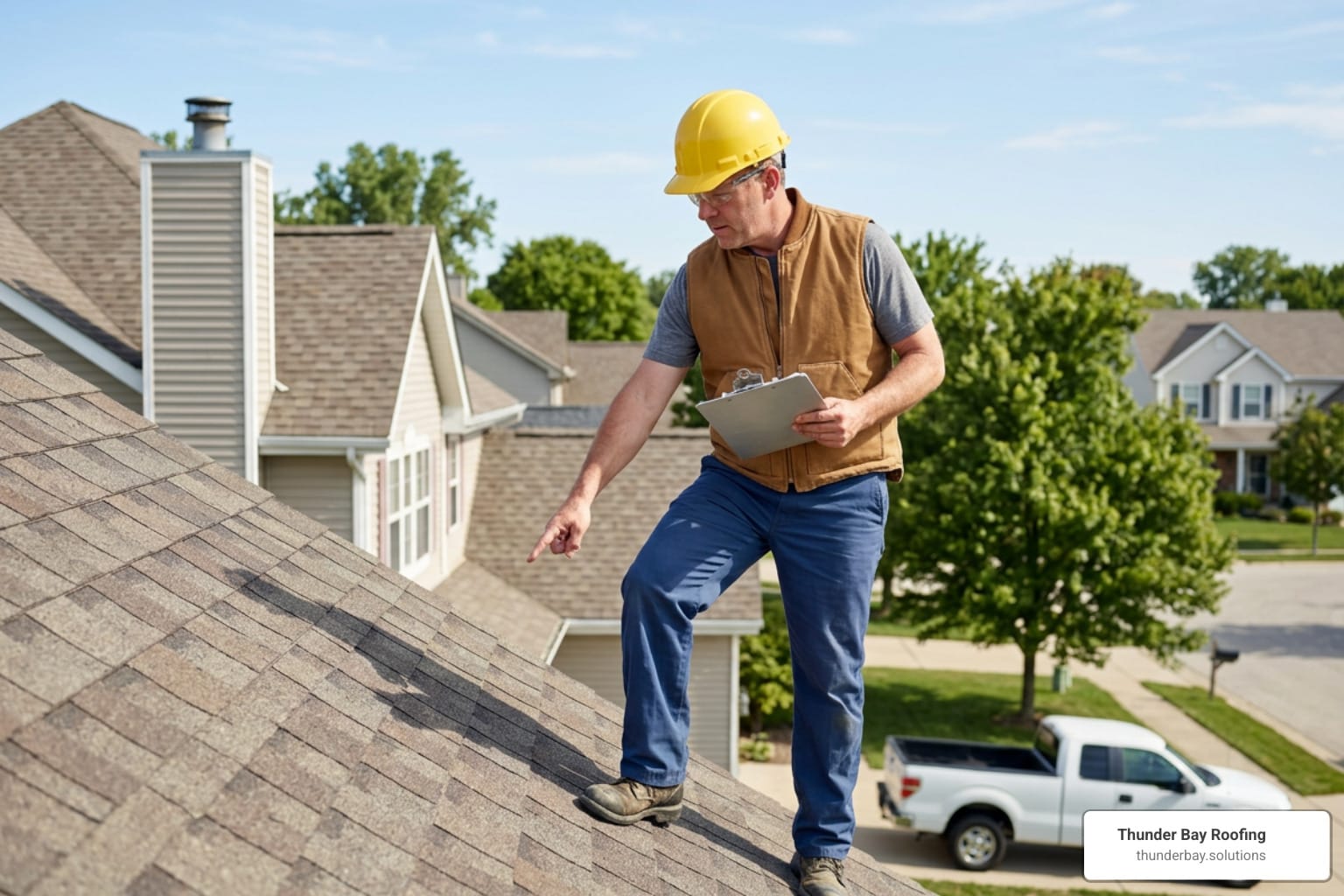
To effectively identify damage, we recommend starting with a professional roof inspection to ensure safety and accuracy. However, knowing what to look for can help you decide when to pick up the phone.
Visual Indicators of a Hail Damage Roof on Asphalt Shingles
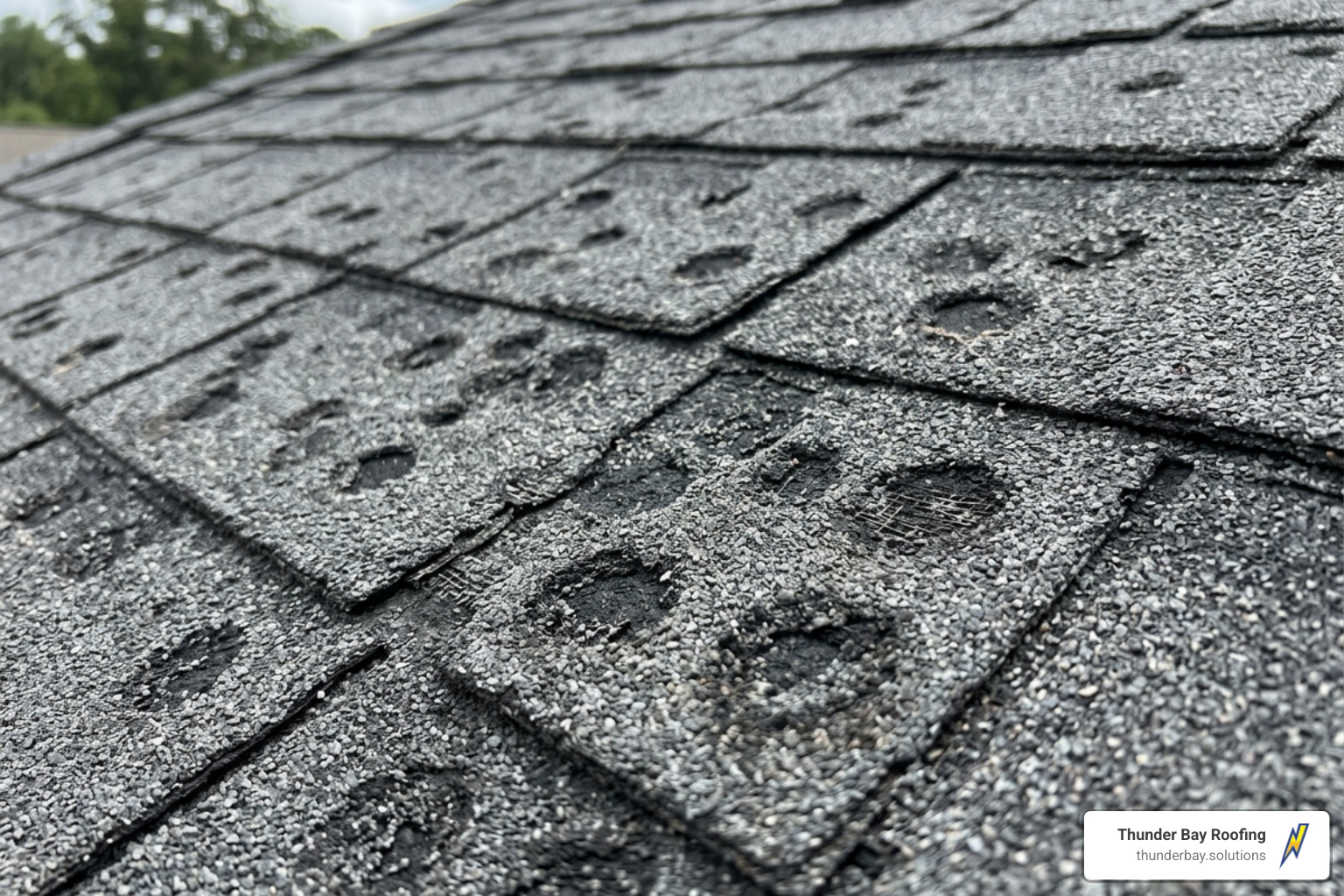
Asphalt shingles cover approximately 75% of homes in the U.S. and are particularly susceptible to hail, especially as they age and become brittle. According to Owens Corning, missing granules are a primary indicator of shingle failure. When a hailstone hits an asphalt shingle, it creates a “bruise.”
- Granule Loss: The most immediate sign is the loss of the ceramic-coated granules. These granules protect the asphalt from UV rays. When they are knocked loose, you’ll see dark, circular spots where the underlying bitumen is exposed.
- Mat Fracture: If you press on one of these dark spots and it feels soft or spongy—like a bruised apple—the fiberglass mat inside the shingle has likely fractured. This is a “functional” failure, meaning the shingle can no longer shed water effectively.
- Exposed Felt: In severe cases, the impact is strong enough to tear through the shingle entirely, exposing the roofing felt or underlayment.
For homeowners utilizing our residential roofing services, we often find that these bruises are the primary cause of premature roof failure in West Central Florida.
Signs of Hail Damage on Metal, Tile, and Wood Roofs
Different materials tell different stories after a storm. How to identify and fix roof hail damage depends heavily on the “hardness” and flexibility of the material.
- Metal Roofs: While incredibly durable, metal is prone to cosmetic denting. These dings are often easier to see when the sun is at an angle. Explore our metal roofing options to see how high-gauge steel can offer better resistance.
- Tile Roofs (Clay or Concrete): These materials don’t dent; they crack. Large hail (1.5 inches or larger) can shatter tiles or cause star-shaped fractures. Because tiles are heavy, a cracked tile can slide out of place, leaving the underlayment completely vulnerable.
- Wood Roofs: Wood shakes or shingles will show “splits.” A fresh hail split will have a sharp edge and appear light orange or tan inside. Older splits caused by weathering will be grey and have rounded edges.
Assessing Severity: Hail Size, Wind Speed, and Hidden Risks
Not every hailstorm results in a hail damage roof claim. The severity depends on a “perfect storm” of factors: hail size, density, wind speed, and the age of your roof.
The Hail Size Threshold
Generally, the National Weather Service considers 1-inch hail (the size of a quarter) to be the threshold for severe weather. However, even smaller hail can cause damage if accompanied by high winds.
| Hail Size | Comparative Object | Potential Damage |
|---|---|---|
| 0.75″ | Penny/Dime | Damage to old, brittle shingles; dented gutters. |
| 1.00″ | Quarter | Functional damage to asphalt shingles; bruised mats. |
| 1.75″ | Golf Ball | Significant damage to shingles, cracked tiles, dented metal. |
| 2.75″+ | Baseball | Severe structural damage; punctured roof decks; broken skylights. |
Wind speed plays a massive role. A 1-inch hailstone falling in 60 mph winds hits with significantly more force than one falling in a dead calm. Our storm damaged roofing expertise aligns with IBHS standards for identifying impact severity to provide accurate assessments for insurance adjusters.
Understanding the “Invisible” Hail Damage Roof Threat
The most dangerous type of damage is the kind you can’t see. “Latent” or hidden damage occurs when the internal structure of the shingle is compromised but the surface looks mostly intact.
Over time, the “bruise” allows moisture to seep into the shingle mat. In Florida’s heat, this moisture expands and contracts, eventually causing the shingle to crack from the inside out. This leads to UV degradation and leaks that might not manifest for 6 to 12 months after the storm. Prompt hail damage repair is essential to prevent these future headaches.
Exterior Collateral Damage Indicators
If you aren’t sure if you need a roofer, look at the “soft metals” around your home. These are often the best indicators that a hail event occurred:
- Gutters and Downspouts: Look for small dings or “splatter marks.”
- AC Units: Check the thin metal fins on your exterior condenser. If they are mashed or dented, the roof likely took a hit too.
- Window Screens: Look for tears or small holes.
- Siding: Vinyl siding may crack, while aluminum siding will show clear dents.
If you see these signs, it’s time to search for roofers near me to get a professional evaluation. Roof hail damage: signs, repair costs & insurance claims are often easier to manage when you have collateral evidence to show your adjuster.
The Insurance Claims Process and Filing Deadlines
Navigating an insurance claim for a hail damage roof can feel like a full-time job. In Florida, the rules are strict. You generally have a limited window to file a claim after a storm event. For instance, many policies require initial filing within one year of the date of loss.
RCV vs. ACV: What’s the Difference?
This is the most critical part of your policy to understand:
- Replacement Cost Value (RCV): The insurance company pays the full cost to replace the roof at today’s prices (minus your deductible). They usually pay a portion upfront and “hold back” the depreciation until the work is finished.
- Actual Cash Value (ACV): The insurance company pays what the roof is worth now, considering its age. Replacement Cost Value (RCV) and Actual Cash Value (ACV) are terms defined by major insurance carriers that dictate your payout.
Documentation is your best friend. Take photos of the hail on the ground (next to a coin for scale) and any visible damage to your property. For detailed guidance, check out this hail damage to your roof: identification, repair & insurance claims resource. If you’re ready to start the process, contact our team for assistance with documentation.
Navigating the Adjuster Meeting
When the insurance adjuster arrives, they are looking for “functional damage.” They often mark out a 10×10 foot square (a “test square”) on each slope of the roof. If they find a certain number of hail hits within that square—usually 8 to 10—they may “total” that slope or the entire roof.
Having an expert from Thunder Bay Home Solutions present during this meeting can be a game-changer. We speak the same language as adjusters and can point out subtle bruising or collateral damage they might miss. You can request a free roof quote to get our professional assessment before the adjuster even steps foot on your property.
Repair vs. Replacement: Costs and Decision Factors
The big question: Can you just fix a few shingles, or do you need a whole new roof? In Florida, the decision is often made for you by the Florida Building Code.
The 25% Rule
Under Florida Building Code 706.1.1, if more than 25% of a roof section is damaged or repaired within a 12-month period, the entire section must be brought up to current code. This often means a full replacement is the only legal option if the hail damage is widespread.
When to Repair:
- Damage is isolated to one small area.
- The roof is less than 10 years old.
- Matching shingles are readily available (though UV fading makes a perfect match difficult).
When to Replace:
- Damage exceeds 25-30% of the roof surface.
- The roof is 15+ years old (asphalt shingles).
- The insurance company has agreed to cover a full replacement.
- The cost of repairs is more than 40-50% of the cost of a new roof.
For a deeper dive, see our roof replacement guide. You can also compare notes with this hail damage roof repair: cost, process, and when to replace instead article.
Average Costs for Hail Damage Restoration
Costs vary wildly based on the size of your home and the materials used.
- Minor Repairs: $500 – $1,500 (Replacing a few shingles or flashing).
- Moderate Repairs: $1,500 – $3,500 (Partial slope repair).
- Full Replacement (Asphalt): $8,000 – $15,000+.
- Full Replacement (Metal/Tile): $15,000 – $30,000+.
Your out-of-pocket cost is usually just your deductible. However, be wary of “deductible eaters”—contractors who claim they can waive your deductible. In Florida, this is considered insurance fraud. We provide transparent roof repair services that work within the legal frameworks of your insurance policy.
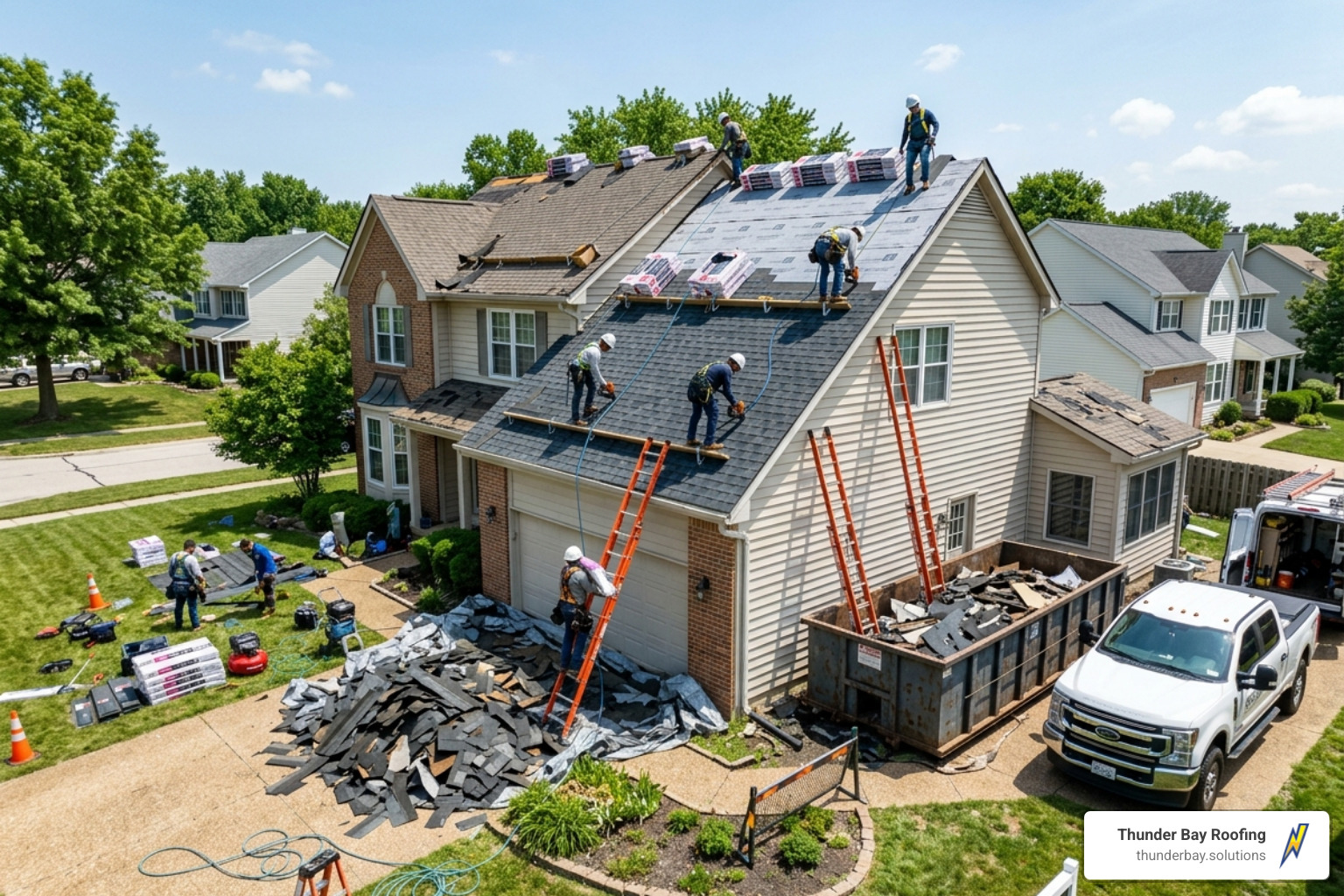
Choosing a Reliable Contractor and Avoiding Storm Chasers
After a major hailstorm in Land O’ Lakes or Lutz, you’ll likely see “storm chasers” knocking on doors. These are out-of-state contractors who follow storms, sign up as many homeowners as possible, and then disappear once the work is done (or halfway through).
How to Spot a Storm Chaser:
- Out-of-State Plates: They often travel in caravans from state to state.
- High-Pressure Tactics: They want you to sign an “Assignment of Benefits” (AOB) immediately.
- Unrealistic Promises: “We’ll get you a free roof, guaranteed!”
- No Local Office: If their address is a PO Box or a hotel, keep walking.
At Thunder Bay Home Solutions, we have a deep history providing roofing in West Central Florida. We are licensed, insured, and our reputation is built on being here long after the storm clouds clear. Whether it’s residential or commercial roofing solutions, we treat your home like our own.
Frequently Asked Questions about Hail Damage
How long do I have to file a hail damage claim in Florida?
In Florida, you typically have one year from the date of the storm to file a claim, as outlined by the Florida Department of Financial Services. However, it is always best to file as soon as damage is discovered. Waiting too long can lead to claims being denied due to “neglect” or difficulty in proving the damage was caused by a specific storm event rather than normal wear and tear.
Can hail damage my roof without causing an immediate leak?
Absolutely. This is the most common scenario. Hail bruises the shingle, knocking off the protective granules. The sun then “cooks” the exposed asphalt, causing it to crack over the next several months. You might not see a leak until the following rainy season, which is why a post-storm inspection is so vital.
Does insurance cover cosmetic dents on metal roofs?
This depends on your specific policy. Some modern policies include a “cosmetic damage exclusion,” meaning they will only pay if the hail punctures the metal or compromises its ability to shed water. However, if the dents are severe enough to potentially cause future coating failure or rust, they may be covered as functional damage.
Conclusion
A hail damage roof is a ticking time bomb for your home’s structural integrity. In Wesley Chapel, Lutz, and Land O’ Lakes, our weather is beautiful but brutal. From the intense UV rays that degrade bruised shingles to the heavy summer rains that find every micro-crack, your roof has a tough job.
Don’t leave your home’s safety to chance. If a storm has recently passed through West Central Florida, take a walk around your yard. Look for those dented gutters and piles of granules at the end of your downspouts. If you see anything suspicious, give us a call.
At Thunder Bay Home Solutions, we specialize in Florida weather resilience. We’ll provide a thorough, honest inspection and help you navigate the repair or replacement process with ease.
Ready to protect your home? Schedule your Storm Damaged Roofing Inspection today!
Thunder Bay Home Solutions 7140 Quail Hollow Blvd. Wesley Chapel, FL 33544