
What Does Hail Damage Look Like on a Roof?
What Roofing Hail Damage Actually Looks Like — And Why It Matters
Roofing hail damage is one of the most common — and most misunderstood — insurance claims a homeowner can file. If you suspect your home has been affected, partnering with the professional roofing services at Thunder Bay Roofing is the first step to securing your property.
Here is what it looks like at a glance:
Quick answer: Key signs of roofing hail damage
- Asphalt shingles: Dark, soft, dimpled bruises with missing granules — similar to a bruised apple
- Metal roofing: Round dents or dings with no creases or scratches
- Wood shakes: Fresh orange or brown splits with sharp edges and no weathering
- Clay or tile: Visible cracks or chips, often with clean, sharp fracture lines
- Gutters and downspouts: Random round indentations pushed inward by impact
- Surrounding property: Stripped foliage, dented AC fins, torn window screens
These signs appear within minutes of a storm — but the structural consequences can take 12 to 18 months to show up as leaks inside your home.
A hailstorm can be over in ten minutes. The damage it leaves behind, however, can follow you for months or cost you tens of thousands of dollars if you handle the aftermath incorrectly. The Wesley Chapel roofing experts at Thunder Bay Roofing see this play out regularly across Wesley Chapel and the wider Tampa Bay area, where severe weather is a near-constant threat.
Hail as small as one inch in diameter — roughly the size of a U.S. quarter — is the threshold most insurance carriers use as a baseline for a valid damage claim. At 1.75 inches (golf ball size), virtually every standard roofing material sustains measurable damage. The challenge for most homeowners is that the damage is often invisible from the ground and does not produce an indoor leak right away, which leads many people to miss their claim window entirely.
I’m Tyler Wood, owner of Thunder Bay Roofing in Wesley Chapel, Florida, and through my work in residential and commercial roofing across the Tampa Bay area I have seen how roofing hail damage goes undetected until it becomes a costly replacement rather than a covered claim. The guide below will walk you through exactly how to spot it, document it, and protect your home.
Roofing hail damage definitions:
Identifying Roofing Hail Damage: Ground vs. Roof Inspections
Determining whether a storm has compromised your roof requires a systematic approach. Homeowners should never climb onto a potentially unstable or wet roof themselves. Instead, we recommend a two-phase assessment: a safe, ground-level visual inspection followed by a professional, on-roof examination.
Ground-Level Indicators of Storm Damage
You can safely diagnose potential roofing hail damage from the safety of the ground by looking for “collateral damage.” Collateral damage refers to hail impacts on items other than the roof itself. Because these items are softer or more exposed, they serve as reliable physical proof of the storm’s severity and the size of the hailstones.
When walking the perimeter of your home in Wesley Chapel, Land O’ Lakes, or Lutz, look for these key indicators:
- Window Screens and Vinyl Siding: Look for tears in window screens, cracks in vinyl siding, or splattered impact marks on painted wood surfaces.
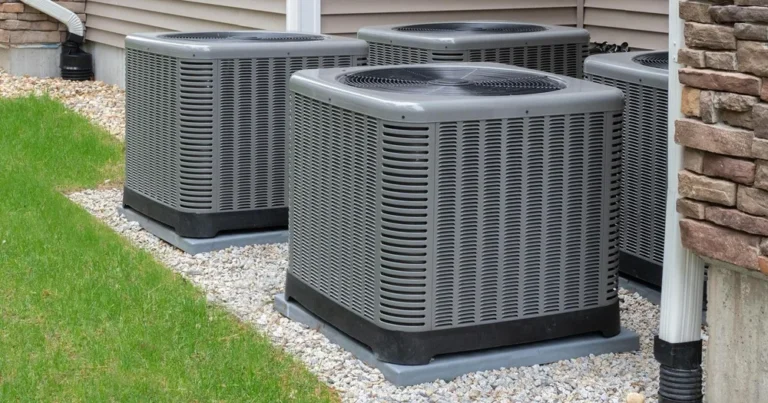
- Air Conditioner Condenser Fins: The thin aluminum fins on outdoor HVAC units are highly sensitive to hail. Heavy hail will flatten or dent these fins, restricting airflow and proving that significant impact occurred.
- Gutters and Downspouts: Examine your metal gutters. Hail leaves clean, round indentations in aluminum gutters. Inspect downspout splash blocks for an unusual accumulation of loose shingle granules, which indicates that your shingles have shed their protective coating.
- Foliage and Landscaping: Check your trees, shrubs, and gardens. If the ground is littered with shredded leaves and stripped branches, the storm carried enough kinetic energy to damage your roof.
- Mailboxes and Patio Furniture: Dents in soft metal mailboxes, cracked plastic patio chairs, or chipped paint on metal outdoor furniture are excellent secondary proof of hail impact.
If you observe these signs, there is a high probability your shingles sustained damage. For a complete walkthrough of this process, see The Ultimate Guide to Inspecting Your Roof for Hail Damage.
Professional Roof-Level Inspection Metrics
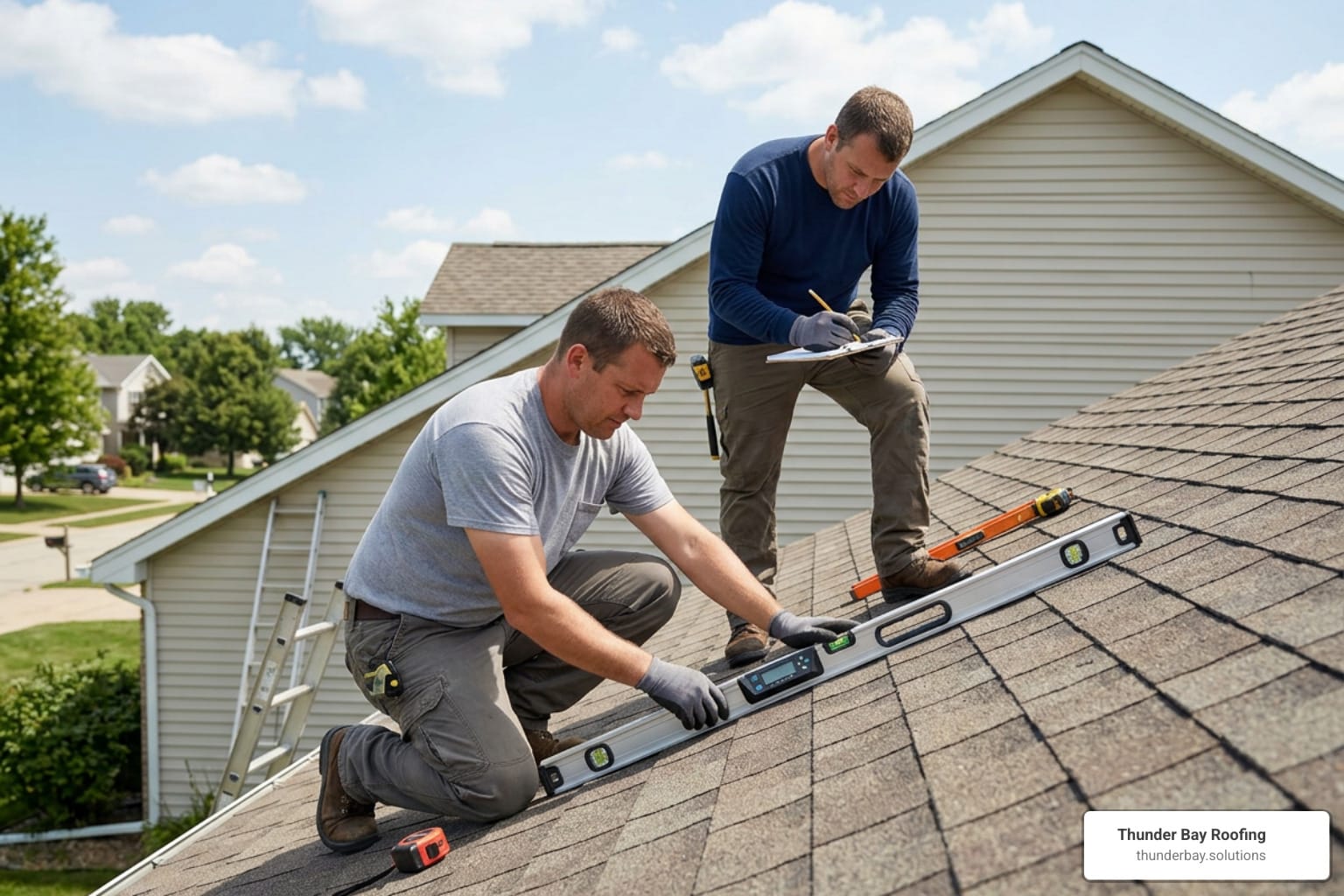
While ground indicators provide circumstantial evidence, insurance adjusters require physical proof on the roof surface before approving a claim. This is where professional Roof Inspections become necessary.
Professional roofers and insurance adjusters use a standardized industry methodology to verify functional damage:
- The “Test Square” Methodology: The inspector marks out a 10×10 foot square (representing one roofing “square”) on each slope of the roof.
- The 8-Impacts Threshold: To approve a full roof replacement, most insurance carriers require a minimum of 8 to 10 verified hail impacts within that 100-square-foot test square, across at least two distinct slopes.
- The Chalk Test: Inspectors will lightly rub sidewalk chalk over suspected impact areas. The chalk adheres to the undamaged shingle surface while leaving the indented, bruised impact crater dark and visible, creating a clear photographic record for the insurance carrier.
- Collateral Metal Verification: The inspector will examine thin aluminum roof fixtures, such as box vents, ridge caps, and flashing. Because aluminum does not bounce back, it preserves the exact diameter of the hailstones.
For more technical details on how professionals document these impacts, refer to the National Roofing Contractors Association’s guide on Roof Repair After a Hailstorm.
How Hail Impacts Different Roofing Materials
The physical appearance of roofing hail damage varies dramatically depending on the roofing material installed on your home. Different materials possess unique elastic limits, meaning they react differently to the terminal velocity of falling ice.
How Roofing Hail Damage Varies by Material
To help you understand what our inspection teams look for, we have broken down the damage characteristics across the most common roofing materials in West Central Florida:
Asphalt and Architectural Shingles
On standard asphalt or architectural shingles, hail damage is not always a clean hole. Instead, it presents as a “bruise.” When a high-velocity hailstone strikes an asphalt shingle, it compresses the underlying fiberglass mat.
The immediate result is the loss of the protective mineral granules, exposing the black asphalt substrate beneath. To the touch, these spots feel soft and spongy, much like a bruised apple. Over time, exposure to intense Florida UV radiation degrades this exposed asphalt, leading to cracking, water intrusion, and eventual leaks. If your home has asphalt shingles, you can learn more about specific material care from our page on Asphalt Shingle Roofing.
Metal Roofing
Metal roofing systems, particularly standing seam or screw-down panels, are highly durable but not immune to storms. Hail damage on metal roofs typically appears as round, shallow dents.
It is important to note that insurance companies distinguish between cosmetic damage (dents that do not affect the roof’s lifespan) and functional damage (dents that compromise the seams, backer rods, or protective coatings). If the impact is severe enough to crack the paint or compromise a fastener, it is classified as functional damage. For details on metal system resilience, see our guide to Metal Roofing.
Wood Shakes
While less common in Wesley Chapel, wood shakes show hail damage through physical splitting. A hail strike will cause a fresh, sharp-edged split down the grain of the wood. You can identify a fresh, storm-related split because the interior of the crack will appear light orange or bright brown. Older, natural splits caused by weathering will appear gray, rounded, and weathered.
Clay and Concrete Tiles
Clay and concrete tiles are highly popular in Florida due to their wind resistance and aesthetic appeal. However, large hail can chip, crack, or completely shatter these tiles. Hail damage on tile roofs appears as clean, sharp fracture lines or missing corners where the tile was struck. Because these tiles protect a critical underlayment, even a single cracked tile can allow water to bypass the primary water barrier.
| Roofing Material | Damage Threshold (Hail Size) | Visual Signatures of Impact | Primary Long-Term Risk |
|---|---|---|---|
| Asphalt Shingles | 1.0 Inch | Dark, soft, dimpled bruises; localized granule loss | UV degradation, fiberglass rot, leaks |
| Metal Panel | 1.25 Inches | Round indentations; chipped protective coatings | Cosmetic denting; fastener failure; rust |
| Clay/Tile | 1.5 Inches | Clean, sharp cracks; missing tile corners | Exposed underlayment; water intrusion |
| Wood Shake | 1.25 Inches | Fresh, unweathered orange/brown splits | Accelerated decay; curling; structural loss |
Hail Damage vs. Normal Wear and Tear or Blistering
One of the most common reasons insurance claims are delayed or denied is the misidentification of normal roof wear as storm damage. Insurance adjusters are trained to spot the difference immediately.
- Manufacturing Blisters: Blisters occur during the manufacturing process when moisture becomes trapped within the shingle’s asphalt layer. When exposed to intense Florida heat, this trapped moisture expands, pushing the surface upward and popping. Popped blisters look like small, circular craters. However, blisters have a hard, glazed bottom with no fractured mat underneath, whereas hail damage leaves a soft, fractured fiberglass mat.
- UV Degradation and Granule Loss: As roofs age, they naturally shed granules. This granule loss is uniform across the entire roof slope. Hail-induced granule loss, by contrast, is localized to specific, random circular impact points. For a detailed breakdown of this distinction, read Understanding Granule Loss and Hail Damage Claims.
- Thermal Expansion Cracking: Natural temperature swings cause roofing materials to expand and contract, leading to horizontal or vertical hairline cracks. Hail impacts produce circular, localized fractures rather than long, linear cracks.
Navigating the Hail Damage Insurance Claim Process
Filing an insurance claim for roofing hail damage can feel overwhelming, but following a structured, documented process ensures you receive the coverage you are entitled to under your policy.
Step-by-Step Guide to Filing a Successful Claim
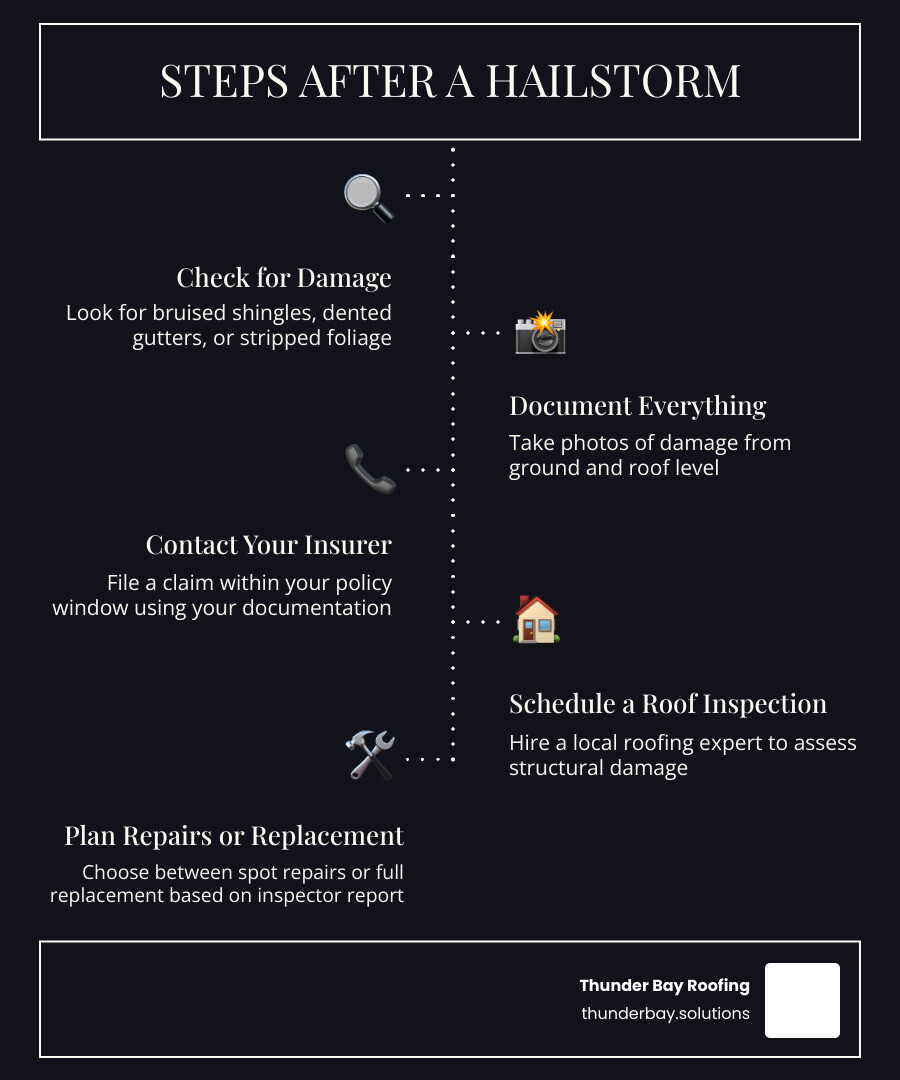
If a severe hailstorm has recently passed through Wesley Chapel, Land O’ Lakes, or Lutz, follow this order of operations to secure your property and file your claim:
- Document the Date and Time: Note the exact date and time of the storm. This allows your roofing contractor to cross-reference the event with the National Oceanic and Atmospheric Administration (NOAA) Storm Events Database, proving to your insurer that a qualifying event occurred.
- Perform a Ground Assessment: Take clear, high-resolution photographs of collateral damage around your home (dented gutters, broken window screens, shredded leaves).
- Secure Your Property: If you have active leaks, take immediate steps to prevent further interior damage. Cover exposed areas with temporary tarps. Save all receipts for materials or emergency services, as these are fully reimbursable.
- Get a Professional Inspection First: Before calling your insurance company, contact a trusted local roofer to perform a comprehensive inspection. Having a detailed, professional damage report in hand prevents you from filing a “zero-pay” claim if the damage does not exceed your deductible.
- File the Claim: Contact your insurance carrier and provide your policy number, the storm date, and your contractor’s initial assessment.
- Meet the Adjuster Together: Ensure your chosen roofing contractor is present on-site when the insurance adjuster arrives. This ensures both parties agree on the scope of the damage and prevents the adjuster from overlooking critical impacts.
For a comprehensive homeowner playbook on this process, explore The Homeowner’s Guide to Hail Damage and Repair. If your roof has sustained wind damage in addition to hail, you can also review our services for Storm Damaged Roofing.
Understanding ACV vs. RCV Insurance Policies
The type of homeowners insurance policy you carry determines how much out-of-pocket expense you will incur during a roof replacement.
- Actual Cash Value (ACV) Policies: An ACV policy pays only for the depreciated value of your roof based on its age. For example, if you have a 15-year-old asphalt roof that would cost $15,000 to replace, an ACV policy may only pay out $6,000 after accounting for depreciation and your deductible. This leaves you to cover the remaining balance out of pocket.
- Replacement Cost Value (RCV) Policies: An RCV policy covers the actual, current cost to replace your roof with a new one of similar quality, regardless of its age. You are only responsible for paying your deductible. RCV policies offer vastly superior financial protection, especially in storm-prone regions like West Central Florida.
To learn more about how insurance carriers evaluate these policies and calculate depreciation, you can read the Owens Corning Hail Damage and Insurance Guide or review the Insurance Information Institute Guide to Claims.
Repairing and Upgrading Your Roof After a Storm
Once your insurance claim is approved, you must decide whether to perform localized spot repairs or proceed with a complete roof replacement.
Upgrading to Class 4 Shingles to Prevent Roofing Hail Damage
If your roof requires a full replacement, we strongly recommend upgrading to Class 4 impact-resistant shingles.
Class 4 shingles are tested under the industry-standard UL 2218 classification. During this test, conducted by UL Solutions, a 2-inch steel ball is dropped twice from a height of 20 feet onto the same spot on a shingle. To achieve a Class 4 rating, the shingle must withstand these impacts without showing any tearing, cracking, or fracturing on its back mat.
The Cost-Benefit Analysis of Class 4 Shingles
While Class 4 impact-resistant shingles typically cost 10% to 25% more than standard architectural shingles, they represent an excellent long-term investment:
- Insurance Premium Discounts: Many Florida insurance carriers offer annual premium discounts ranging from 10% to 35% for homes with verified Class 4 roofing systems.
- Extended Lifespan: These shingles are engineered to withstand hail up to 2 inches in diameter, ensuring your roof survives future storms without requiring another replacement.
- Increased Home Value: A transferrable warranty on an impact-resistant roof is a major selling point for future buyers.
To explore your repair and replacement options, check out our dedicated page on Hail Damage Repair or read Everything You Need to Know About Roof Hail Damage Repair.
How to Avoid Storm Chasers and Hire a Reputable Local Roofer
Following a major hailstorm, out-of-state contractors — often called “storm chasers” — flood local neighborhoods. These companies travel from state to state following weather radar maps, looking to secure quick insurance payouts.
To protect yourself from predatory practices, always verify that your roofer meets the following criteria:
- A Permanent Local Address: Ensure the company has a physical office in West Central Florida (such as Wesley Chapel, Land O’ Lakes, or Lutz) rather than a temporary P.O. Box or an out-of-state address.
- Active State Licensing and Insurance: Verify their license status on the Florida Department of Business and Professional Regulation (DBPR) website. They must carry active general liability and workers’ compensation insurance.
- No Upfront Cash Demands: Never work with a contractor who demands your entire insurance payout or a large cash deposit before materials are delivered to your property.
- Local References: Ask for references from homeowners in your immediate ZIP code who have had work completed in the last 12 to 24 months.
If you are ready to work with a trusted, licensed local professional, you can request a Free Roof Quote directly from our team.
Frequently Asked Questions about Roofing Hail Damage
What size hail actually damages a roof?
Hail that is 1 inch in diameter (roughly the size of a U.S. quarter) is the standard threshold at which functional damage begins to occur on standard asphalt shingles. Hail smaller than 1 inch typically causes minor, cosmetic granule loss that does not compromise the structural integrity of the roof. Once hail reaches 1.25 inches (half-dollar size) or 1.75 inches (golf ball size), it consistently produces functional damage across almost all standard roofing materials, including metal and tile.
Why do hail damage claims get denied?
The most common reasons for claim denials include:
- Filing Too Late: Most insurance policies require you to file a claim within 12 months of the storm event.
- Pre-existing Wear and Tear: If your roof was already near the end of its natural lifespan and showing severe UV degradation, the insurer may attribute the damage to neglect rather than the storm.
- Lack of Documentation: Failing to provide clear photos of collateral damage or a professional inspection report makes it easy for insurers to dispute the origin of the damage.
Will filing a hail damage claim raise my insurance premium?
Legally, insurance companies cannot raise your individual premium rates solely because you filed a claim for a natural disaster or “act of God,” such as a hailstorm. However, following a widespread storm event, insurance carriers may adjust rates across an entire geographic region or ZIP code to account for the increased collective risk. This means your rates may rise regardless of whether you file an individual claim, making it highly advisable to file and receive the repairs you are paying for through your premiums.
Conclusion
Detecting and resolving roofing hail damage early is the single best way to protect your home’s structure and avoid massive out-of-pocket expenses down the road. Because hail damage is often invisible from the ground and takes months to manifest as an active leak, partnering with a trusted, local professional is essential.
At Thunder Bay Roofing, we bring decades of Florida weather expertise to every project. We understand the unique challenges that Wesley Chapel, Land O’ Lakes, and Lutz homeowners face, from high-velocity winds to sudden, severe hailstorms. Whether you need a detailed inspection, localized storm repairs, or a complete Roof Replacement, our licensed and insured team is here to guide you through every step of the process, including navigating your insurance claim.
Don’t wait for a minor bruise to turn into a major ceiling leak. Contact Thunder Bay Roofing today to schedule your professional storm damage inspection.