
Everything You Need to Know About Roof Hail Damage Repair
What Roof Hail Damage Repair Actually Involves (And What to Do First)
Roof hail damage repair is the process of assessing, restoring, or replacing roofing materials compromised by hailstone impacts — and knowing where to start makes a major difference in cost, safety, and insurance coverage. For homeowners seeking expert roofing services in West Central Florida, identifying damage early is the key to preventing long-term structural issues.
Here’s what most homeowners need to know right away:
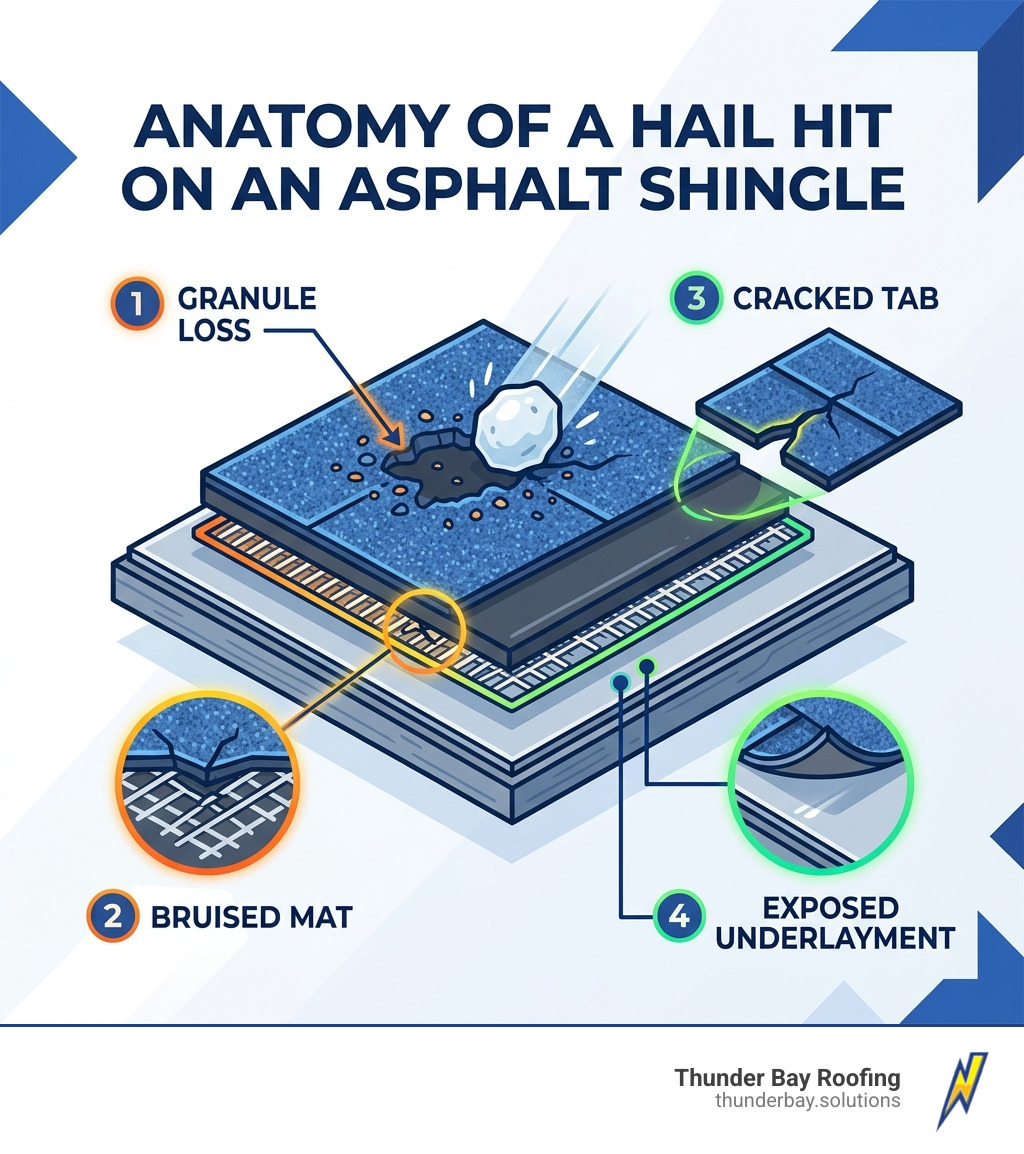
- Even small hail causes real damage. Hailstones as small as 1 inch in diameter can bruise asphalt shingles, strip granules, and crack the reinforcing mat beneath — damage that often isn’t visible from the ground.
- Leaks can appear months later. Hail creates hidden fractures that worsen gradually with rain and UV exposure, long after the storm is forgotten.
- Act within your insurance window. In Florida, homeowners have one year from the storm date to file an initial hail damage claim.
- Repair or replace depends on three things: how much of the roof is damaged, how old the shingles are, and whether the structural integrity is compromised.
- Get a professional inspection first — before contacting your insurer, before signing anything, and before any contractor touches your roof.
Hailstorms are not just a Midwest problem. Across Wesley Chapel and the greater Tampa Bay area, intense convective storms regularly drop damaging hail alongside heavy rain and wind. The difference between a $500 spot repair and a $15,000 full replacement often comes down to how quickly you respond and how well the damage is documented.
When hail hits, it doesn’t always announce itself with an obvious leak. Instead, it quietly degrades your shingles — stripping the granules that block UV rays, bruising the asphalt mat that keeps water out, and loosening the sealant that holds everything in place. Left unchecked, what starts as cosmetic damage becomes a structural problem.
I’m Tyler Wood, owner of Thunder Bay Home Solutions in Wesley Chapel, Florida — and through years of working on Florida roofing systems exposed to explore weather, I’ve seen how quickly unaddressed hail damage can escalate into costly interior water damage and insurance complications. This guide walks you through everything you need to handle roof hail damage repair the right way, from the first inspection to the final warranty.
Identifying the Signs of Hail Damage on Your Roof
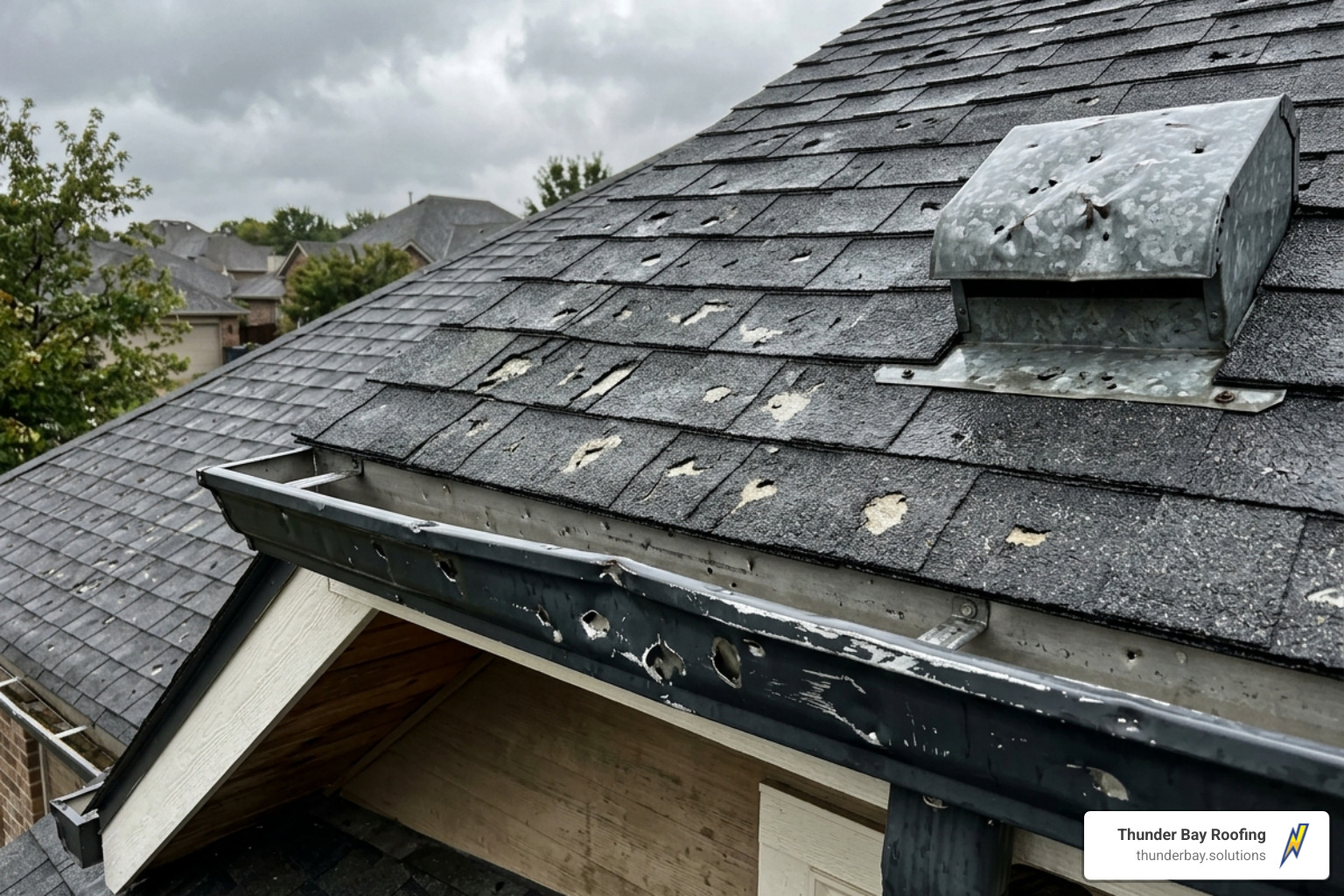
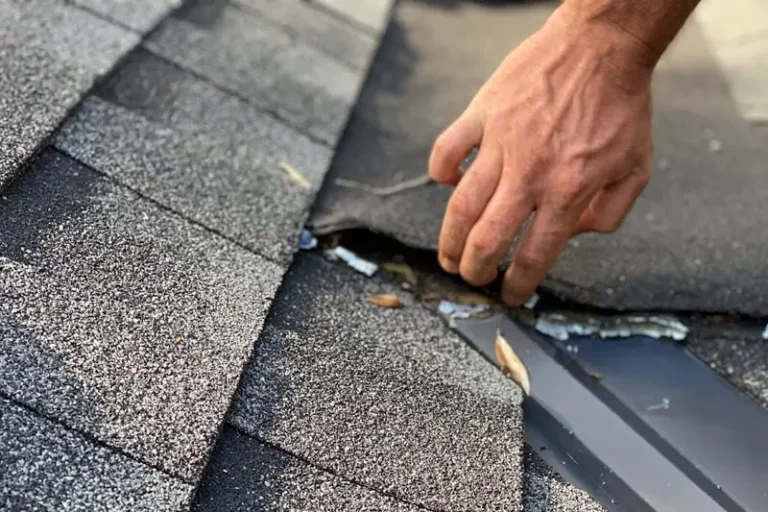
Identifying hail damage is often more like detective work than a simple visual check. While you might expect to see massive holes, the reality is usually more subtle. Hail damage on asphalt shingles typically manifests as circular patterns of granule loss, exposing the black asphalt substrate underneath. These “bruises” are soft to the touch, much like a bruise on an apple, indicating that the internal fiberglass mat has been fractured.
Beyond the shingles themselves, we always look for “collateral damage.” This includes dents on soft metal fixtures like attic vents, chimney flashing, and gutters. If the hail was strong enough to dent a metal downspout, it was certainly strong enough to compromise your shingles. According to Bob Vila’s guide on identifying roof hail damage, these impact marks are often random and vary in size, unlike the uniform patterns seen in manufacturing defects.
To ensure nothing is missed, we recommend scheduling professional roof inspections immediately after a storm. Our team looks for fractured mats and loosened seals that are invisible from the ground but can lead to catastrophic leaks during the next Florida downpour.
How to Spot Roof Hail Damage Repair Needs Safely
Safety is our number one priority. We never want a homeowner climbing a ladder on a potentially slick or compromised roof. Instead, perform a ground-level inspection using a pair of binoculars. Walk the perimeter of your home and look at the “slopes” (the angled sides of your roof).
Check your gutter downspouts for an unusual accumulation of mineral granules—these look like coarse sand and are the protective outer layer of your shingles. If you see piles of these, your shingles have lost their UV protection.
Distinguishing Hail Impact from Normal Wear and Tear
It is easy to confuse hail damage with the natural aging of a Florida roof. UV degradation can cause shingles to become brittle and lose granules over time, but this usually happens uniformly across the entire roof. Hail, by contrast, leaves random, localized strike marks.
| Feature | Hail Damage | Normal Wear/UV Damage |
|---|---|---|
| Pattern | Random, circular strikes | Uniform across sun-exposed areas |
| Texture | Soft “bruises” or indents | Hard, brittle, or “balding” |
| Collateral | Dented vents/gutters | No metal damage |
| Cracking | Fractured internal mat | Surface “craze” cracks from heat |
The Step-by-Step Process for Roof Hail Damage Repair
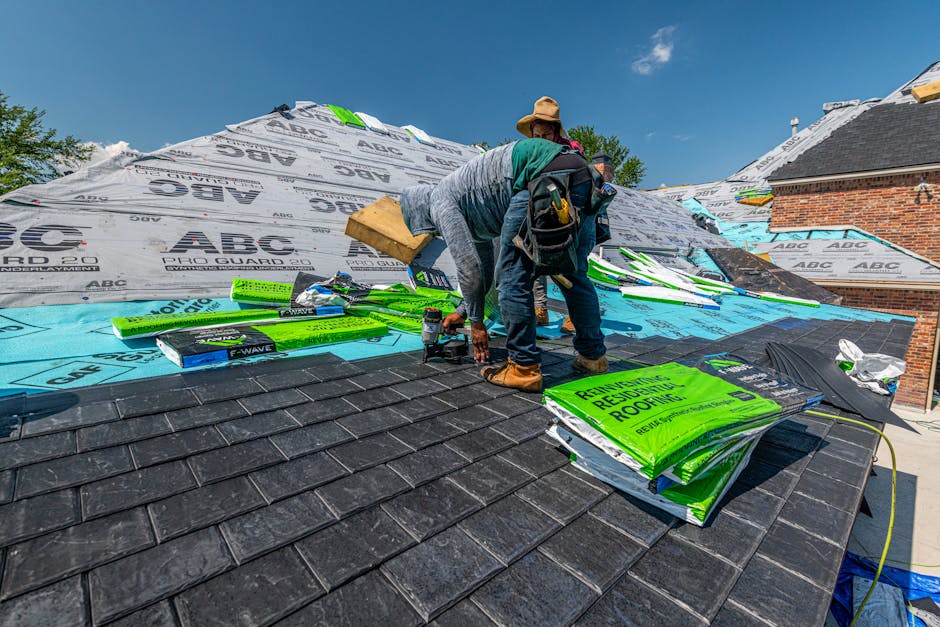
Once damage is confirmed, the roof repair services process begins. This isn’t just about slapping on a few new shingles; it’s a systematic restoration to ensure your home remains watertight. According to the 2026 Hail Roof Damage Guide, a proper repair involves several critical phases.
First, we perform a comprehensive damage assessment to determine if the underlayment (the waterproof barrier beneath the shingles) has been punctured. If we find active leaks, we provide emergency tarping to protect your interior while the permanent repair is scheduled. We then meticulously match the existing material to ensure aesthetic continuity, though older roofs may have some color variance due to fading. The final step is always a thorough walkthrough and debris cleanup to ensure your property is safer than we found it.
Estimating the Cost of Roof Hail Damage Repair
Talking about money is never fun, but being prepared helps. In April 2026, the national average for hail damage repairs sits at approximately $4,250. However, the actual range is broad:
- Minor spot repairs: $375 – $1,500
- Partial slope replacement: $1,500 – $4,000
- Extensive repairs/Full replacement: $7,500 and up
Factors like your roof’s square footage, the steepness (pitch), and the specific material (asphalt vs. tile) will drive these numbers. You can explore Owens Corning’s roofing cost factors to see how different materials impact the bottom line.
Immediate Steps to Prevent Further Damage
If you suspect damage after a storm, do not wait. Documentation is your best friend.
- Record the date: Insurance companies need the specific storm date to verify weather reports.
- Take photos: From the ground, photograph any visible damage, including dented cars or shredded landscaping, which serves as proof of hail size.
- Moisture check: Check your attic and ceilings for stains. If you find a leak, use roof leak detection techniques like placing buckets and clearing debris from gutters to prevent water backup.
- Call a pro: Get a professional assessment to document the “functional damage” that adjusters need to see.
Navigating Insurance Claims and Recoverable Depreciation
Dealing with storm damaged roofing claims can feel like learning a second language. Most homeowners are surprised to find that insurance companies rarely cut a single check for the full amount upfront. Instead, they use a process designed to ensure the work is actually completed.
When you file a claim, you must provide detailed documentation, including photos and a professional estimate. According to First Roof Guide, your policy limits and deductible (often 1-2% of your home’s value in Florida) will determine your out-of-pocket costs.
Understanding Recoverable Depreciation in Roof Claims
This is the part that trips most people up. Insurance companies typically calculate two values:
- Actual Cash Value (ACV): The value of your roof today, accounting for its age and wear.
- Replacement Cost Value (RCV): The cost to actually buy a new roof at today’s prices.
The difference between these two is “recoverable depreciation.” The insurance company holds this money back (the depreciation holdback) until you provide proof of completion. Once we finish the roof hail damage repair and send the final invoice, the carrier releases the remaining funds to you.
How Roofing Companies Work with Insurance Adjusters
We see ourselves as your advocate. When an adjuster visits your home, they are looking for reasons to limit the payout. We prefer to be on-site during their inspection to point out subtle “functional damage” they might miss. We use Xactimate, the same estimating software used by most insurance carriers, to ensure our scopes of work align with their requirements.
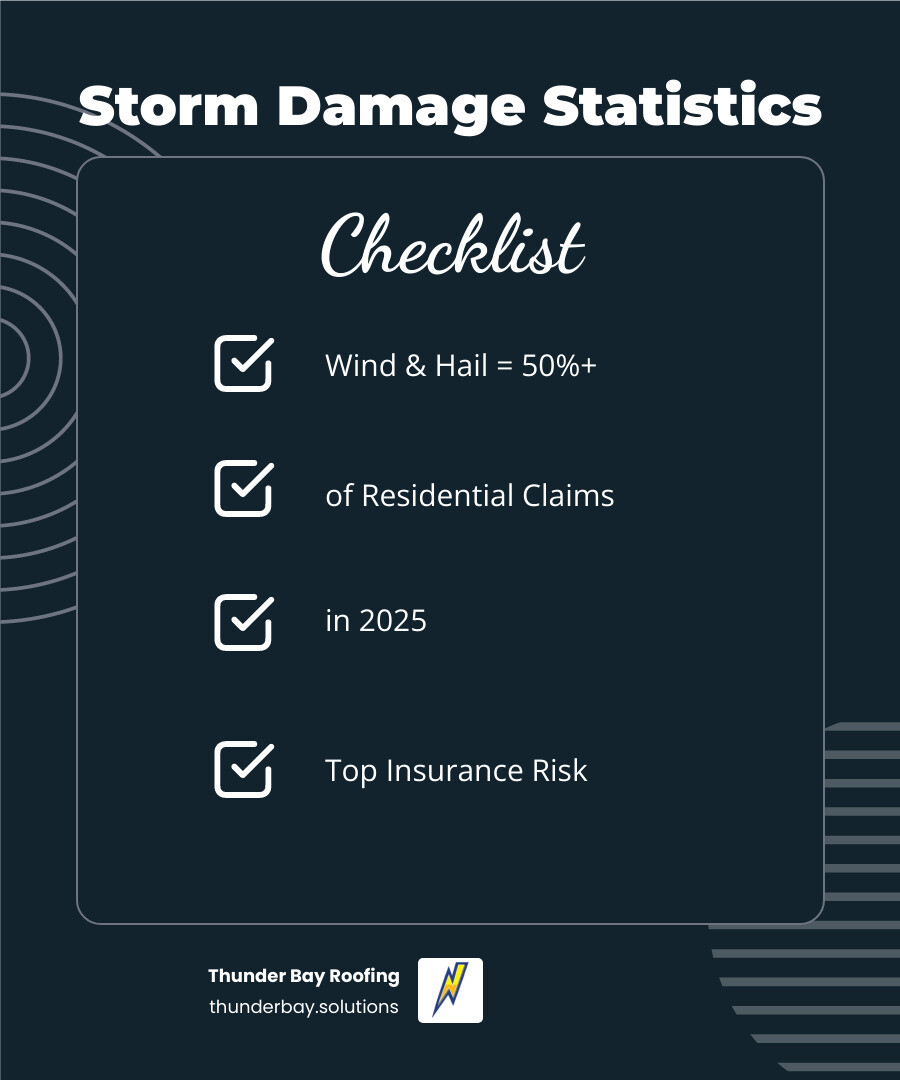
In Florida, we also have to navigate the Florida Building Code 25% rule. This state law mandates that if more than 25% of a roof section is damaged within a 12-month period, the entire section must be replaced and brought up to current building codes. We make sure your adjuster understands when this rule is triggered so you aren’t left with an illegal, partial repair.
Repair vs. Replacement: Determining the Best Path Forward
Should you just fix the spots or go for a full roof replacement? It’s the million-dollar question (or at least the $15,000 one). If your roof is less than 10 years old and the damage is concentrated on one slope, a repair is often sufficient.
However, if your shingles are nearing their 15-to-20-year lifespan, they likely lack the flexibility to withstand the “manipulation” required for a repair. Brittle shingles often crack when we try to lift them to replace the ones underneath. As noted in the Lakewood Hail Guide, widespread bruising across multiple slopes usually signals that the structural integrity is compromised, making replacement the safer, more cost-effective long-term choice.
The Benefits of Class 4 Impact-Resistant Shingles
If you are replacing your roof in a hail-prone area like Lutz or Land O’ Lakes, we strongly recommend Class 4 shingles. These shingles meet the UL 2218 standard, meaning they can withstand a 2-inch steel ball dropped from 20 feet without cracking.
These shingles are made with SBS modified asphalt—essentially a rubberized asphalt that flexes instead of shattering upon impact. While they cost about 10-25% more than standard shingles, many Florida insurers offer premium discounts of 15% to 35% for installing them. Check out CertainTeed’s impact-resistant options for a look at the technology involved.
When to Choose a Full Roof Replacement
A full replacement is usually necessary when:
- The 25% rule is met: As per Florida code, significant damage requires a total overhaul.
- Widespread bruising: If impacts are found on every slope, the roof’s lifespan has been cut short.
- Granule depletion: If your gutters are full of “sand,” your asphalt shingle roofing can no longer protect itself from the Florida sun.
Choosing a Reputable Contractor for Roof Hail Damage Repair
After a storm, “storm chasers” often flood neighborhoods. These are out-of-state companies that follow hail maps, sign up as many homeowners as possible, and then disappear when the work is done—leaving you with no one to call if a leak develops later.
To protect yourself, always choose a local contractor with a physical office in West Central Florida. Ensure they are licensed and insured in the state of Florida. A reputable company like Thunder Bay Home Solutions provides clear hail damage repair contracts, transparent pricing, and robust workmanship warranties that complement the manufacturer’s warranty.
Frequently Asked Questions about Roof Hail Damage Repair
What size hail typically causes roof damage?
While wind speed matters, the general rule is that 1-inch hail (quarter-sized) is the threshold for damage to standard asphalt shingles.
- 3/4 inch (Dime/Penny): Rarely causes damage unless shingles are very old.
- 1 inch (Quarter): Causes bruising and granule loss on most asphalt shingles.
- 1.25 inch (Half Dollar): Typically damages wood shakes and heavy composite shingles.
- 2 inches+ (Egg/Tennis Ball): Can puncture the roof deck and cause severe structural damage.
How long do I have to file a hail damage claim in Florida?
Under Florida Senate Bill 2-D, homeowners generally have one year from the date of the loss to file an initial claim. If you discover additional damage later, there is an 18-month window for supplemental claims. Waiting too long can give the insurance company grounds to deny the claim, arguing that the damage was caused by “wear and tear” rather than a specific storm event.
Can I repair my own hail damage?
We strongly advise against it. Beyond the obvious safety risks of falling, DIY repairs can void your manufacturer’s warranty. Furthermore, insurance companies require “proof of professional repair” to release recoverable depreciation funds. Without a certified contractor’s invoice, you might never see the second half of your insurance check.
Conclusion
At Thunder Bay Home Solutions, we live and work in the same communities we serve. We understand that a hailstorm is a stressful event, but roof hail damage repair doesn’t have to be a nightmare. By acting quickly, documenting the damage, and working with a licensed local expert, you can ensure your home remains the safe haven it’s meant to be.
Whether you’re in Wesley Chapel, Lutz, or Land O’ Lakes, our team is ready to provide the Florida weather expertise you need. Don’t let a “minor” storm turn into a major headache.
Ready to protect your home? Schedule your expert roof hail damage repair today. We’ll handle the inspection, the insurance coordination, and the restoration so you can get back to normal.