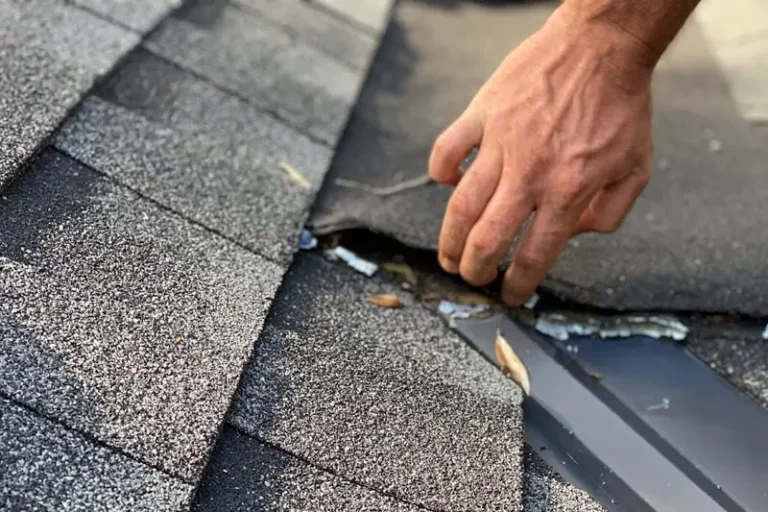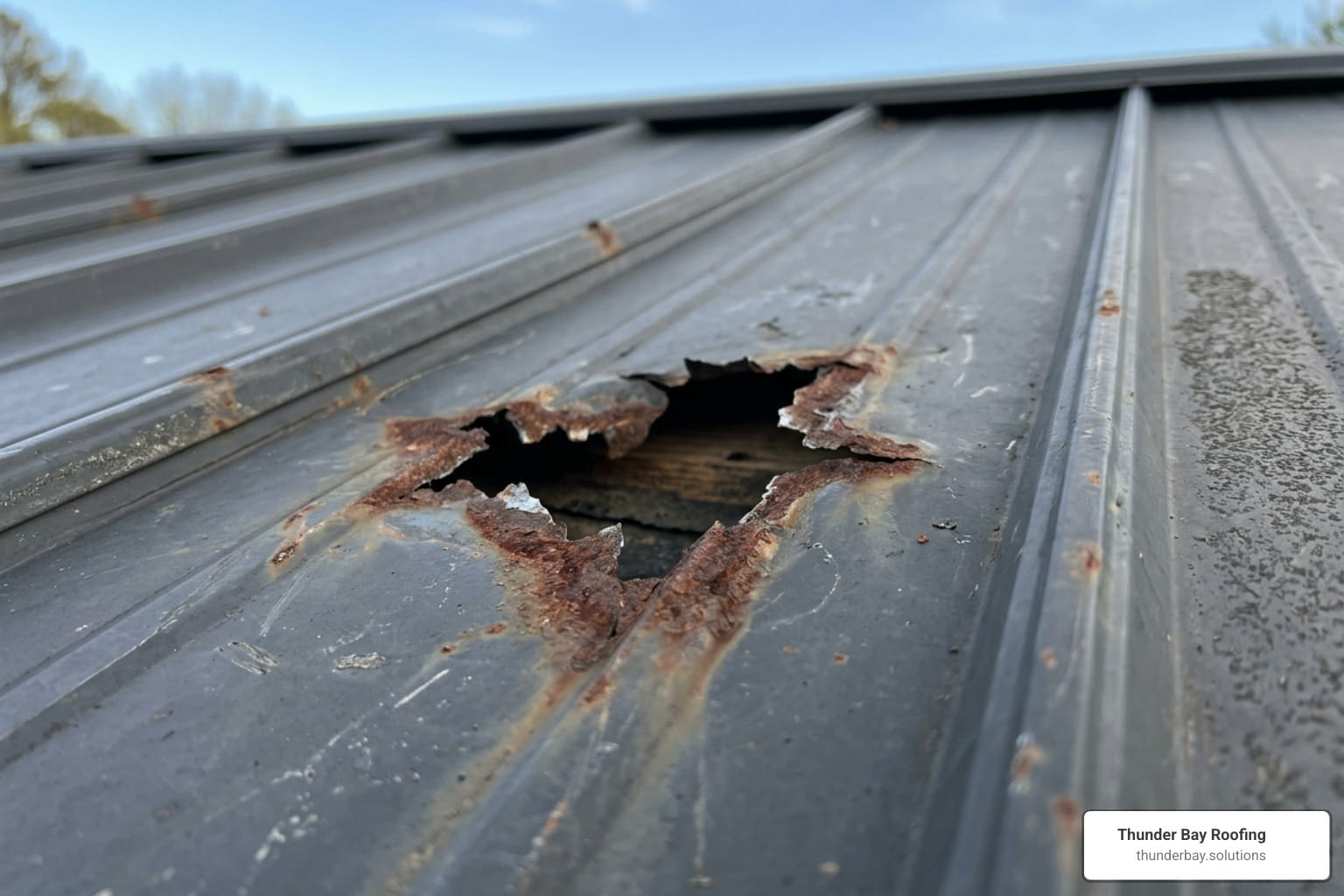

The Ultimate Guide to Inspecting Your Roof for Hail Damage
Why Inspecting Your Roof for Hail Damage Could Save You Thousands
Inspecting your roof for hail damage after a storm is one of the most important steps you can take to protect your home — and your wallet. Partnering with a trusted provider of professional roofing services ensures that hidden structural issues are identified before they lead to costly leaks.
Here’s what to look for at a glance:
- Dented gutters and downspouts — soft metal is the first place hail leaves evidence
- Dark, circular bruises on shingles — granules knocked off, exposing the black mat underneath
- Soft or spongy spots when you press on shingle surfaces — a sign of mat fracture beneath
- Dented AC condenser fins, torn window screens — collateral damage that confirms hail size
- Random, scattered impact patterns — unlike wind damage or foot traffic, hail hits are unpredictable
The United States sees more than 4,000 major hail events every year, costing an average of $1 billion in annual roof repairs nationwide. In Florida, where severe storms are a near-constant reality, hail often travels alongside high winds — which means damage can appear on multiple roof faces at once, and it can be far worse than it looks from the ground.
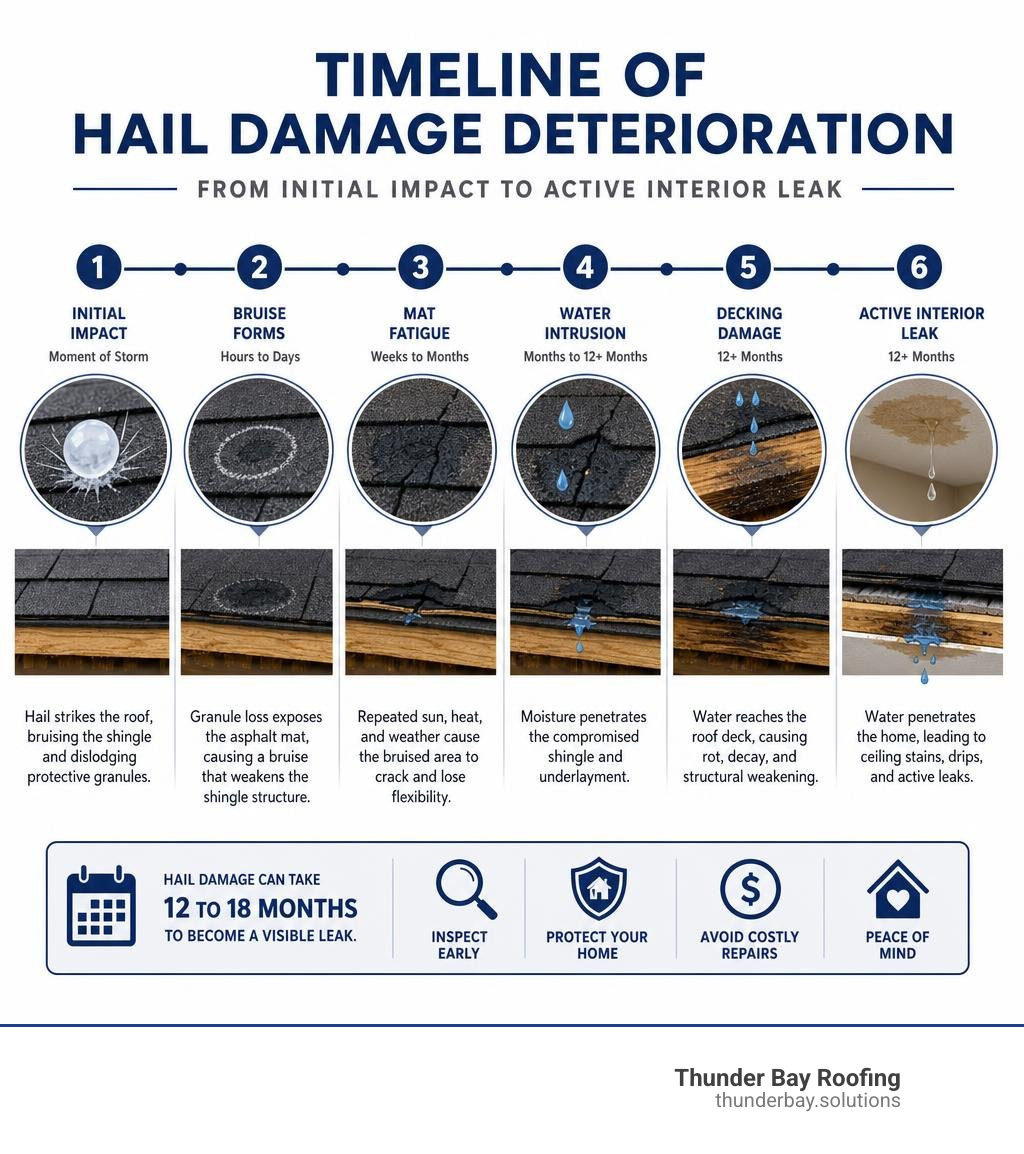
Here’s what makes hail damage especially tricky: it may not cause a visible leak for 12 to 18 months after impact. By the time water stains appear on your ceiling, the insurance window for filing a claim may be closing fast.
Most homeowners either miss the damage entirely or — on the other end of the spectrum — get misled by door-to-door roofers claiming damage that doesn’t meet the functional threshold insurers actually require. Knowing exactly what to look for puts you in control of that conversation.
I’m Tyler Wood, owner of Thunder Bay Roofing in Wesley Chapel, Florida — and through years of roofing work across the Tampa Bay area, inspecting roofs for hail damage is one of the most critical services I provide to homeowners after a storm. This guide walks you through every step of the process, from a safe ground-level check to understanding what insurance adjusters are actually looking for.
Inspecting roof for hail damage basics:
What is Hail Damage and How Does It Differ From Normal Wear?
To protect your home and ensure your insurance claim is valid, you must understand what actual hail damage looks like. Many homeowners mistake normal weathering or minor cosmetic blemishes for storm damage.
In the roofing industry, we divide roof damage into two main categories:
- Functional Damage: This is physical damage that compromises the water-shedding ability of the roofing material or shortens its expected lifespan. For an asphalt shingle, this means a fracture in the fiberglass mat beneath the asphalt layer.
- Cosmetic Wear: This refers to surface-level changes that do not affect the roof’s structural integrity or performance, such as minor fading, scuffing, or surface stains.
When inspecting roof for hail damage, the most critical indicator is a “bruise.” Just like an apple, a shingle bruised by hail will feel soft, spongy, and physically indented when you press on it. This softness occurs because the high-velocity impact has ruptured the internal fiberglass reinforcement mat.
Many people believe that granule loss alone constitutes hail damage. However, granule loss is a natural byproduct of shingle aging. In fact, a recent materials study found that up to 35% of granule loss claims in high-density hail storms are actually tied to normal shingle aging combined with minor, non-damaging hail.
That said, severe hail can accelerate this process dramatically. A 2025 materials study focused on repeated sub-severe hail exposure revealed that cumulative impacts weaken asphalt shingles over time, making them highly vulnerable to future storms. In one controlled test series using 50.8 mm (2-inch) hailstones, the experimental group averaged a massive 7,687.2 mm² of immediate granule loss. When this level of loss occurs alongside mat fracturing, it constitutes clear functional damage. To learn more about how these impacts affect your home over time, read The Homeowners Guide to Hail Damage and Repair.
A Step-by-Step Guide to Inspecting Roof for Hail Damage
You do not need to climb onto your roof immediately after a storm to find out if you have damage. In fact, we highly discourage homeowners from getting on a ladder themselves. You can gather excellent forensic evidence right from the safety of your yard.

When we perform a professional inspection, we always start on the ground. Hail is wind-driven, meaning it strikes your home at an angle. By inspecting the perimeter of your property, you can find “collateral damage” that tells a clear story about the size, density, and direction of the hailstones.
When walking your property, keep a close eye out for these key indicators:
- Gutters and Downspouts: Look for dents on the upper edges of your gutters. Aluminum gutters are thin and show dents easily, though these indentations are typically smaller than the actual hailstone diameter. Steel gutters are highly resistant to hail, while copper gutters are softer than steel but harder than aluminum.
- Elevation Damage: Check your siding, window trim, and painted wooden surfaces. Wind-driven hail will leave spatter marks (where it knocks off dirt, oxidation, or mildew) or outright chip the paint.
- AC Condenser Fins: The thin aluminum fins on your outdoor air conditioning unit are incredibly soft. Hail will leave clear, flattened dings in these fins, which is excellent proof of hail size for your insurance adjuster.
- Window Screens and Glass: Look for torn mesh, dented metal screen frames, or cracked glass.
To make sure you do not miss any critical areas, you can use The Ultimate Storm Damage Repair Checklist to systematically document your property.
Safety First: Inspecting Roof for Hail Damage from the Ground
Safety is our absolute priority. Roofs can be incredibly slick after a storm, and structural compromise from fallen branches or severe wind is not always visible from below.
To safely inspect your roof without climbing:
- Use Binoculars: Step back into your yard or onto the sidewalk where you have a clear angle of your roof slopes. Use a high-quality pair of binoculars to scan the shingles.
- Look for Dark Spots: On asphalt roofs, look for dark, circular patches where granules have been freshly knocked away, exposing the black asphalt underneath.
- Inspect Ridge Caps: The very peak of your roof—the ridge cap—takes the most direct, perpendicular hits during a hailstorm. If the ridge caps are cracked or missing pieces, the rest of the roof likely sustained damage as well.
- Stay Grounded: Never attempt to lean a ladder against a gutter that may be structurally weakened, and never walk on a wet roof.
If your ground-level check reveals dented metal vents, shredded window screens, or dark spots on your shingles, it is time to call in the experts for a comprehensive Storm Damaged Roofing assessment.
Identifying Material-Specific Signs of Hail Impact
Different roofing materials react to hail impacts in completely unique ways. Knowing what to look for based on your specific roof type is essential.
Asphalt Shingles
On standard 3-tab or laminated architectural shingles, hail damage appears as dark, circular bruises. The impact dislodges the protective mineral granules, exposing the underlying asphalt. When you touch these spots, they feel soft and spongy compared to the firm, undamaged shingle around them.
Metal Roofs
Metal roofing is highly durable, but it is prone to cosmetic denting. Hail will leave shallow dimples or “dings” on the metal panels. To spot these subtle dents, look at the metal surface during low-angle sunlight (early morning or late afternoon). You can also use the chalk-rubbing technique: gently rub the side of a piece of sidewalk chalk over a suspected area. The chalk will coat the flat surface but leave the indented dimples bare, making them instantly visible.
Wood Shakes
When hail strikes wood shingles or shakes, it causes physical splits along the grain. These splits will have sharp, clean edges and a bright orange or light brown color inside the crack, indicating a fresh split. Older, natural splits will look weathered, gray, and dirty.
Tile and Slate
Clay, concrete tile, and slate roofs are brittle. Hail impacts will cause star-shaped cracks, chipped edges, or complete fractures where pieces of the tile have broken off and slid down into the gutters.
| Roofing Material | Primary Hail Damage Indicator | Visual Appearance | Tactile Feel / Diagnostic Test |
|---|---|---|---|
| Asphalt Shingles | Bruising & granule loss | Dark, circular spots | Soft, spongy to the touch |
| Metal Roofs | Dimples & dings | Shallow circular craters | Chalk-rubbing highlights dents |
| Wood Shakes | Clean splits along grain | Bright orange/brown cracks | Sharp, unweathered edges |
| Tile & Slate | Fractures & chips | Star-shaped cracks, missing corners | Brittle, loose pieces |
All professional inspections should align with Haag Engineering standards, which are the gold standard used by both roofing contractors and insurance adjusters to verify functional hail impact.
Distinguishing True Hail Damage from Wear, Tear, and Mechanical Scrapes
One of the most common reasons insurance claims get denied is the misidentification of roof damage. Adjusters are trained to look for any excuse to classify a spot as “wear and tear” rather than storm damage.
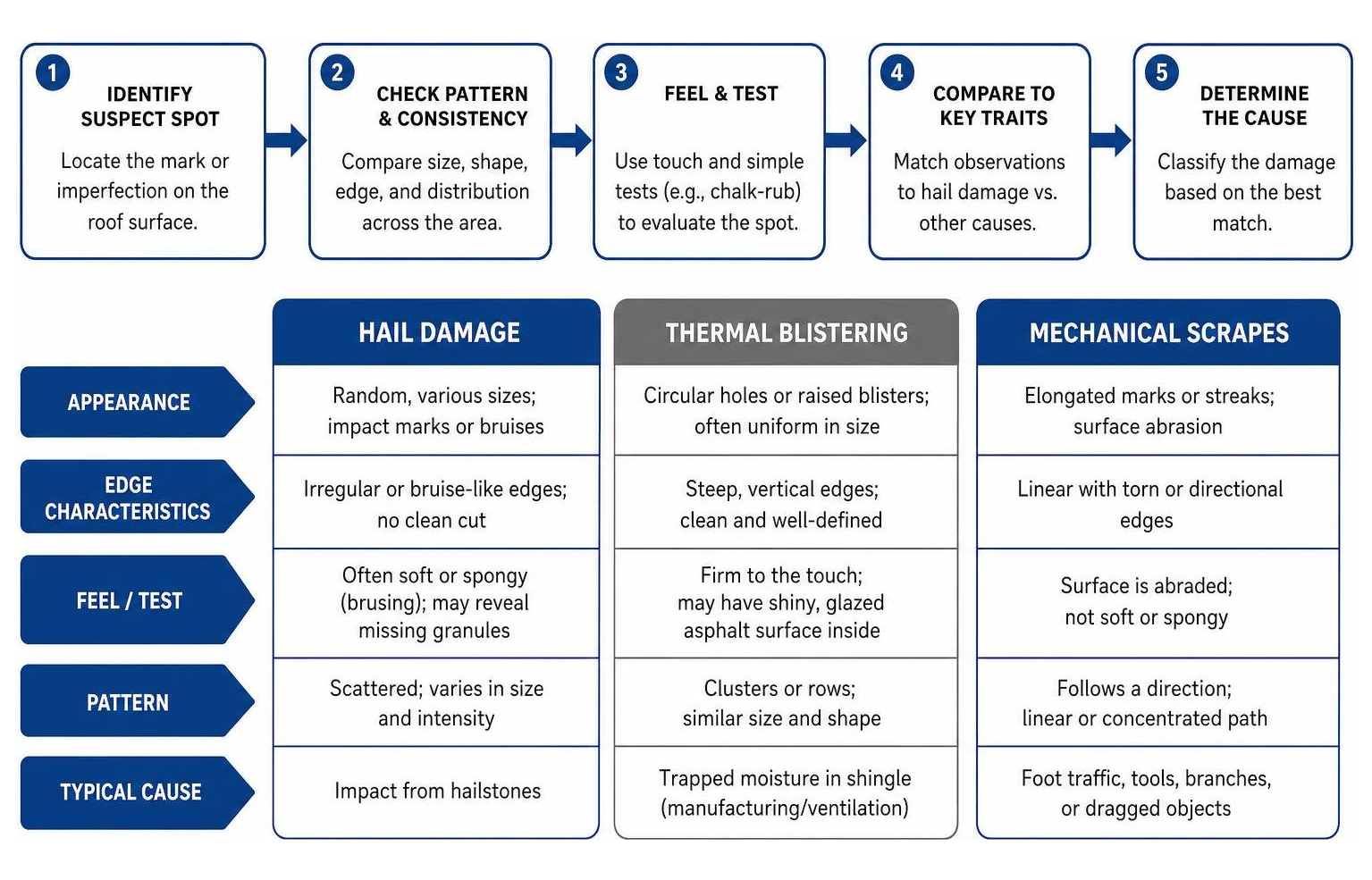
Here is how you can tell the difference:
Thermal Blistering vs. Hail Damage
Blistering is a common manufacturing or ventilation issue. It occurs when moisture becomes trapped inside the shingle during manufacturing. Under intense Florida heat, this moisture expands and pops, leaving a circular hole.
- Blisters are perfectly circular, have steep, vertical edges, are firm to the touch, and often show a shiny, glazed asphalt surface inside.
- Hail Hits have sloped, compacted edges, are randomly scattered, and are physically soft and bruised.
Mechanical and Foot-Traffic Damage
Scrapes from tree branches, shoes, or ladders can easily look like hail damage. However, mechanical damage almost always leaves a scrape, crease, or directional streak. Hail falls downward; it does not scratch or crease shingles. Furthermore, ladder damage is incredibly easy to spot because it typically presents as two parallel scrapes spaced exactly 16 inches apart—matching the standard width of a ladder’s rails.
To ensure your claim is handled fairly, it is vital to understand these differences. You can read more about professional forensic techniques in this guide on Reading the Roof Before the Roofer Does. If high winds accompanied the storm, you should also understand how wind affects your shingles by reviewing our guide on Wind Damage Roofing 101 or exploring our Wind Damage Repair services.
The Test Square Method: How Insurance Adjusters Quantify Damage
When an insurance adjuster steps onto your roof, they do not look at the entire surface as one giant piece. Instead, they use a highly standardized scientific method called the Test Square Method.
A “square” in roofing terms is a 10-foot by 10-foot area (100 square feet). The adjuster will use chalk to draw a test square on at least three or four different slopes of your roof (usually the North, South, East, and West exposures).
Inside each test square, the adjuster will count the number of genuine, functional hail hits. They perform a tactile check on every single mark, pressing their thumb into the center of the spot to feel for a fractured mat.
Most major insurance companies require seeing 8 to 10 functional hail hits within a single 100-square-foot test square to justify approving a full roof replacement. If the density of hits is lower, they may only approve localized repairs.
Because this process is highly technical, having a certified professional present during the adjuster’s inspection is incredibly beneficial. For a complete breakdown of how this process works, read Everything You Need to Know About Roof Hail Damage Repair and learn more about our dedicated Hail Damage Repair solutions.
Navigating the Insurance Claim Process and Avoiding Denials
Filing an insurance claim for storm damage is a time-sensitive process. In Florida, storms can roll in quickly, and the clock starts ticking the moment the last hailstone hits the ground.
- Act Quickly: We highly recommend scheduling an inspection within 24 to 48 hours of a major storm. While most policies allow between 6 and 24 months to file a claim, waiting makes it much harder to prove that the damage was caused by a specific storm event rather than natural weathering.
- Understand Your Policy: Do you have an Actual Cash Value (ACV) or Replacement Cost Value (RCV) policy? An RCV policy covers the actual cost of replacing your roof today, minus your deductible. An ACV policy only pays out what your roof was worth at its current age, which can leave you with significant out-of-pocket expenses.
- Avoid Claim Denials: The most common reasons claims get denied are pre-existing wear and tear, lack of regular maintenance, or waiting too long to report the damage. Having clear, dated photo documentation of the storm and your roof’s condition is your best defense.
For a comprehensive walkthrough of costs, timelines, and claim steps, check out this Hail Damage on Your Roof: Signs, Cost & Insurance Guide (2026). If your roof has sustained significant damage, we can help you navigate your Storm Damaged Roofing claim from start to finish.
Why Professional Inspecting Roof for Hail Damage Matters
While checking your gutters and yard is a great start, a DIY inspection will not hold up in an insurance negotiation. Insurance companies require documented, professional proof.
A certified roof inspection report from us includes:
- High-resolution aerial drone photography and close-up tactile photos of shingle bruising.
- Official NOAA weather radar data correlating the exact date and time of the hail event with your address.
- Detailed test square damage mapping for every slope of your roof.
- An itemized, professional estimate for repairs or replacement using industry-standard estimating software.
By partnering with a local, licensed contractor who understands Florida’s strict building codes, you ensure your interests are protected. Schedule a certified, professional Roof Inspection to secure the unbiased proof you need.
Frequently Asked Questions about Roof Hail Damage
What size hail will actually damage a roof?
Generally, hail must be 1 inch in diameter (the size of a quarter) to cause functional damage to standard 3-tab asphalt shingles. For thicker, laminated architectural shingles, it typically takes 1.25 to 1.5-inch hail to cause damage. However, if the hail is wind-driven or if your roof is already over 10 years old, even smaller pea-sized or dime-sized hail can cause severe granule loss and compromise the roof’s integrity.
Does granule loss automatically mean I need a full roof replacement?
No. Granule loss by itself is considered cosmetic unless it is accompanied by a fracture in the underlying fiberglass mat. While up to 35% of granule loss claims are tied to natural aging, insurance adjusters will only approve a full roof replacement if they find a sufficient density of functional bruises (usually 8 to 10 hits per test square) that physically compromise the roof’s waterproofing ability.
How long do I have to file an insurance claim after a hailstorm?
Most homeowners insurance policies require you to file a claim within 6 to 24 months of the storm event. Because latent hail damage can take over a year to manifest as an active interior leak, it is critical to have your roof professionally inspected and documented immediately after a storm, even if you do not see water dripping from your ceiling.
Conclusion
Protecting your home from the long-term effects of storm damage starts with a timely and accurate inspection. Ignoring minor hail impacts today can lead to wood rot, mold growth, and costly structural repairs tomorrow.
At Thunder Bay Roofing, we have spent decades helping homeowners across West Central Florida, including Wesley Chapel, Land O’ Lakes, and Lutz, navigate the aftermath of severe weather. We provide honest, highly documented inspections that ensure your home remains safe and your insurance claims are handled fairly.
Do not wait for a small leak to turn into a major disaster. Visit our Wesley Chapel Roofing page to schedule your professional roof inspection today. We are here to help you weather any storm.