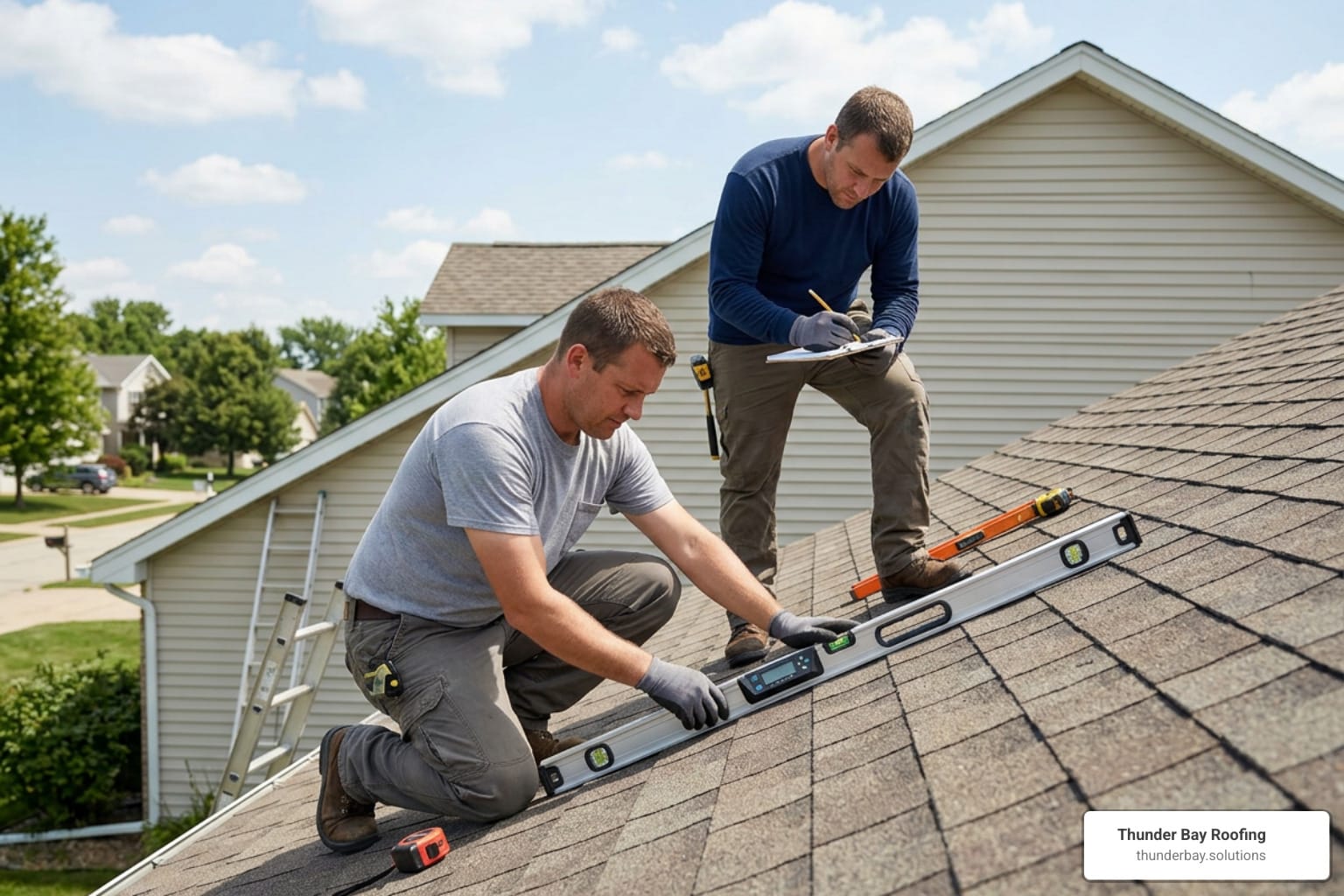

Fix a Flat Roof Leak in San Antonio: A Practical Homeowner Guide
How to Find and Fix a Flat Roof Leak Before It Spreads
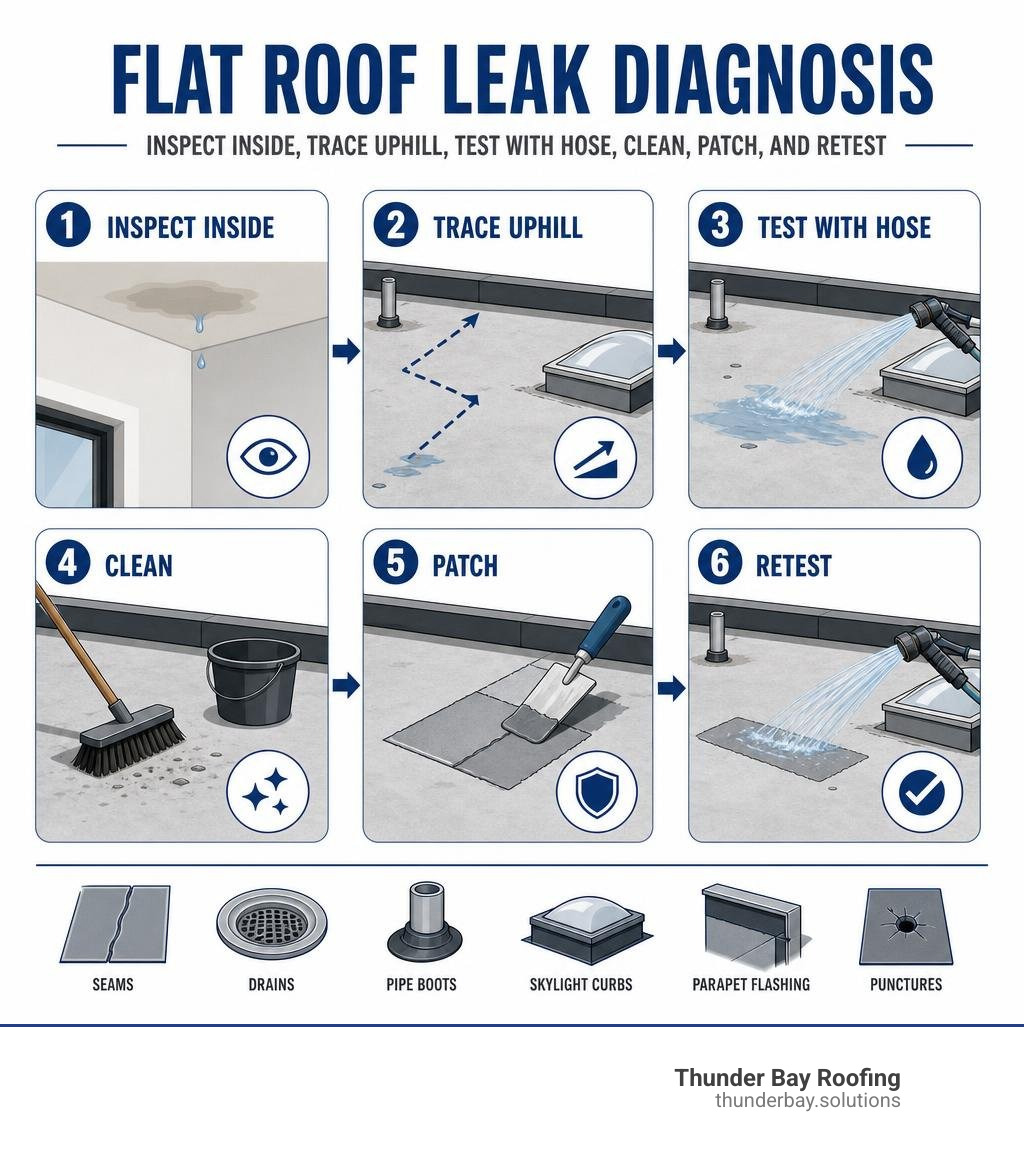
If your goal is to fix leak on flat roof surfaces safely, the most important step is identifying the true entry point rather than reacting only to the ceiling stain. On low-slope roofs in Wesley Chapel, Lutz, Land O Lakes, and Oldsmar, water can move sideways beneath the membrane before it appears indoors. For dependable flat roof repair and leak detection, schedule a professional inspection promptly after heavy rain, wind-driven rain, or storm damage.
A flat roof leak is urgent because trapped moisture can reach insulation, decking, drywall, and interior finishes. Florida hurricane season, intense UV exposure, daily afternoon storms, and wind uplift all accelerate membrane wear around seams, drains, pipe boots, skylight curbs, parapet flashing, punctures, and other vulnerable roof details.
Homeowners should document the stain location from inside, protect belongings, and avoid walking on a wet roof, soft decking, or any area near unprotected edges. A trained roofing technician can trace lateral moisture migration, evaluate uphill roof components, use moisture-detection tools, and perform controlled leak testing without creating additional safety or structural risk.
I am Tyler Wood, owner of Thunder Bay Home Solutions LLC and Thunder Bay Roofing, where I help Florida property owners diagnose storm, rain, UV, and drainage-related roof damage. My work in roofing and property protection informs this guide on how to safely fix leak on flat roof systems and recognize when a professional inspection is the safer choice.
Similar topics to fix leak on flat roof:
Professional Diagnostic and Repair Process to Fix Leak on Flat Roof Systems
Flat roofs operate under a continuous hydrostatic load rather than shedding water instantly through steep gravity drainage. When water breaches the upper membrane layer, it migrates horizontally through underlying insulation boards and deck flutes before penetrating interior drywall. Homeowners facing an active ceiling drip can review temporary leak mitigation steps to minimize immediate interior property loss while arranging a formal structural assessment.
Safety Precautions Required for Flat Roof Inspections
Working on low-slope systems involves severe fall risks that require strict safety controls and adherence to OSHA fall protection standards. Fall-related incidents account for approximately one in five construction fatalities, primarily occurring near unprotected roof perimeters, skylights, and degraded structural decking.
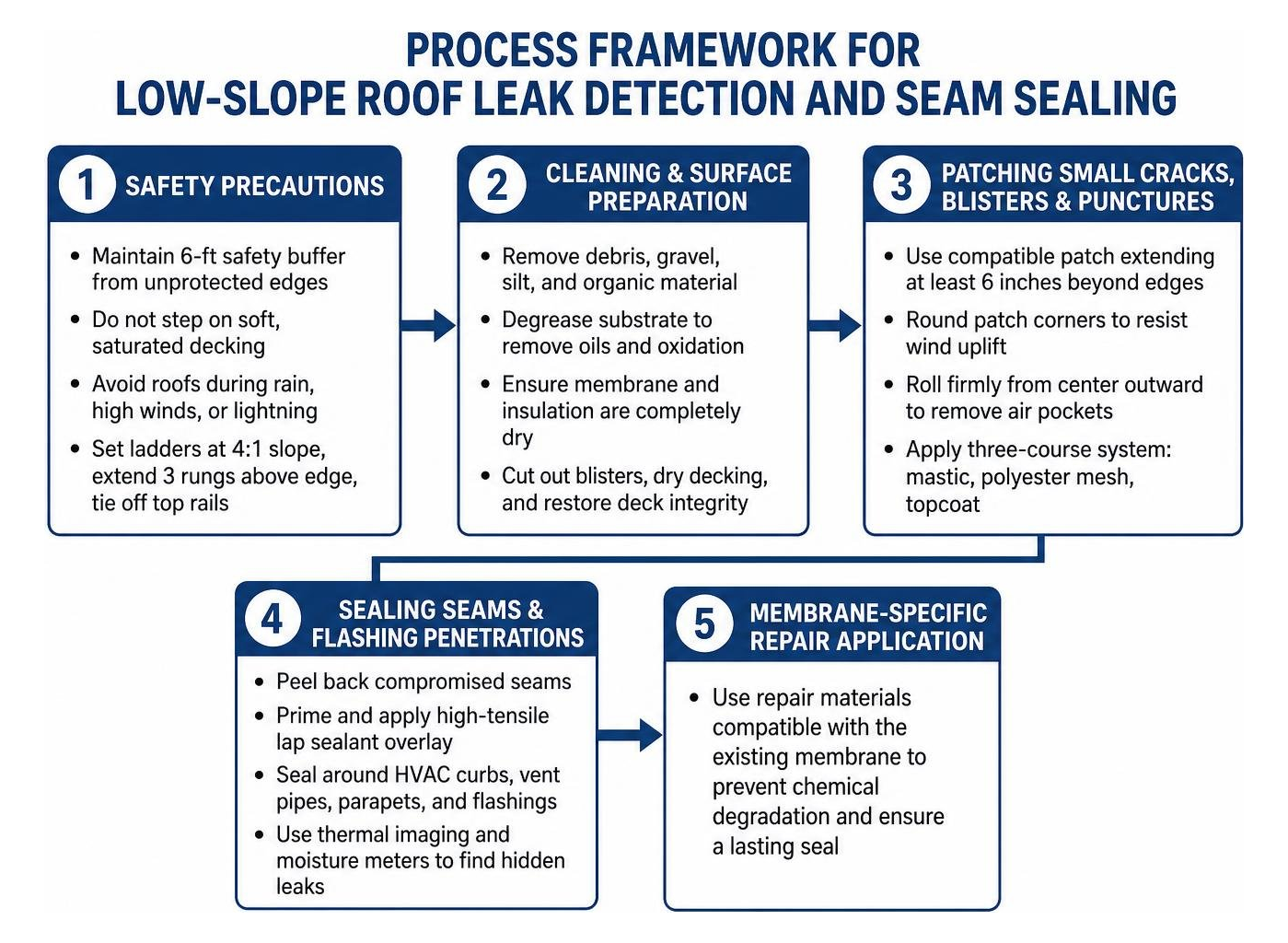
- Edge Protection: Certified contractors maintain a minimum safety buffer of six feet from any unprotected edge unless proper tie-off systems or guardrails are fully installed.
- Deck Integrity Testing: Water-saturated wood decking loses its load-bearing capacity rapidly; technicians never step directly onto soft, spongy, or visibly sagging areas.
- Environmental Conditions: Roof access is strictly avoided during active Florida rainstorms, high winds, lightning hazards, and daily afternoon storm patterns common across Pasco County and Hillsborough County.
- Ladder Setup: Commercial extension ladders are secured at a 4:1 slope ratio, extending three rungs above the roof edge, and tied off to prevent lateral slippage.
Commercial Cleaning and Substrate Preparation
A permanent membrane repair requires an immaculate, dry substrate to achieve chemical adhesion. Contaminants like algae, dust, degraded asphalt oils, and pooled silt prevent bonding agents from fusing to the underlying roof.
Professional restoration crews clear away all standing organic material, loose gravel ballast, and silt using specialized equipment. The repair perimeter is treated with material-specific detergents or industrial acetone wipes to strip away oxidized surface layers. Contractors ensure surrounding insulation and membrane are completely dry because trapped moisture creates blistering under extreme Florida heat. Licensed technicians cut out moisture blisters, remove damp insulation beneath, and thoroughly dry the decking before installing replacement material, using comprehensive leak repair strategies to restore deck integrity.
Professional Membrane Patching Procedures
Punctures caused by windborne debris or mechanical foot traffic require compatible patching materials extending at least six inches beyond all rupture edges.
Technicians round all patch corners prior to application, stopping wind uplift forces from catching square edges during severe tropical weather. The repair is pressed using a heavy steel seam roller, applying deliberate mechanical pressure from the center outward to displace air pockets. A three-course liquid membrane application – consisting of elastomeric mastic, an embedded layer of spun-bound polyester mesh, and an impenetrable topcoat – creates a monolithic barrier over structural fractures.
Sealing Seams and Flashing Penetrations
Roof penetrations and flashing terminations represent more than 90% of low-slope system failures. Thermal expansion and contraction cycles break rigid sealants around HVAC curbs, plumbing vent pipes, and parapet walls over time.
Contractors restore split seams by peeling back compromised sections, applying specialized bonding primers, and fusing a targeted overlay with high-tensile lap sealant along the edges. When water intrusion points are hidden beneath ballast or interior wall lines, professional roof leak detection helps technicians locate the structural breach using non-invasive thermal imaging and moisture meters.
Membrane-Specific Techniques to Fix a Flat Roof Breach
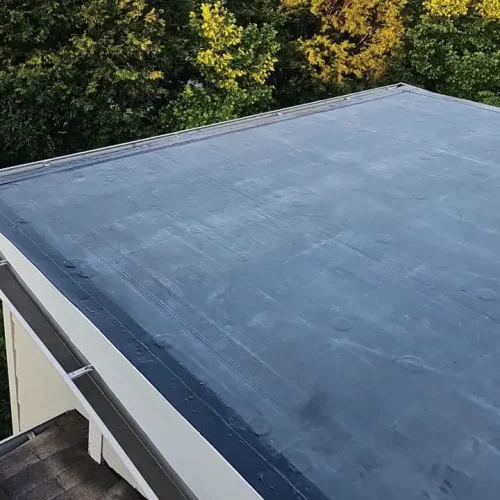
Using chemically incompatible repair materials causes rapid chemical degradation of the underlying roofing membrane within weeks. For instance, applying standard asphalt-based roofing cement over synthetic single-ply systems causes petroleum distillates to dissolve the rubber or thermoplastic compounds.
| Membrane System | Primary Breach Culprits | Required Primers & Cleaners | Compatible Repair Material | Incompatible Products |
|---|---|---|---|---|
| EPDM Rubber | Shrinkage, seam adhesive failure | Weathered membrane cleaner, EPDM primer | Uncured EPDM peel-and-stick flashing tape | Asphalt mastic, coal tar, polyurethane foam |
| TPO & PVC | Punctures, cracked field welds | Thermoplastic solvent wash | Hot-air welded membrane patch, silicone sealant | Petroleum cements, standard butyl caulk |
| Modified Bitumen | Granule loss, seam fishmouths | Asphalt primer | Cold-applied SBS adhesive, torch-applied cap | Solvent-heavy single-ply adhesives |
| Built-Up Roof (BUR) | Ponding, gravel displacement | Bitumen cutback primer | Interlocking fiberglass mesh & flashing cement | Single-ply solvent tapes, unprimed acrylic |
EPDM Rubber Membrane Repair
Ethylene propylene diene monomer (EPDM) synthetic rubber requires non-petroleum bonding methods. Professional repairs on durable EPDM roofing systems include carbon buildup removal with weathered membrane cleaner, EPDM-specific primer application, and uncured peel-and-stick flashing tape placed over the damaged area. Standard roofing tar must never contact EPDM, as the oils swell and dissolve the rubber polymer.
TPO and PVC Single-Ply Systems
Thermoplastic Polyolefin (TPO) and Polyvinyl Chloride (PVC) membranes feature hot-air welded seams that form a cohesive physical bond. Professional repairs on heat-welded TPO roofing use specialized heat guns operating between 800 and 1,000 degrees F alongside robotic rollers to fuse new thermoplastic patches directly to the existing substrate. High-grade silicone lap sealants are feathered around perimeter edges to block wind-driven rain.
Modified Bitumen and Built-Up Roofs (BUR)
Asphalt-based multi-ply systems rely on layered redundancy to resist ponding water. For properties with low-slope roofing options, professional repairs can include SBS-modified flashing cement, open-weave fiberglass mesh embedded into the compound, and a protective surfacing layer of ceramic granules or gravel ballast to defend against severe UV exposure.
DIY vs. Professional Flat Roof Leak Repair
Homeowners often compare temporary interior protection with professional contracting services when dealing with low-slope water intrusion. The safest homeowner role is to limit interior damage, document visible staining, and request a roof assessment rather than walking the roof or applying incompatible materials to the membrane.
When to Fix Leak on Flat Roof Structures Yourself vs. Hiring a Pro
Water trapped within a flat roof assembly degrades organic insulation boards, reduces thermal performance, and leads to internal wood rot within 24 to 48 hours. If water has penetrated the structural decking or affected an expansive commercial layout, licensed technicians are necessary to evaluate code compliance, drainage, deck condition, and membrane compatibility. Severe storm damage also requires immediate weather protection planning so continuous rainfall does not expand interior damage before structural reconstruction begins.
Call a licensed roofing contractor immediately if you encounter:
- Spongy, yielding decking beneath your feet.
- Widespread seam separation exceeding five linear feet.
- Multiple active leak paths in adjacent rooms.
- Water ponding that remains stationary longer than 48 hours.
- Structural sagging visible along the interior ceiling line.
For complex projects in Lutz, Wesley Chapel, Land O Lakes, Oldsmar, and nearby Florida service areas, navigating Pasco County and Hillsborough County wind-mitigation and permitting mandates requires certified installation standards to maintain insurance compliance.
Cost Comparison and Longevity Expectations
Temporary interior protection materials, such as buckets, plastic sheeting, and absorbent cleanup supplies, commonly cost far less than structural repairs but do not resolve the roof breach. Professional commercial-grade repairs often range from $350 to $1,500 depending on the scope of internal deck repair, insulation replacement, drainage correction, and required flashing work.
Unverified surface patches can fail quickly when intense UV exposure, thermal movement, ponding water, and wind uplift stress the repair edges. A professional repair is designed around membrane compatibility, moisture mapping, substrate condition, and local wind requirements. When an existing flat roof exhibits widespread micro-fissures but retains sound structural integrity, a professionally applied restoration coating can extend the assembly’s service life by 10 to 15 years at a fraction of full tear-off costs.
Frequently Asked Questions About Flat Roof Leaks
How do I find the source of a flat roof leak if water travels laterally?
Water travels through the path of least resistance across roof insulation and deck flutes, often entering interior ceilings 10 to 15 feet away from the exterior breach. A professional technician begins with interior benchmarking, compares the ceiling stain location against exterior wall lines, evaluates uphill seams, flashings, drains, curbs, and penetrations, and confirms the leak path with controlled diagnostic testing. Moisture meters and thermal imaging help identify trapped water without relying only on the visible ceiling stain.
What is the best sealant for ponding water on a flat roof?
High-solids silicone sealant is the industry standard for low-slope roofs experiencing ponding water. Unlike acrylic coatings that re-emulsify and break down under standing moisture, 100% silicone cures through moisture reaction and maintains a permanent, flexible seal even under water that stands longer than 48 hours. Product selection still depends on the existing membrane type, surface condition, and manufacturer compatibility requirements.
How long will a DIY flat roof patch last?
A homeowner-applied flat roof patch is not a dependable long-term repair because roof membranes require compatible cleaners, primers, seam pressure, and substrate moisture control. In Florida humidity, daily thermal shock, and strong UV exposure, incompatible or poorly bonded materials can lift, crack, or trap water beneath the membrane. A professional repair provides a better service-life expectation because the technician verifies the membrane type, removes saturated materials when needed, and inspects the roof after the repair cures.
Conclusion
Stopping water intrusion on a low-slope roof requires swift diagnosis, correct material compatibility, and safety-conscious execution. Left unaddressed, a minor membrane breach saturates insulation, breeds mold, and destabilizes structural roof decks under the pressure of severe Florida weather.
When you need long-term security, our experienced team delivers code-compliant, precision solutions engineered to withstand tropical winds and intense UV radiation. Schedule our trusted roof repair services online to protect your property today.