
How to Estimate Roof Leak Repair Cost in Austin, Even if You’ve Never Tried it Before
Estimate the Cost to Patch a Roof Leak Before Damage Spreads
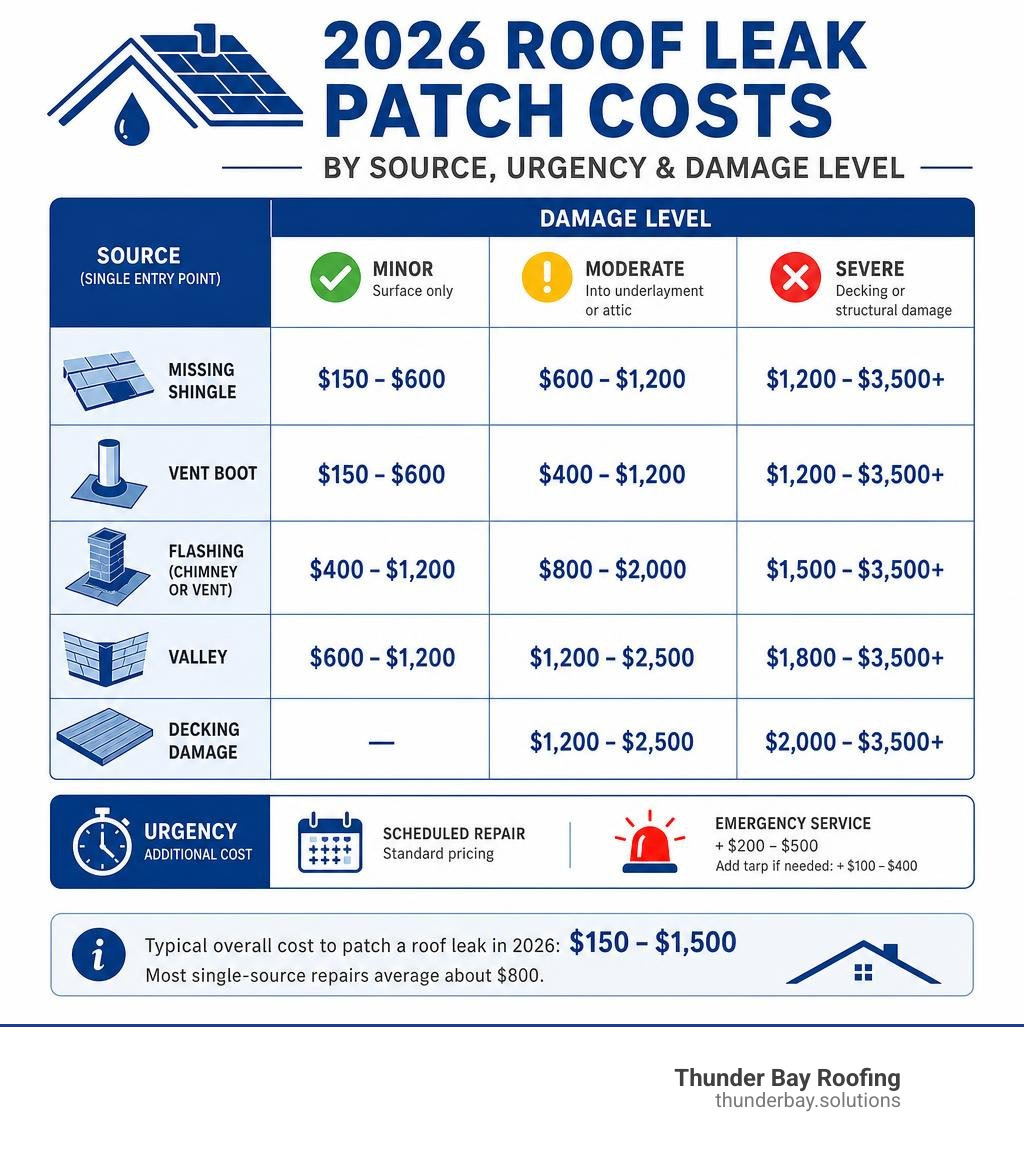
In 2026, the cost to patch a roof leak is usually $150 to $1,500, with many single-source repairs averaging about $800. Start by finding the likely entry point, such as a vent boot, missing shingle, flashing joint, or valley. Then factor in roof height, slope, material, and whether water has reached the attic or ceiling.
For a quick Tampa Bay budgeting range:
- Small shingle or vent boot repair: $150-$600
- Flashing around a vent or chimney: $400-$1,200
- Valley, underlayment, or decking damage: $1,200-$3,500+
- Emergency service: add about $200-$500, plus $100-$400 if a tarp is needed
A scheduled inspection from an experienced roof repair team is often the fastest way to avoid paying for the wrong fix. A surface patch can stop water for a short time, but replacing the failed shingle, boot, or flashing component is the repair that protects the roof for years.
I am Tyler Wood, owner of Thunder Bay Roofing, and I help property owners understand the real cost to patch roof leak issues before small water entry turns into damaged insulation, drywall, or roof decking. This guide breaks down the price drivers so you can estimate the work clearly and know when a simple patch is not enough.
Key cost to patch roof leak vocabulary:
Average Cost to Patch Roof Leak by Source and Damage Type
The primary driver of roof repair expenses is the exact component that failed, rather than the overall size of your roof. Most single-source leaks cost between $150 and $1,500, but complex penetrations or structural water infiltration can drive totals higher.
Contractors charge a diagnostic service fee of $150 to $350, which covers initial dispatch, safety setup, ladder deployment, and the first hour of on-roof troubleshooting. Pinpointing water paths requires dedicated roof leak detection because water travels down rafters before staining a ceiling.
According to The Roofing Brief’s 2026 roof leak repair pricing guide, fixing individual penetration points remains the most budget-friendly project, while rebuilding concealed valleys or rebuilding rotten structural decking represents the high end of repair scopes.
| Leak Source / Component | Typical Cost Range (2026) | Primary Repair Method | Average Expected Lifespan |
|---|---|---|---|
| Plumbing Vent Pipe Boot | $150 – $400 | Neoprene gasket replacement or retrofit collar | 10 – 15 Years |
| Missing / Damaged Shingles (1–5) | $150 – $600 | Individual shingle removal and resealing | Matches existing roof |
| Step & Counter Flashing | $400 – $1,200 | Metal rework, mortar joint re-caulking | 15 – 20 Years |
| Chimney Cricket / Saddle | $650 – $1,500 | Metal fabrication and masonry counter-flashing | 15 – 20 Years |
| Skylight Perimeter Seal | $450 – $1,300 | Flashing kit replacement and perimeter membrane | 10 – 15 Years |
| Roof Valley (Closed or Open) | $600 – $2,400 | Tear-out, self-adhered membrane, re-shingling | 15 – 20 Years |
| Flat Roof Seam / Puncture | $350 – $1,100 | Membrane cleaning, patch weld, or elastomeric coat | 5 – 10 Years |
| Decking Rot (Per 4×8 Sheet) | $120 – $250 / sheet | Plywood replacement alongside surface repair | Matches existing roof |
Estimating the Cost to Patch Roof Leak Flashing and Vent Boots
Flashing failures represent 40 to 50 percent of all residential roof leaks according to field data from the National Roofing Contractors Association (NRCA).
Metal flashing routes water away from critical roof joints. When sealants dry out or metal pulls away from brick or siding, water enters during intense, wind-driven rainstorms.
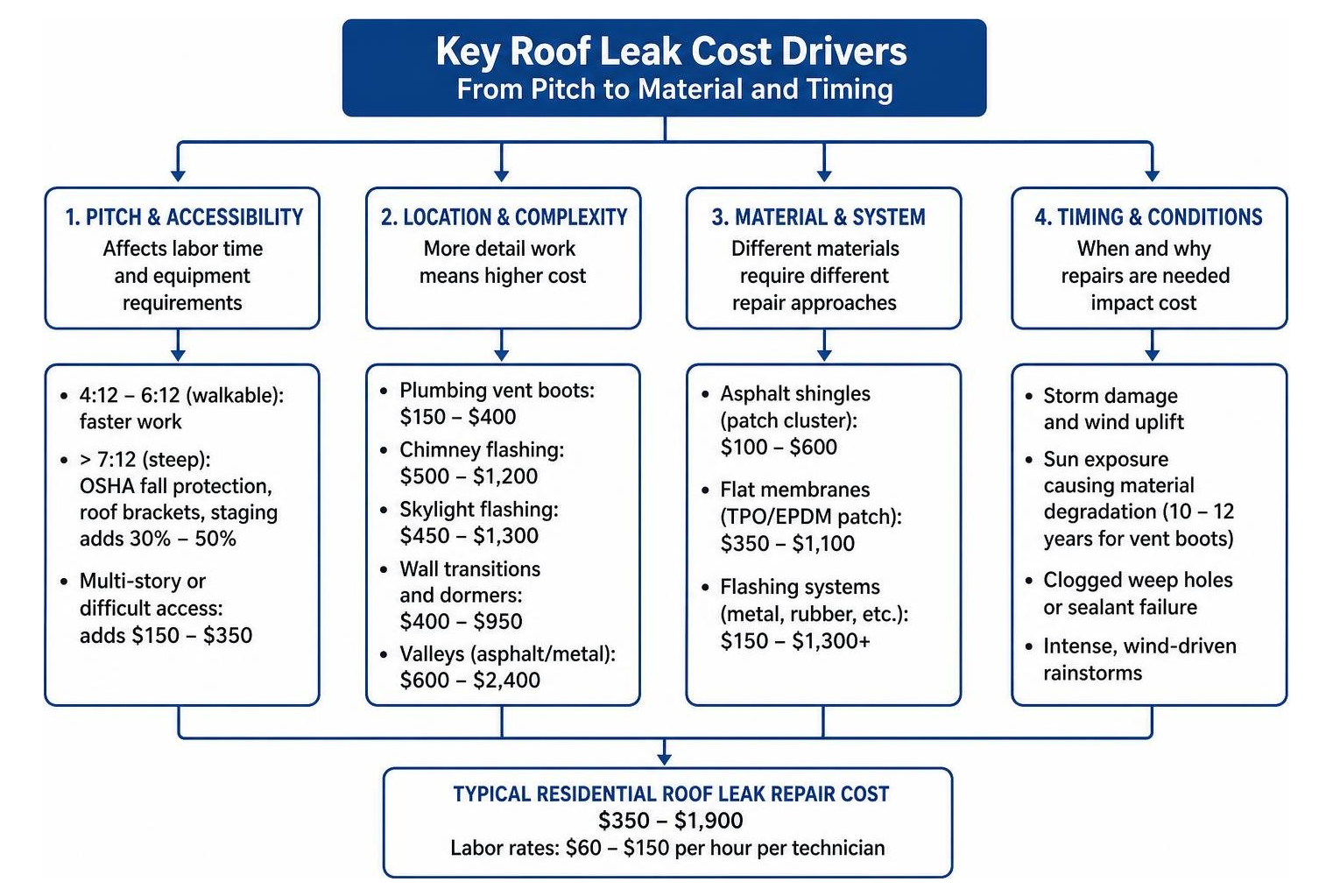
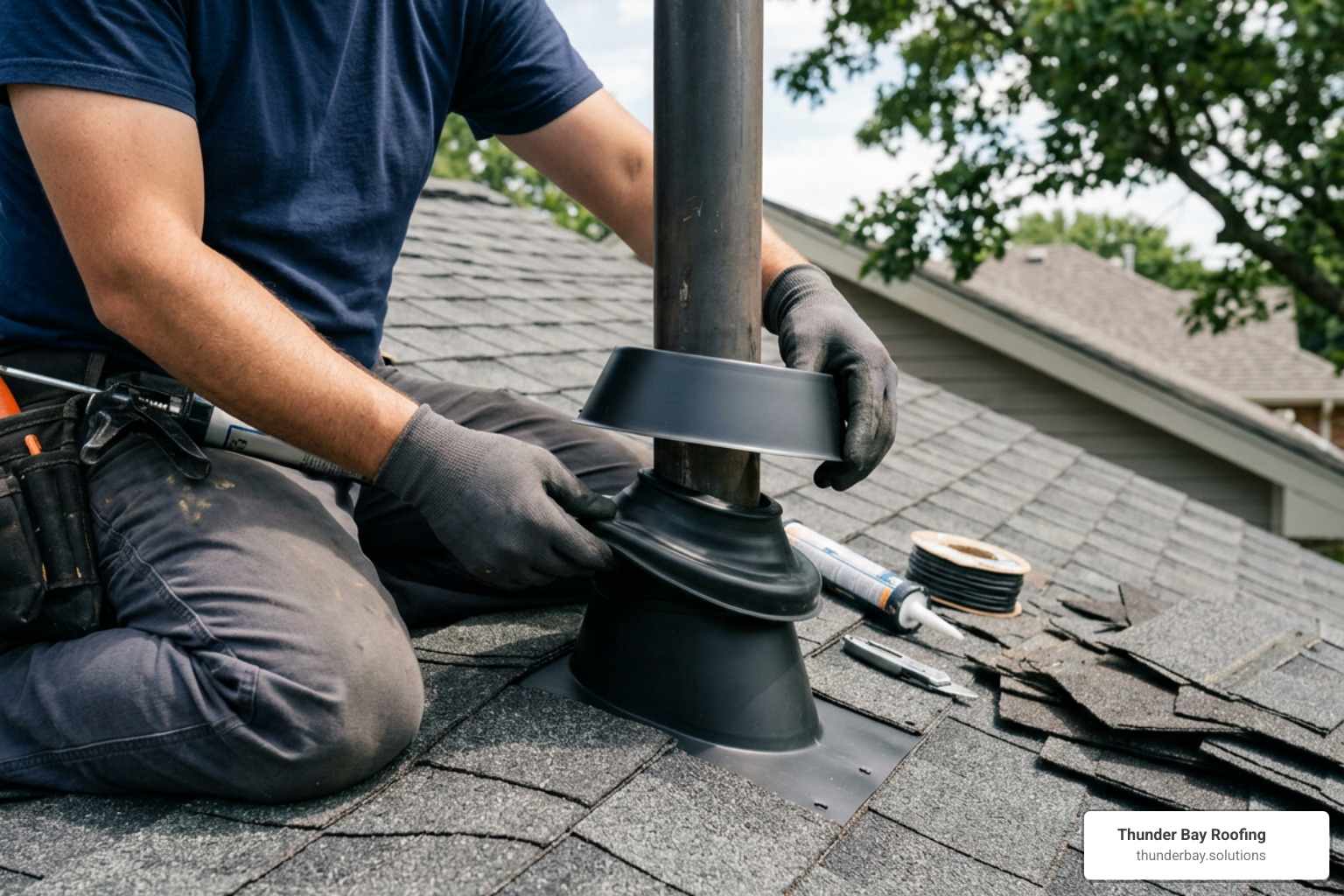
- Plumbing Vent Boots ($150 – $400): Neoprene rubber collars degrade under relentless sun within 10 to 12 years. Replacing the entire boot or installing a specialized heavy-duty retrofit collar resolves the problem quickly.
- Chimney Flashing ($500 – $1,200): Chimneys require an integrated system of step flashing interwoven with shingles and counter-flashing embedded into mortar joints. When masonry shifts, counter-flashing cracks, allowing moisture behind interior drywall. Complete re-flashing costs $650 to $1,200.
- Skylight Flashing ($450 – $1,300): Water around skylights usually stems from clogged condensation weep holes or failed apron flashing rather than the glass itself. Correcting the metal integration and installing new self-adhered membranes ranges from $450 to $1,300.
- Wall Transitions and Dormers ($400 – $950): Where a sloped roof meets a vertical wall, step flashing must overlap correctly behind the exterior cladding. Repairing these areas often involves pulling back siding, making labor the dominant cost factor.
Shingle, Valley, and Flat Membrane Repair Costs
Shingle blow-offs, roof valley bottlenecks, and flat roof punctures each require specific restoration strategies.
Wind uplift from severe storms can break shingle sealant strips or tear tabs entirely. Replacing a small cluster of asphalt tabs costs $100 to $600, and securing missing shingle replacement promptly stops exposed nail heads from rusting and leaking directly into the roof deck.
Roof valleys handle the highest volume of water on any roof. When two roof planes funnel water into a single channel, worn shingles or corroded valley metal will leak rapidly. Repairing an asphalt or metal valley costs $600 to $2,400 because it requires stripping materials out 18 to 24 inches on both sides of the valley centerline, laying down a new self-adhering waterproof underlayment, and weaving in fresh shingles.
For flat or low-slope sections, leaks typically stem from seam failure or mechanical punctures. Heat-welding a thermoplastic polyolefin (TPO) patch or applying a reinforced ethylene propylene diene monomer (EPDM) membrane patch costs between $350 and $1,100, restoring continuous waterproof protection over the low-pitch roof plane.
Primary Factors That Drive Roof Leak Repair Pricing
Roof leak repair pricing varies based on physical complexity, accessibility, and market variables rather than just the square footage of the damage.
According to Modernize’s 2026 roof repair cost study, typical residential repairs across the United States land between $350 and $1,900, with national labor billing rates spanning $60 to $150 per hour per technician. In localized markets across Hillsborough County and Pasco County, specialized wind-mitigation building standards and strict contractor licensing ensure projects comply with regional building codes.
Roof Pitch, Accessibility, and Material Impact
A steep roof pitch increases labor time and equipment costs. Walkable roofs with a slope of 4:12 to 6:12 allow technicians to work quickly.
Slopes exceeding 7:12 require OSHA-mandated fall arrest systems, roof brackets, and staging boards, increasing labor costs by 30 to 50 percent. Multi-story homes or properties with difficult ladder access due to zero-lot lines and landscape obstacles add an extra $150 to $350 to cover extended setup times.
Roof material also dictates total costs:
- Asphalt Shingles: Standard architectural shingles cost the least to service ($150 – $1,400) because matching shingles are readily available and simple to weave into place.
- Metal Roofing: Standing seam metal repairs run 20 to 25 percent higher ($400 – $2,200) due to custom metal fabrication, specific fastener replacements, and panel unseaming requirements.
- Concrete & Clay Tile: Tile roofs range from $600 to $2,500+ because cracked tiles require careful removal to avoid breaking adjacent units, followed by replacing the underlying underlayment.
Emergency Response vs. Scheduled Service Visits
When a major tropical system or convective thunderstorm tears through communities like Wesley Chapel, active water intrusion cannot wait for a regular business-hours visit.
- Scheduled Daytime Repair: $350 – $1,500 base cost with zero emergency premiums.
- Emergency Dispatch Surcharge: Adds $200 – $500 for immediate mobilization, after-hours dispatch, or weekend responses.
- Emergency Tarping and Stabilization: Costs $100 – $400 for a single-story home and up to $800 for high-pitch or multi-story structures. Professional emergency tarping secures the opening with 2×4 furring strips and durable poly tarps, preventing thousands of dollars in attic insulation loss and drywall collapse until weather conditions permit permanent mechanical repairs.
Assessing Damage: Patch, Rebuild, or Full Roof Replacement?
Determining whether your roof needs a simple patch, a section rebuild, or a complete replacement depends on the structural condition of the decking and the overall age of the roofing system.
The 30 Percent and 15-Year Rule for Major Repairs
To determine whether patching is financially practical, apply the standard 30% / 15-Year Rule:
- Roof Age (15 Years): If an asphalt shingle roof is under 15 years old and the underlying decking is solid, an isolated mechanical repair makes financial sense. If the roof is older than 18 to 20 years, asphalt shingles lose their protective granules, becoming brittle. Nailing into brittle shingles causes adjacent tabs to crack, creating new leak paths.
- Repair Cost Ratio (30 Percent): If a repair quote exceeds 30 percent of the cost of a full replacement, or if multiple leaks appear across different slopes, investing in repairs yields diminishing returns. A brand-new roof replacement provides a full warranty and restores proper wind-uplift ratings.
When wear is widespread, budgeting for a full roof replacement protects your property’s long-term value far better than recurring patch jobs.
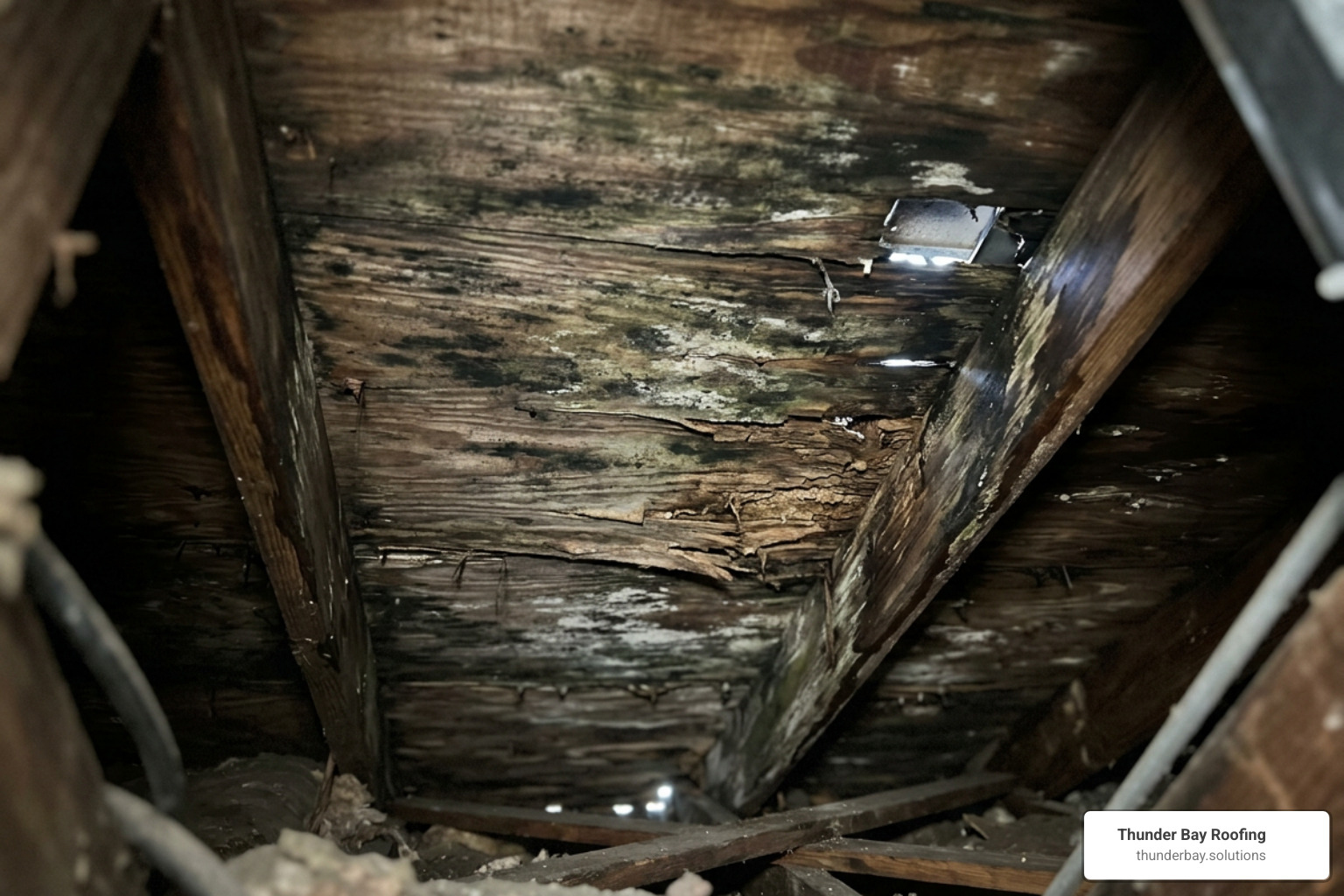
Hidden Water Damage and Escalation Costs
The visible ceiling stain inside your home is usually the final stage of an ongoing leak. Water travels along roof rafters, pools on horizontal ceiling drywall, and saturates blown-in attic insulation long before dripping into your living space.
The cost of delaying roof leak repairs escalates quickly:
- Day 1 to Day 7 (Active Leak Caught Early): Localized exterior repair costs $300 – $1,500. Roof decking remains structurally sound, and attic insulation dries out with simple air circulation.
- Week 2 to Week 6 (Ignored or Undetected): Moisture softens plywood or oriented strand board (OSB) decking, fosters attic mold growth, and ruins ceiling drywall. The repair scope expands to include wood replacement, insulation extraction, and drywall patching, driving total repair costs to $2,500 – $8,000.
- Months of Continuous Moisture: Roof rafters begin to rot, structural trusses sag, and major indoor air quality remediation becomes mandatory, requiring thousands in framing restoration.
DIY vs. Professional Roof Leak Repairs
While home improvement stores sell buckets of black roof cement and silicone caulking, DIY leak patches frequently fail within months and can mask deeper structural deterioration.
Safe Homeowner Fixes vs. When to Hire a Pro
Homeowners should restrict DIY work to low-risk, ground-level, or single-story tasks on low-pitch roofs.
Safe DIY tasks include clearing leaf debris from roof valleys, cleaning clogged gutters, or slipping an external rubber retrofit collar over a cracked plumbing boot pipe.
However, major structural components require a licensed professional:
- Step Flashing and Sidewall Intersections: Rebuilding metal flashing requires removing adjacent siding and shingles without tearing the underlying vapor barrier.
- Valley Tear-Outs: Valleys require precise membrane overlaps and specific shingle nailing setbacks to prevent fasteners from piercing water channels.
- Steep-Slope Work: Any roof pitch above 6:12 presents severe fall hazards that demand full OSHA harness rigging, staging ladders, and non-slip safety footwear.
Calculating the True Cost to Patch Roof Leak Long-Term
A tube of silicone or asphalt cement applied over the top of a leak costs $15 in materials, but it rarely creates a lasting fix. Roof sealants crack when exposed to extreme thermal expansion and intense ultraviolet (UV) radiation.
- Surface Caulk Patch: Lasts 12 to 24 months. It blocks water temporarily but traps trapped moisture against the wood deck underneath, accelerating wood rot.
- Component Replacement: Lasts 10 to 20 years. By removing damaged shingles, installing new flashing, and fastening mechanical seals correctly, the leak point matches the lifespan of the surrounding roof.
Investing in an expert component repair avoids paying recurring service fees every single season.
Frequently Asked Questions About Roof Leak Repairs
Does homeowners insurance cover the cost of patching a roof leak?
Homeowners insurance covers roof leak repairs caused by sudden, accidental events, such as hurricane winds, fallen tree branches, or severe hail.
Insurance policies exclude damage resulting from standard wear and tear, age-related deterioration, or deferred maintenance.
If wind tears shingles from your roof in Lutz, your policy will typically cover the resulting roof patch and interior drywall repairs once the cost exceeds your deductible (which typically ranges from $1,000 to $2,500 or a percentage-based hurricane deductible). Always take photos of exterior damage before any temporary tarping takes place to give the insurance adjuster clear documentation.
How long does a typical roof leak patch last compared to a permanent fix?
A temporary surface patch using elastomeric roofing mastic or silicone lasts between 18 months and 2 years before intense heat and rain break down the chemical bond.
A permanent, professional repair—which involves replacing the broken shingle, installing fresh metal flashing, and securing new underlayment—lasts 10 to 20 years, matching the remaining service life of the roof.
How quickly should an active roof leak be repaired?
Active roof leaks should be stabilized within 24 to 48 hours.
Even a slow, minor drip introduces gallons of water into attic insulation, creates mold colonies within 48 to 72 hours, and weakens ceiling drywall to the point of collapse. If continuous rain prevents an immediate mechanical repair, install an emergency water-tight tarp to protect the home’s framing and interior finishes until dry weather returns.
Conclusion
A leaking roof will not fix itself, and delaying repairs turns a minor $350 flashing correction into a major $3,000 structural headache.
Understanding the primary cost drivers—from component location and material type to roof pitch and water intrusion depth—helps you budget accurately and choose the right repair strategy.
When you discover water stains on your ceiling or notice damaged shingles after a storm, secure a professional evaluation right away. Request a project estimate online for expert roof repair designed to keep your home dry and structurally protected.