
The Ultimate Guide to 45 Mil EPDM Specifications
Key Technical Specifications of 45 Mil EPDM Membranes
A 45 mil EPDM single-ply rubber membrane measures precisely 0.045 inches in thickness. This measurement represents forty-five thousandths of an inch, which is roughly equivalent to the thickness of a standard U.S. dime. At Thunder Bay Roofing, our commercial installation team evaluates rubber membrane physical specifications to ensure dependable, long-term weatherproofing across commercial and residential structures.
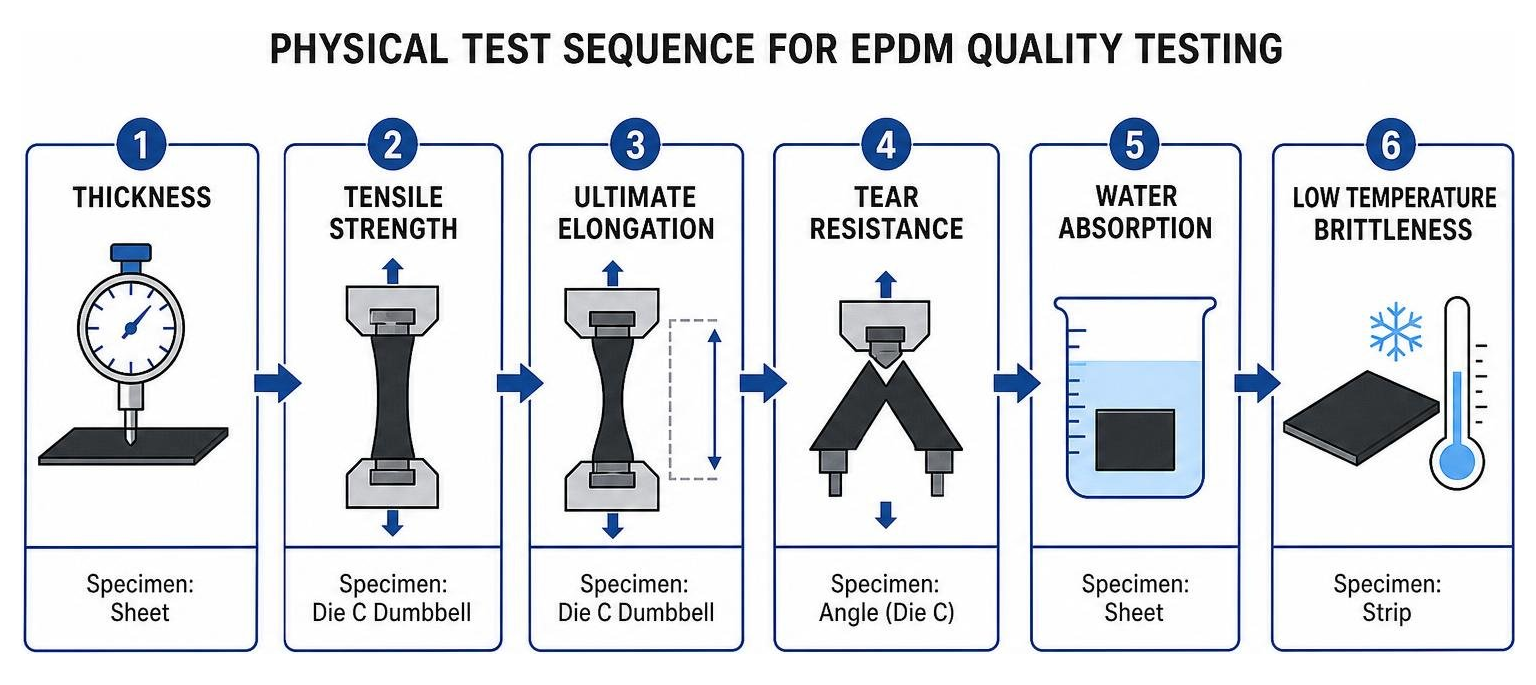
When selecting single-ply membranes for property protection or water containment, mechanical test scores confirm how well the material performs under structural tension and severe weather exposure. The physical performance of nonreinforced 45 mil Ethylene Propylene Diene Monomer rubber meets strict criteria established by ASTM D 4637 Type I standards. Commercial data sheets, including the JM EPDM NR 45 mil Data Sheet, demonstrate that high-grade 45 mil membrane formulations consistently exceed minimum industry standards.
The primary mechanical and physical specifications for standard 45 mil EPDM rubber include:
- Tensile Strength: Reaches a minimum of 1,305 psi (with premium formulations tested up to 1,686 psi) to resist structural movement and wind uplift.
- Ultimate Elongation: Stretches over 300% (and up to 451% in verified laboratory tests) without losing structural integrity or cracking.
- Tear Resistance: Delivers a tear strength of at least 150 lbf/in (often reaching 185 lbf/in), protecting the membrane during high-wind events.
- Thermal Tolerance: Functions continuously across extreme temperatures ranging from -40°F to +180°F, with a cold-brittleness point at or below -49°F.
- Water Absorption: Maintains a water absorption rate under 8% by mass, with advanced vulcanized sheets testing as low as 0.55%.
- Material Weight: Weighs approximately 0.31 pounds per square foot, making a standard 100-square-foot section roughly 31 lbs.
| Physical Property | ASTM D 4637 Minimum Standard | Typical 45 Mil EPDM Test Result |
|---|---|---|
| Material Thickness | 0.045 inches (45 mil) | 0.045 inches |
| Tensile Strength | ≥ 1,305 psi | 1,686 psi |
| Ultimate Elongation | ≥ 300% | 451% |
| Tear Resistance | ≥ 150 lbf/in | 185 lbf/in |
| Water Absorption | < 8.0% mass | 0.55% mass |
| Reflectivity Rating | N/A | 0.06 |
| Emissivity Rating | N/A | 0.88 |
Roofing-Grade vs. Pond-Grade 45 Mil EPDM Differences
While roofing-grade EPDM and pond-grade EPDM are both manufactured from synthetic rubber compounds, their specific chemical formulations make them entirely non-interchangeable across distinct application environments.
When building high-performance low-slope structural assemblies, contractors rely on specialized EPDM Roofing products engineered specifically to withstand severe weather, fire hazards, and biological decay over prolonged operational lifespans.
Aquatic Safety and Additives in 45 Mil EPDM
Roofing-grade EPDM contains chemical fire retardants and industrial algaecides intended to protect commercial buildings from flame spread and fungal rot. If installed in an aquatic environment, these active chemicals slowly leach into the water column, proving highly toxic to fish, invertebrates, and delicate aquatic vegetation.
Conversely, pond-grade 45 mil EPDM is manufactured without toxic active additives. Formulations like the 45 mil EPDM Pond Liner – BPM Geosynthetics pass stringent ecotoxicity standards. Pure pond-grade rubber is certified safe for koi, wildlife, and aquatic plants. However, because it lacks building-code-mandated flame retardants, pond-grade EPDM must never be substituted for building construction roof membranes.
Commercial Roofing Applications for 45 Mil EPDM
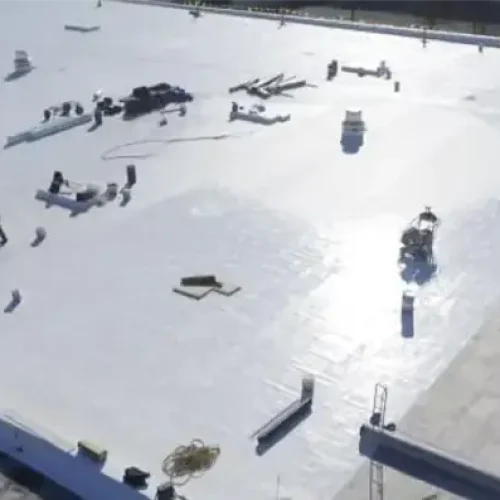
In architectural applications, 45 mil epdm serves as a dependable waterproof membrane for commercial building projects, flat residential roof designs, and low-slope additions. Commercial installers utilize three primary attachment protocols when deploying 45 mil EPDM on Flat Roof Systems:
- Fully Adhered Systems: Bonding adhesive attaches the single-ply membrane directly to the underlying roof insulation or substrate. This provides maximum wind uplift protection on steep-contour flat roofs.
- Mechanically Fastened Systems: Specialists secure the rubber membrane to the roof deck using heavy-duty plates and screws placed within overlapping seam margins before heat-welding or taping the seams.
- Ballasted Systems: The rubber sheet rests loosely over the roof deck insulation and is weighted down using round river rock or smooth precast concrete pavers.
When designing custom waterproofing systems for commercial roofs, our team evaluates factors like slope, drainage dynamics, structural load capacity, and local building code requirements. You can learn more about how flat roofing assemblies protect commercial structures on our comprehensive guide to Low Slope Roofing.
Comparing 45 Mil EPDM to PVC and HDPE Alternatives
Selecting the right waterproofing material requires reviewing how EPDM compares to alternative synthetic membranes such as Polyvinyl Chloride (PVC) and High-Density Polyethylene (HDPE).
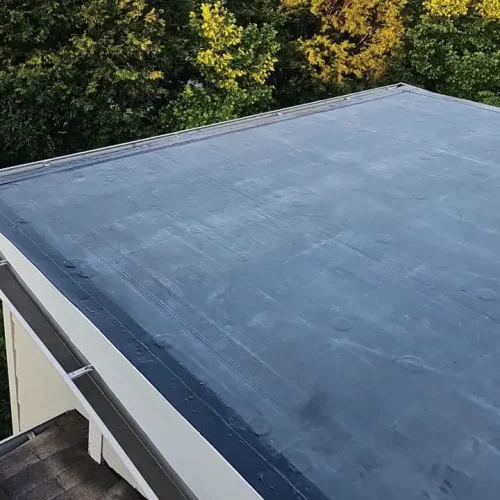
Unlike PVC, which relies on chemical plasticizers to achieve pliability, EPDM is naturally flexible. Over time, sunlight bakes plasticizers out of PVC, causing the material to harden, shrink, and crack. EPDM remains flexible across decades of outdoor heat and cold exposure.
When compared to rigid HDPE liners, EPDM provides far superior contouring capabilities. HDPE is prone to environmental stress cracking when bent around tight angles or exposed to frequent freeze-thaw shifts. EPDM stretches up to 300% without tearing, allowing it to easily adapt to settling soils or shifting structural roof framing.
Property owners interested in detailed membrane comparisons can read The Ultimate Breakdown of Flat Roof Membrane Types and Systems for a deeper dive into modern roofing materials.
| Feature / Metric | 45 Mil EPDM Rubber | PVC Membrane | HDPE Geomembrane |
|---|---|---|---|
| Elasticity / Elongation | Exceptional (≥ 300%) | Moderate (150% – 250%) | Low (100% – 150%) |
| Plasticizer Content | 0% (Naturally Flexible) | High (Degrades with Age) | 0% (Rigid Polymer) |
| Punture & Stress Cracking | Superior Resistance | Susceptible when aged | High risk along stress folds |
| Cold-Temperature Limit | -49°F (-45°C) | -20°F (-29°C) | -30°F (-34°C) |
| Expected Lifespan | 30 to 50+ Years | 15 to 25 Years | 20 to 30 Years |
Practical Guidelines: Sizing, Installation, Repair, and Freight
Proper installation requires accurate site measurement, thorough substrate preparation, and detailed attention to delivery logistics.
To compute the necessary square footage for a pond liner or flat structural containment assembly, use this industry formula:
- Total Liner Length = Max Project Length + (2 x Max Depth) + (2 Feet for Overlap/Anchoring)
- Total Liner Width = Max Project Width + (2 x Max Depth) + (2 Feet for Overlap/Anchoring)
When installing EPDM over sharp subgrades, rocky soils, or wooden structural decking, lay down a 6 oz to 8 oz non-woven geotextile underlayment first. Underlayment shields the rubber membrane against structural punctures from below and can extend manufacturer warranty coverage.
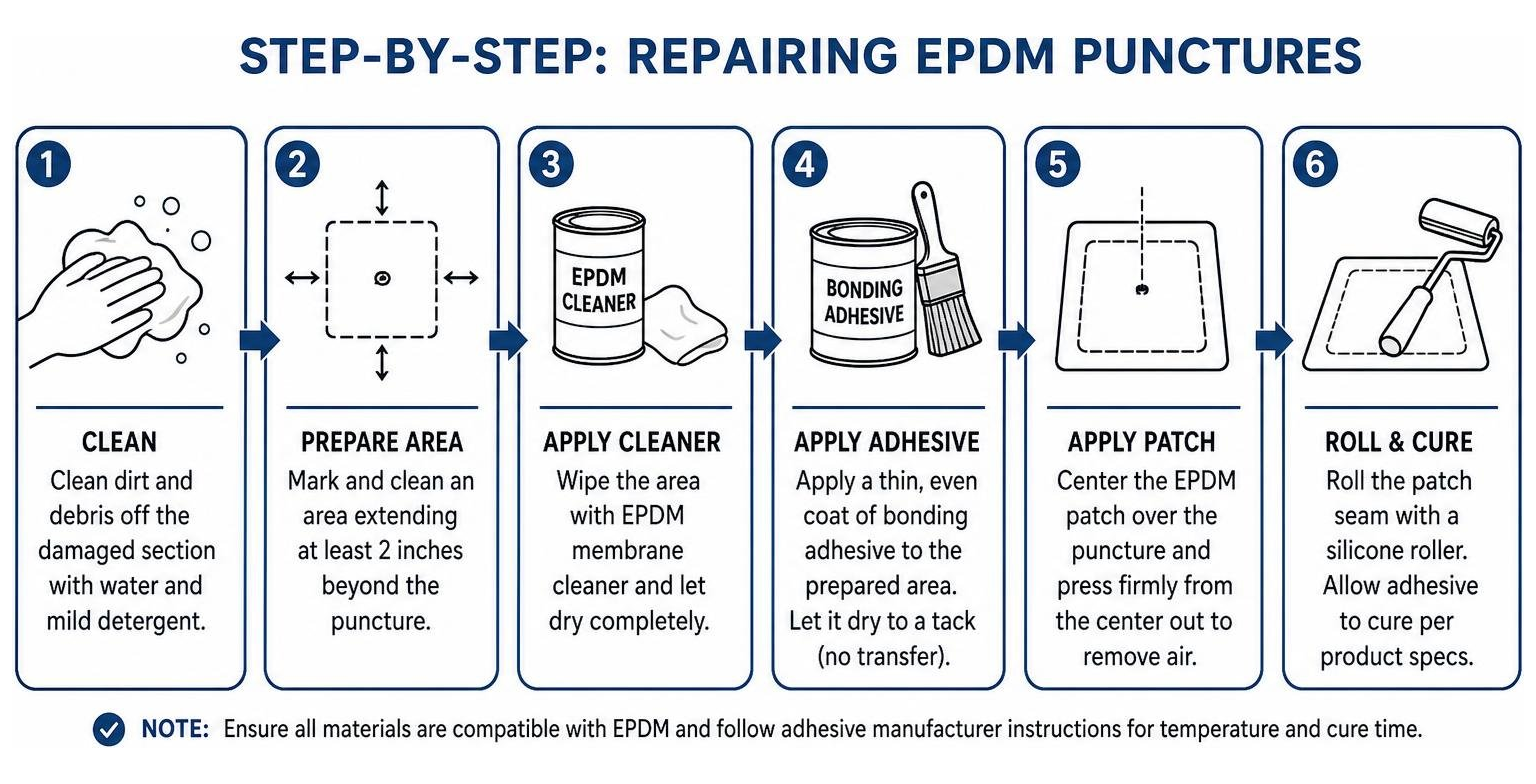
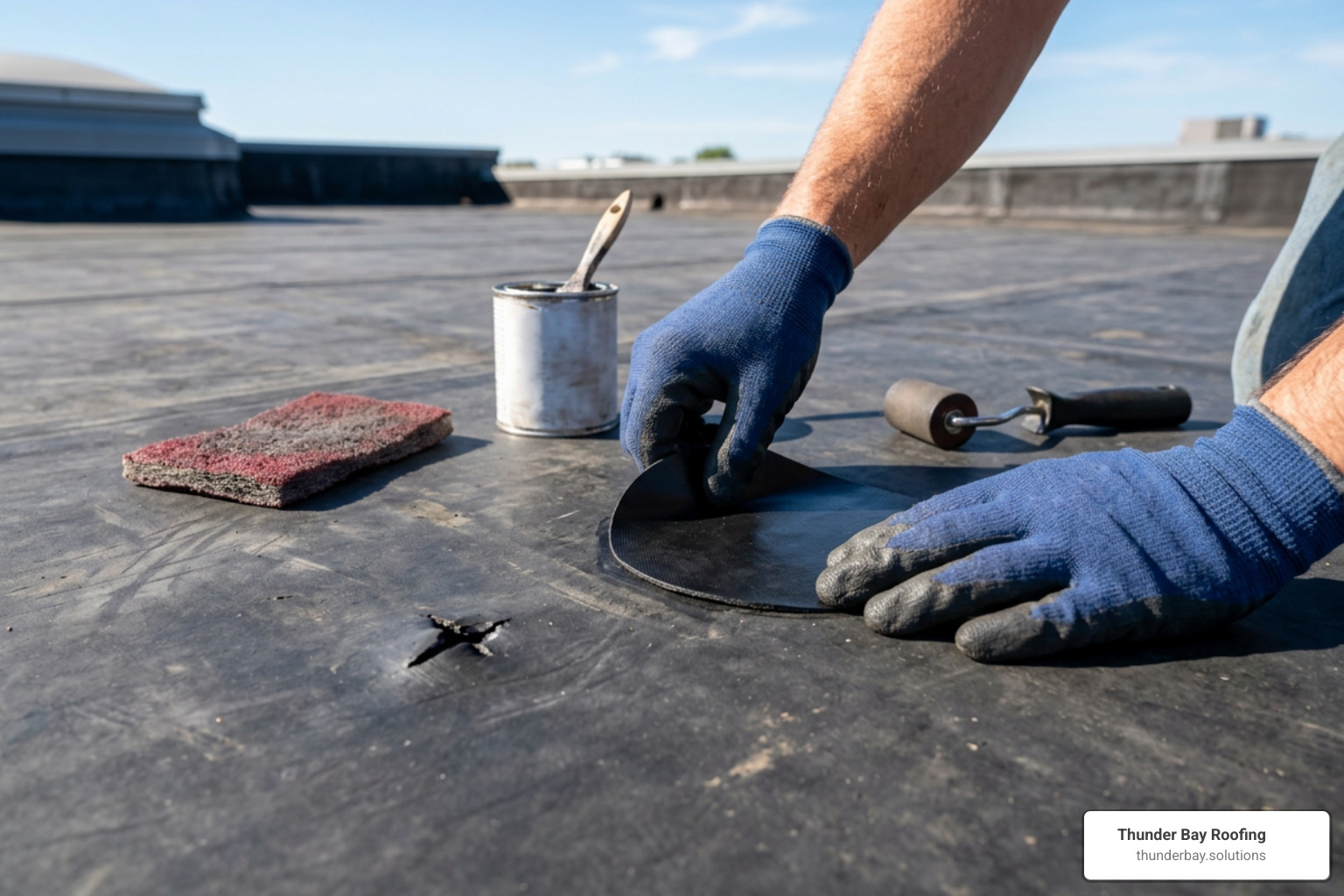
If an installed 45 mil EPDM membrane experiences a mechanical puncture during construction or storm activity, you can repair it easily on-site using standard cold-vulcanization steps:
- Clean dirt, oils, and surface debris off the damaged section using clean water and a mild detergent.
- Scrub the damaged rubber surface with an abrasive scrub pad and a specialized low-VOC primer, such as QuickPrime LVOC, to remove surface oxidation.
- Cut a rounded self-adhesive EPDM repair patch, extending at least 3 inches past the puncture margin on all sides.
- Apply the patch firmly over the primed area and roll it thoroughly with a steel hand roller to eliminate air bubbles and lock the seam edge tight.
Shipping logistics require advance planning due to material weight. EPDM weighs approximately 0.31 lbs per square foot. Large single-ply rolls, such as a 25′ x 100′ membrane sheet, weigh over 750 pounds. Freight delivery carriers ship these heavy rolls on 40-foot semi-trucks, requiring offloading equipment like a forklift or an on-site crew to unload safely.
Frequently Asked Questions
How thick is 45 mil EPDM and what does ‘mil’ mean?
In manufacturing, a ‘mil’ is a unit of measure equal to one-thousandth of an inch (0.001 inches). Therefore, a 45 mil epdm membrane is 0.045 inches thick, which is roughly the thickness of a U.S. dime.
What is the typical lifespan and warranty coverage for a 45 mil EPDM membrane?
A standard 45 mil EPDM membrane delivers an operational lifespan of 30 to 50 years. Commercial roofing systems generally carry a 15-year to 20-year manufacturer material warranty. Pond liners typically include a 20-year or 25-year warranty, which can upgrade to a lifetime warranty when installed with an approved geotextile underlayment.
Can damaged 45 mil EPDM membranes be repaired?
Yes, damaged EPDM membranes can be patched. Repairs involve scrubbing the damaged surface with a low-VOC primer and pressing down a self-adhering EPDM patch with a hand roller.
Protect Your Structure with Proven Membrane Solutions
Choosing between 45 mil single-ply membrane roofing options requires balancing structural needs, long-term durability, and building code standards. Whether you need routine Roof Inspections, targeted commercial repairs, or complete structural waterproofing, working with experienced membrane specialists ensures your property remains protected against severe weather.
In severe weather situations, such as post-storm events, immediate expert service stops water intrusion before interior structural damage occurs. For assistance with severe storm damage, visit our emergency hurricane damage roof repair service page or check our comprehensive guide to complete roof replacement options.
At Thunder Bay Roofing, our team brings localized experience to commercial flat roof installations, low-slope membrane applications, and single-ply building protections across West Central Florida. Contact our team today to schedule a consultation with our local roofing specialists.