
Don’t Get Blown Away by Your Insurance Claim Roof Replacement
When an Insurance Claim Roof Replacement Catches You Off Guard
An insurance claim roof replacement is one of the most stressful and confusing things a homeowner can face — especially right after a storm has already turned your week upside down. Working with an experienced local roofing company can make all the difference in securing a fair payout.
Here is a quick answer to what the process looks like:
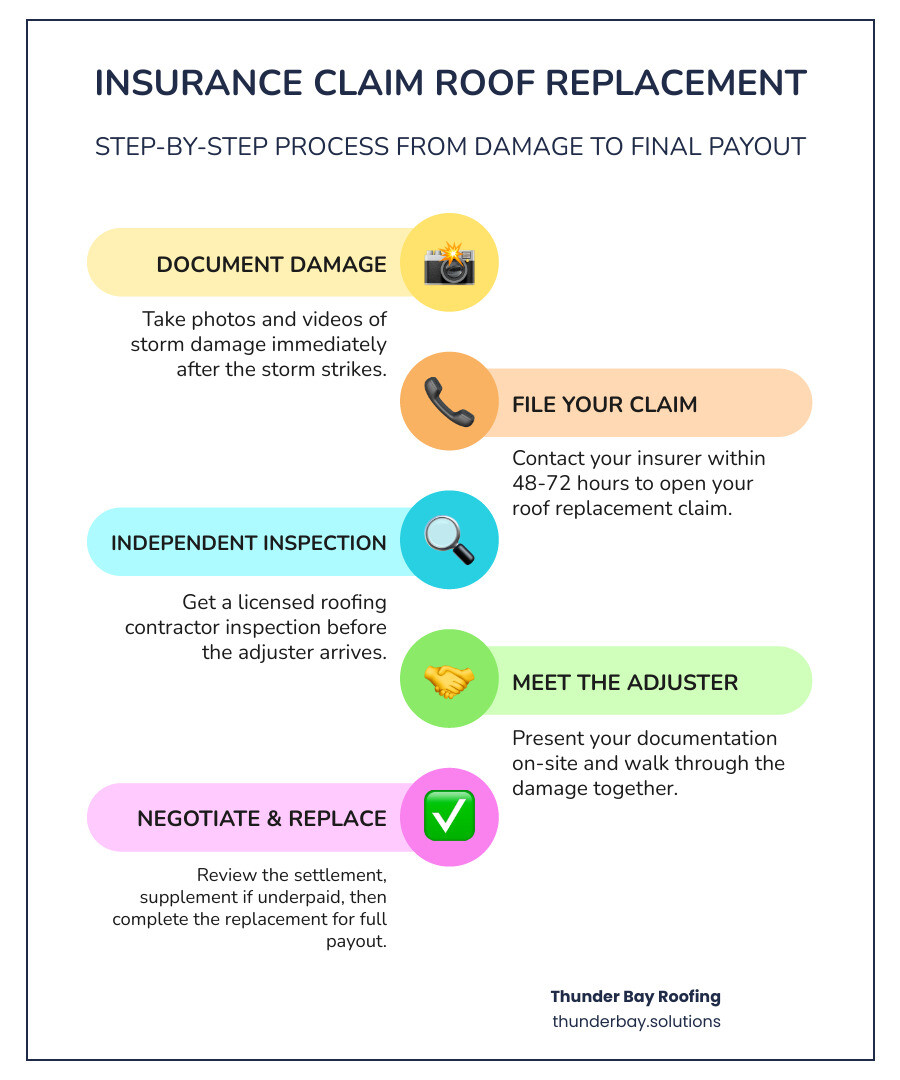
- Document the damage with photos and videos immediately after the storm.
- Contact your insurer within 48-72 hours to open your claim.
- Get an independent roofing inspection before the adjuster visits.
- Meet the adjuster on-site and present your documentation.
- Review the settlement offer and negotiate or supplement if it is too low.
- Complete the replacement with a licensed contractor to unlock the full payout.
Most claims take 30 to 60 days from filing to final payment, and the average roof insurance claim settles between $10,000 and $20,000. However, roughly 30% of claims are underpaid — and 5-10% are denied outright on the first attempt.
Your roof is your home’s first line of defense against Florida’s hurricanes, heavy rain, and relentless UV exposure. When it fails, the financial stakes are high. Knowing how the claim process works before you need it can be the difference between a full replacement and a check that barely covers half the bill.
I’m Tyler Wood, owner of Thunder Bay Roofing in Wesley Chapel, Florida — and through years of working with Florida homeowners on storm repairs, replacements, and navigating the insurance claim roof replacement process, I have seen how the right documentation and the right contractor can make or break a settlement. This guide will walk you through everything you need to know.
What Does Homeowners Insurance Cover (and What is Excluded)?
Homeowners insurance is designed to protect your property from sudden, accidental physical losses. It is not a maintenance policy. When it comes to your roof, understanding the exact line between what your policy covers and what it excludes is the single most important factor in securing a successful claim payout.
For homeowners in West Central Florida, including Wesley Chapel, Land O’ Lakes, and Lutz, severe weather is a constant threat. Most standard homeowners policies (such as an HO-3 policy, which is the most common type) provide “open peril” coverage for your dwelling. This means your roof is covered for any cause of damage unless that cause is specifically excluded in your policy documents.
Typically covered perils include:
- High winds, gales, and tropical storms
- Hurricanes and tornadoes
- Hail and falling objects (like tree branches)
- Lightning strikes and fire
If a sudden storm tears shingles off your roof, you will need professional wind damage repair or a complete replacement. Similarly, if severe summer storms batter your shingles, you may require professional hail damage repair to restore your home’s structural integrity.
However, insurance companies will not pay for a new roof simply because it is old, worn out, or showing cosmetic blemishes. Exclusions are standard across almost all carriers. If your roof is leaking because you haven’t cleaned your gutters in ten years, or because the shingles have naturally reached the end of their 20-year lifespan, your claim will be denied.
Common exclusions include:
- Normal wear and tear, weathering, and aging
- Lack of maintenance or neglect (e.g., ignoring slow leaks)
- Mold, rot, rust, and algae growth
- Pest infestations, rodents, birds, and insects
Covered Perils vs. Exclusions
To successfully navigate an insurance claim roof replacement, you must be able to prove that the damage was caused by a specific, sudden, and accidental covered event.
For instance, wind damage is a covered peril. When high winds lift, crack, or completely tear shingles away, they expose the underlayment to water intrusion. You can learn more about how wind affects different roofing materials in our guide on wind damage roofing 101.
On the other hand, gradual degradation is entirely your responsibility. If an adjuster inspects your roof and finds thermal blistering, cracking, or advanced granule loss that is consistent with age rather than storm impact, they will classify it as wear and tear.
To protect your home, you must take active steps to mitigate damage. If a storm damages your roof, you are legally obligated under your policy to make temporary repairs—such as putting up a tarp—to prevent further water damage inside the home. If you fail to do so, your insurer can deny coverage for any subsequent interior water damage.
How Roof Age and Condition Affect Coverage
The age of your roof is one of the most heavily scrutinized factors during the underwriting and claims processes. Many insurance companies scrutinize claims on roofs older than 15 to 20 years much more carefully. In fact, some insurers will automatically switch your policy from Replacement Cost Value (RCV) to Actual Cash Value (ACV) coverage once your roof reaches 10 to 15 years of age.
When you apply for or renew a homeowners insurance policy in Florida, the carrier will often inspect your roof. If it is nearing the end of its useful life, they may charge higher premiums, demand a full replacement as a condition of renewal, or refuse to cover wind and hail damage altogether.
If your roof structure is compromised due to age, decay, or severe storm damage, the cost to fix it can escalate quickly. Understanding how much to replace your entire roof structure is critical, as structural repairs involve replacing the decking, rafters, and support beams, which goes far beyond a standard shingle replacement.
Navigating Your Insurance Claim Roof Replacement
Filing a claim can feel like learning a foreign language while under immense pressure. However, as a policyholder, you have rights. You are not forced to accept the first lowball offer from an insurance adjuster, nor are you required to use their “preferred” contractors.
At Thunder Bay Roofing, we provide expert roofing services in Wesley Chapel and surrounding areas to help guide you through this process. Whether you need a simple patch or a complete roof replacement, having a professional advocate on your side ensures your home is restored to safety.
Understanding the Insurance Claim Roof Replacement Process
The ideal window to file a roof insurance claim after discovering storm damage is within 72 hours. While most Florida policies technically allow you to file a claim up to one year after a storm event, waiting makes it incredibly difficult to prove that the damage was caused by the storm rather than subsequent wear and tear.
Here is the step-by-step process you should follow:
- Safety First: After a major storm, check your property from the ground. Look for missing shingles, damaged metal flashing, or fallen tree limbs. Do not climb onto a damaged roof yourself.
- Call a Professional Roofer: Before calling your insurance company, have a licensed local roofing contractor perform a thorough inspection. They will provide a detailed damage report and a realistic estimate.
- File the Claim: Contact your insurance carrier’s claims department. Provide them with the date of the storm, a description of the damage, and your roofer’s inspection report.
- The Adjuster Meeting: The insurance company will send an adjuster to inspect your home. Always have your roofing contractor present during this meeting. Your contractor will ensure the adjuster doesn’t overlook structural damage, soft metal damage, or subtle granule loss.
- Review the Scope of Work: Once the adjuster completes their report, the insurer will issue a loss sheet outlining what they agree to pay for. Compare this line-by-line with your roofer’s estimate.
- Complete the Work: Once terms are agreed upon, your contractor will complete the replacement.
For a comprehensive national overview of how to navigate these steps successfully, refer to the detailed guide on how to get your roof replaced through insurance.
Documenting Roof Damage Effectively
To build an airtight case for your insurance company, you must create a flawless paper trail. Documentation is your strongest leverage when disputing a low payout.
- Take Photos and Videos: Use your smartphone to document everything. Enable GPS location and timestamps in your camera settings so the insurance company can verify when and where the photos were taken. Capture wide angles of the entire roof, close-ups of specific damage, and any interior water leaks.
- Use Scale References: If you are documenting hail damage, place a coin or a ruler next to the impact marks to show their size.
- Keep a Communication Log: Write down the date, time, name, and job title of every single person you speak with at your insurance company. Follow up every phone call with a confirmation email summarizing what was discussed.
- Save All Receipts: If you have to buy tarps, plywood, or pay a professional for emergency mitigation, keep every receipt. These out-of-pocket costs are typically reimbursable under your claim.
For a step-by-step checklist of what to look for and document after a storm, check out our ultimate storm damage repair checklist.
RCV vs. ACV: How Your Policy Determines Your Payout
The type of coverage you have—Replacement Cost Value (RCV) or Actual Cash Value (ACV)—is the single biggest variable determining your out-of-pocket costs.
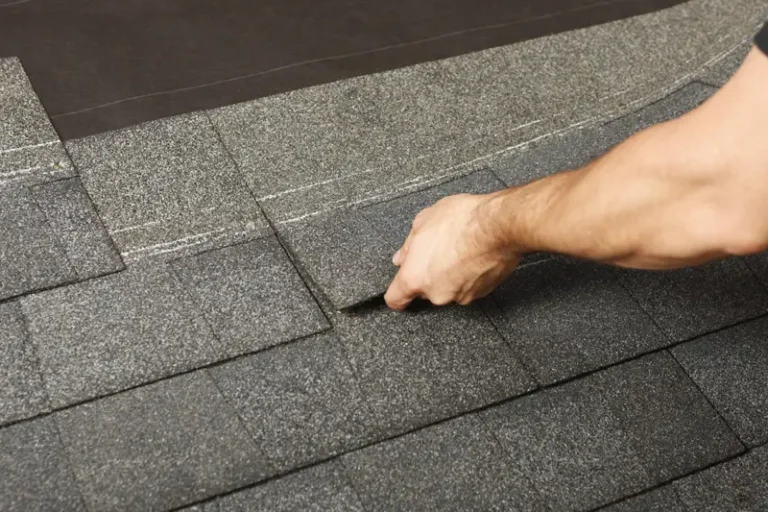
Under an RCV (Replacement Cost Value) policy, the insurance company covers the actual cost of replacing your damaged roof with new materials of like kind and quality at today’s market prices. The insurer does not subtract depreciation for the age or pre-loss condition of your roof.
Under an ACV (Actual Cash Value) policy, the insurer only pays what your roof was worth at the exact moment it was damaged. They calculate this by taking the replacement cost and subtracting depreciation based on the roof’s age and condition. This can leave you with a massive out-of-pocket gap.
| Feature | Replacement Cost Value (RCV) | Actual Cash Value (ACV) |
|---|---|---|
| Depreciation Subtracted? | No | Yes |
| Payout Structure | Two checks (Initial ACV check + Recoverable Depreciation check) | One single check (ACV minus deductible) |
| Out-of-Pocket Cost | Only your deductible | Deductible + depreciated value of the roof |
| Ideal For | Newer roofs and complete peace of mind | Lower monthly premium options |
The Replacement Cost Trap and Legal Precedents
Many homeowners with RCV policies fall into what we call the “Replacement Cost Trap.” Under a standard RCV policy, the insurance company will not pay the full replacement cost upfront. Instead, they issue an initial check for the Actual Cash Value (ACV) of the damage. They hold back the remaining funds—known as “recoverable depreciation”—until the roof replacement is actually completed and a final invoice is submitted.
Some homeowners try to sue their insurance company for the full replacement cost before they actually replace the roof. However, courts have repeatedly ruled that replacing the roof is a “condition precedent” to receiving the replacement cost payout.
A prime example of this legal reality is the federal court case JOHNSON et al v. THE HANOVER INSURANCE COMPANY (D.N.J. 2025). In this case, the homeowners sued for a full roof replacement estimated at over $124,000. However, because they had not actually replaced the roof yet and failed to prove the depreciated Actual Cash Value of the damage, the court dismissed their lawsuit. The ruling affirmed that a policyholder cannot demand replacement cost value upfront without first completing the repairs or proving the ACV.
Understanding Flat-Dollar vs. Percentage-Based Deductibles
Your deductible is the amount of money you must pay out of pocket before your insurance coverage kicks in. In Florida, deductibles generally come in two forms: flat-dollar and percentage-based.
A flat-dollar deductible is a fixed amount, such as $1,000 or $2,500. A percentage-based deductible, however, is calculated as a percentage of your home’s total insured value (the dwelling coverage limit, or Coverage A), not the cost of the roof repair.
For example, if your home is insured for $400,000 and you have a 2% hurricane deductible, your out-of-pocket deductible for storm damage is $8,000. If a storm causes $16,000 worth of damage, your insurance company will only pay $8,000.
Because coastal and storm-prone areas are highly susceptible to severe wind events, having the right coverage is essential. If your roof has suffered wind or water intrusion, you may need specialized hurricane damage roof repair to ensure your home is up to building code standards.
What to Do If Your Claim Is Denied or Underpaid
If your insurance company denies your claim or offers a settlement that won’t even cover the cost of materials, do not panic. Approximately 5-10% of claims are denied initially, and up to 30% are underpaid. You have several avenues to dispute their decision.
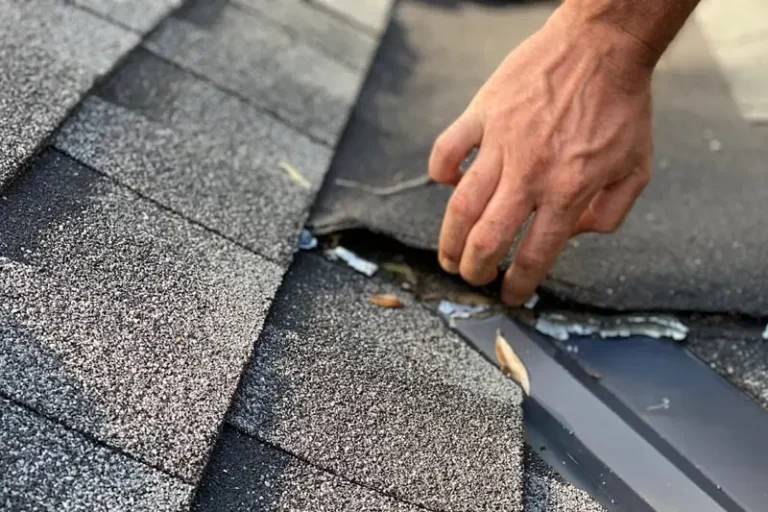
Avoiding Pitfalls in Your Insurance Claim Roof Replacement
Immediately after a major storm, “storm chasers” and out-of-state contractors flood local neighborhoods. They knock on doors, offer free inspections, and promise to “waive” or “cover” your insurance deductible.
Be warned: it is highly illegal in the state of Florida for a contractor to pay, waive, or absorb your insurance deductible. Any contractor who offers to do this is asking you to participate in insurance fraud. Furthermore, these storm chasers often do subpar work, use cheap materials, and disappear long before their “warranties” expire.
Always work with a local, licensed, and insured contractor who specializes in storm damaged roofing and understands local building codes in Wesley Chapel, Lutz, and Land O’ Lakes.
Negotiating with Adjusters and Filing Supplements
If the insurance company’s estimate is too low to cover a proper replacement, your contractor can file a “supplement.” A supplement is a request for additional funds to cover items that were missed, underpriced, or discovered during the tear-off process (such as rotted plywood decking).
Insurance companies routinely approve 60% to 80% of valid supplement items, recovering an average of $2,000 to $8,000 in additional funds to ensure the roof is replaced safely and correctly.
To file a successful supplement, you must provide clear evidence. This starts with getting a professional roof inspection to map out the exact scope of the damage.
Frequently Asked Questions about Roof Insurance Claims
Navigating an insurance claim roof replacement raises plenty of questions. Here are clear, direct answers to the most common queries we receive from homeowners in West Central Florida.
How long does the roof insurance claim process take?
The average roof insurance claim takes 30 to 60 days from the day you file the claim to the final payment and completion of the work. However, this timeline can stretch longer if your claim is underpaid and requires supplements, or if there is a regional surge in claims following a major hurricane. For more answers to common service and timing questions, check out our FAQ page.
Can a contractor waive or cover my insurance deductible?
No. It is a third-degree felony in Florida for a contractor to advertise, offer, or agree to waive, rebate, or pay your insurance deductible. You must pay your full deductible out of pocket, and your contractor must reflect this payment on their final invoice. To learn more about deductible rules and storm damage, read our post on everything you need to know about roof hail damage repair.
Will filing a roof claim cause my insurance premiums to increase?
Under Florida law, an insurance company cannot single you out for a premium increase or cancel your policy solely because you filed a claim for damage caused by an “Act of God,” such as a hurricane, windstorm, or hail. However, your rates may increase if your entire geographic area experiences rate hikes due to widespread storm activity. You can find more details on this in the homeowner’s guide to hail damage and repair.
Conclusion
Navigating an insurance claim roof replacement doesn’t have to feel like weathering a storm alone. By understanding your policy, documenting damage immediately, and steering clear of predatory storm chasers, you can secure the full settlement you deserve to protect your home.
At Thunder Bay Roofing, we have spent years helping our neighbors in Wesley Chapel, Land O’ Lakes, and Lutz rebuild after severe weather. We provide honest, professional, and licensed roof replacement services that meet Florida’s strict building codes.
If your roof has been damaged by wind, rain, or hail, don’t wait for a small leak to become a major structural headache. Contact us today for a free roof quote and let our local experts help you restore your home.