
The Best Residential Flat Roofing Systems Ranked
Understanding Residential Flat Roofing Systems
Residential flat roofing systems are one of the most misunderstood roofing choices a homeowner can make — and one of the most rewarding when done right. If you are comparing your options, partnering with a trusted local roofing contractor ensures you get a system designed to withstand the elements.
The best residential flat roofing systems ranked:
- EPDM Rubber — longest lifespan (50+ years), highly durable, excellent for temperature swings
- TPO Single-Ply — best energy efficiency, reflective white surface, ideal for hot climates like Florida
- Modified Bitumen — proven asphalt-based system, multi-layer protection, 20–30 year lifespan
- Liquid-Applied / GRP Membranes — seamless waterproofing, best for complex roof shapes and zero-pitch areas
- Built-Up Roofing (BUR) — the original multi-layer system, still reliable, 20–30 year lifespan
Flat roofs have a reputation for leaking — but that reputation belongs to poorly installed flat roofs, not the material itself. Modern systems are engineered specifically to handle standing water, UV exposure, and high winds. In Florida, where hurricanes, heavy rain, and intense sun are facts of life, choosing the right flat roof system matters far more than most homeowners realize.
At Thunder Bay Roofing, we see this in Wesley Chapel and across the Tampa Bay area. The gap between a flat roof that fails in five years and one that lasts fifty often comes down to material selection and installation quality — not the concept of a flat roof itself.
I’m Tyler Wood, owner of Thunder Bay Roofing, and through our work across West Central Florida I’ve seen how the right residential flat roofing system holds up against everything from tropical downpours to hurricane-force winds. This guide ranks the top options so you can make a confident, informed decision for your home.
To understand why certain flat roofing materials outperform others, we first need to clear up a common misconception: flat roofs are not actually flat.
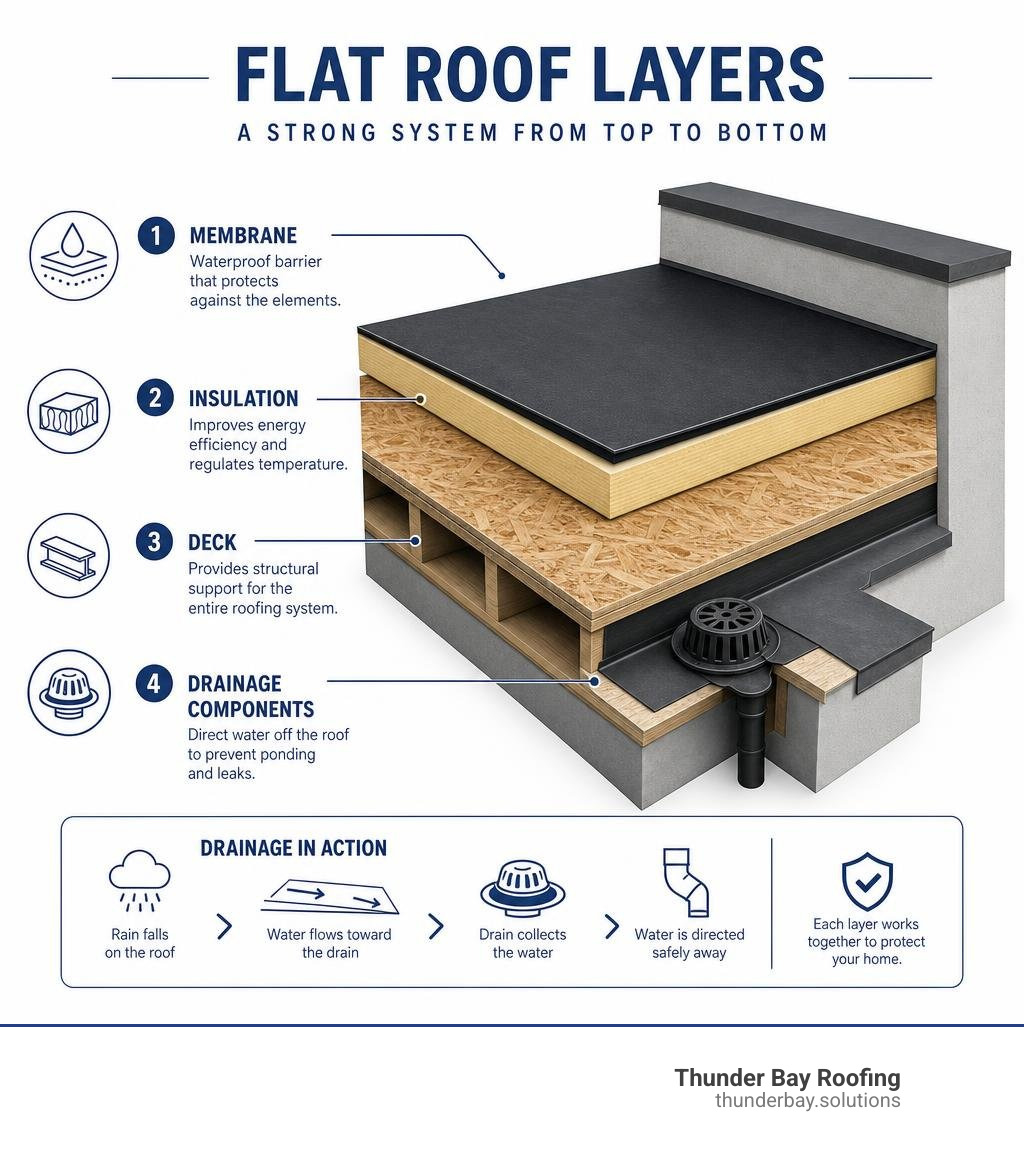
A completely level roof would be a recipe for disaster, inviting water to pool indefinitely until it finds a way into your home. Instead, modern residential flat roofs are engineered with a subtle slope — typically between 5 and 15 degrees, or a minimum of a 1/4-inch vertical rise for every 12 inches of horizontal run. This slight pitch is crucial because it ensures that rainwater is directed toward drainage points rather than sitting on your roof.
When designing or replacing a flat roof, we must carefully consider how water moves across the surface. Water is directed off the roof using three main components:
- Scuppers: Outlets cut into the perimeter walls (parapets) that allow water to drain off the edge.
- Internal Drains: Drains placed in low points of the roof that connect to internal piping.
- Gutters: Installed at the lowest edge of a sloped flat roof to catch runoff.
Another critical design decision is whether to build a warm roof or a cold roof. This choice significantly impacts how your home manages heat and moisture, which is especially important in the humid climate of West Central Florida.
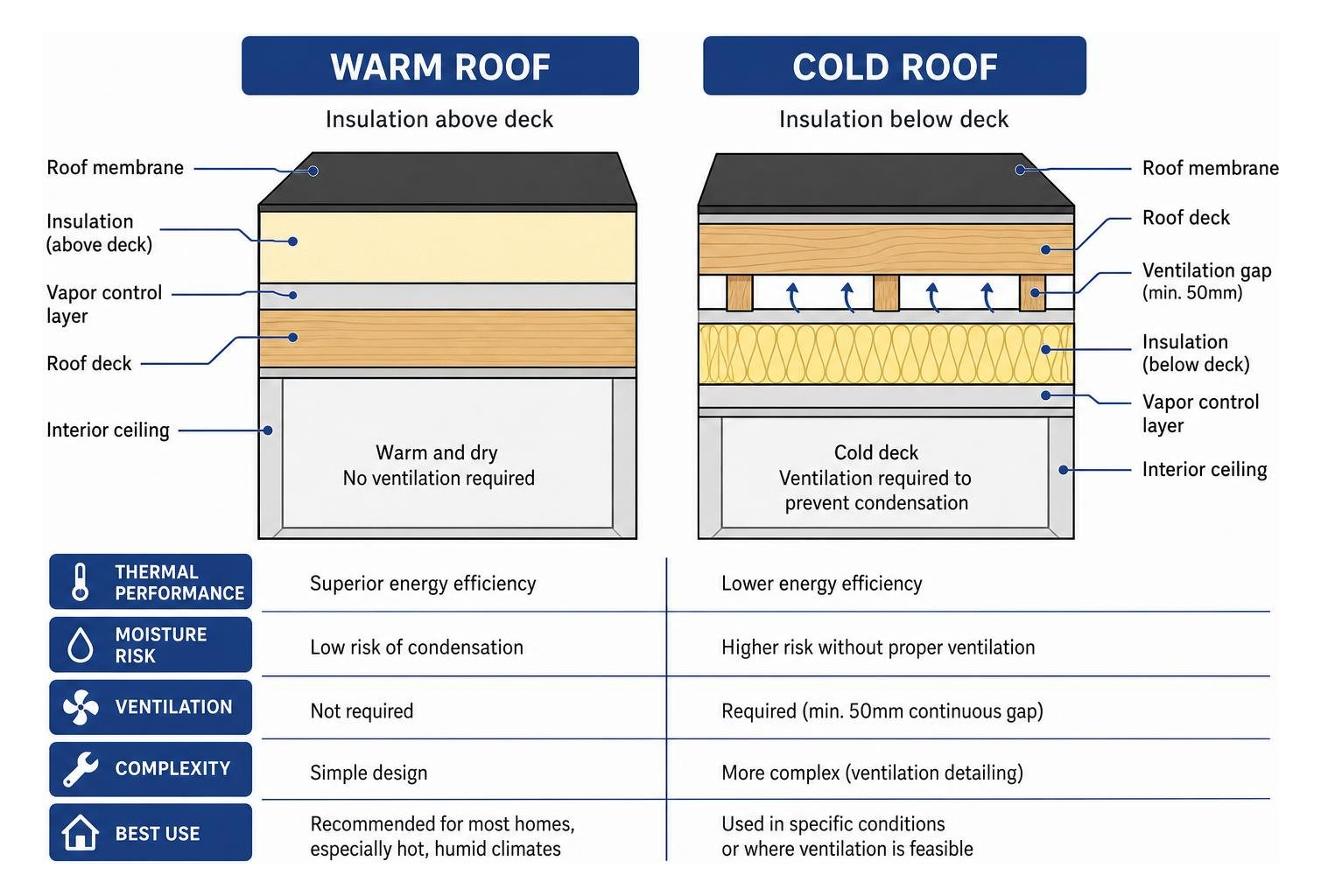
In a warm roof design, the insulation is installed above the roof deck, directly beneath the waterproofing membrane. This keeps the structural deck at a similar temperature to the interior of the home, eliminating the need for roof ventilation and providing superior thermal performance.
Conversely, a cold roof places the insulation below the deck (between the ceiling joists). This leaves the deck cold, requiring a minimum 50mm ventilation gap to prevent condensation from forming and rotting the wood. For most residential flat roofing systems in hot, humid areas like Land O’ Lakes FL and Lutz FL, we highly recommend a warm roof design to prevent moisture entrapment.
Finally, flat roofs must be engineered to withstand wind uplift pressure. When high winds blow over a flat surface, they create negative pressure (vacuum effect) that literally tries to suck the roof membrane off the building. Securing the edges, fastening the insulation properly, and choosing the right installation method are key to preventing wind damage during Florida’s severe storms.
To explore how these structural elements come together, read our detailed breakdown of Flat Roof Systems and how they compare to traditional Low Slope Roofing.
The Best Residential Flat Roofing Materials Ranked
Choosing the right material for your home requires balancing upfront costs, expected lifespan, and climate compatibility. Below, we rank and analyze the top flat roofing materials on the market today.
1. EPDM Rubber: The Longest-Lasting Option for Residential Flat Roofing Systems
Ethylene Propylene Diene Monomer (EPDM) is a highly durable synthetic rubber membrane derived from oil and natural gas. In the commercial roofing sector, EPDM accounts for approximately 40% of the market, but it has become an increasingly popular choice for high-end residential flat roofs due to its incredible longevity.
EPDM’s superpower is its elasticity. High-quality membranes can elongate over 300% in all directions, allowing the roof to stretch and contract as your home settles and temperatures shift. This prevents the material from cracking or tearing over time.
For residential applications, EPDM is typically installed using one of three methods:
- Fully Adhered: The membrane is glued down to the substrate using a strong cold adhesive. This is the cleanest, most wind-resistant method for homes.
- Ballasted: The membrane is laid loose and held down by heavy river stones or pavers. While simple to install, the added weight (often 10 lbs per square foot) requires a highly reinforced roof structure.
- Mechanically Fastened: The membrane is secured to the deck using specialized screws and plates along the seams.
For smaller residential projects under 150 square meters, products like the RubberCover EPDM membrane | Residential Roofing systems | Elevate offer a seamless, flame-free solution. Similarly, systems like the Giscolene EPDM TXR | Residential roofing membrane | Elevate provide excellent UV and ozone resistance, making them highly reliable options.
Pros of EPDM:
- Unmatched Lifespan: A properly installed and maintained EPDM roof can last up to 50 years.
- Eco-Friendly: EPDM is chemically inert, highly recyclable, and safe for rainwater harvesting.
- Low Maintenance: It resists UV rays and extreme weather, requiring minimal repairs over its lifespan.
Cons of EPDM:
- Heat Absorption: Standard EPDM is black, meaning it absorbs heat. In hot climates, this can increase your cooling costs unless you apply a light-colored reflective coating.
- Puncture Risks: While durable, sharp falling branches or dragging tools across the surface can puncture the rubber.
If you are looking for a long-term, set-it-and-forget-it solution, our team can help you design a custom EPDM Roofing system tailored to your home.
2. TPO Single-Ply: The Most Energy-Efficient Choice for Residential Flat Roofing Systems
Thermoplastic Polyolefin (TPO) is a single-ply reflective roofing membrane that has taken the residential and commercial markets by storm over the last few decades. Made from a blend of polypropylene and ethylene-propylene rubber, TPO is widely considered the gold standard for hot, sunny climates.
TPO’s primary selling point is its bright-white surface, which provides exceptional UV reflectivity. Instead of absorbing the sun’s rays and transferring that heat into your home, TPO reflects the energy back into the atmosphere, significantly reducing your air conditioning loads.
During installation, TPO sheets are rolled out and mechanically fastened or fully adhered to the roof deck. The seams are then fused together using a specialized hot-air welder. This chemical weld creates a single, continuous sheet across your entire roof that is incredibly resistant to leaks.
To learn more about the financial benefits of this material, check out our guide on TPO Single-Ply Roofing Membrane Costs and Benefits Explained and explore our professional TPO Roofing services.
Pros of TPO:
- Excellent Energy Efficiency: Can lower household cooling costs by reflecting up to 80% of solar radiation.
- Strong Seams: Hot-air welded seams are up to three times stronger than taped or glued seams.
- Algae and Mold Resistant: TPO naturally resists fungal growth, which is a major benefit in humid climates.
Cons of TPO:
- Varying Manufacturer Quality: Because TPO is a relatively new material (introduced in the 1990s), chemical formulations vary between manufacturers. It is critical to source membranes from established brands like GAF to avoid premature cracking.
- Shorter Track Record: Unlike BUR or EPDM, TPO does not have a century of historical data to prove its long-term performance.
3. Modified Bitumen: The Time-Tested Asphalt Hybrid
Modified Bitumen (MBR) is the modern evolution of traditional Built-Up Roofing (BUR). It combines asphalt with plastic or rubber polymers (such as SBS or APP) to increase its strength, flexibility, and resistance to temperature fluctuations.
Modified bitumen is typically installed in a two- or three-layer system. The base sheet is secured to the deck, followed by a cap sheet that is finished with mineral granules to protect the underlying asphalt from UV damage.
Historically, modified bitumen was applied using open-flame torches to melt the asphalt together. However, due to severe fire hazards on wood-framed residential homes, the industry has shifted toward self-adhering (peel-and-stick) membranes and cold-applied adhesives. For example, high-performance systems like The BauderFlex Bitumen Roof System Membrane – Bauder utilize thinner, highly engineered elastomeric membranes that provide durable, budget-friendly protection without the need for open flames.
If you currently have an asphalt-based roof that is showing signs of wear, you can learn how to handle minor issues in our blog post: The Simple Way to Patch a Leaky Flat Asphalt Roof.
Pros of Modified Bitumen:
- Excellent Impact Resistance: The thick, multi-layer design easily handles light foot traffic and falling debris.
- Familiar Aesthetics: The mineral granule surface looks similar to traditional asphalt shingles, making it a popular choice for homeowners who want a cohesive look.
- Cost-Effective: It offers a great balance of durability and affordability.
Cons of Modified Bitumen:
- Shorter Lifespan: Typically lasts 15 to 20 years, which is shorter than EPDM or TPO.
- Difficult Leak Detection: Because of the multi-layer design, water can travel between the layers, making it difficult to pinpoint the exact source of a leak.
4. Liquid-Applied & GRP Membranes: Seamless Waterproofing
If your home has a complex roof shape, multiple penetrations (like chimneys, skylights, or HVAC units), or a zero-pitch design, traditional sheet membranes can be difficult to install. That is where liquid-applied and GRP (Glass Reinforced Polyester) fiberglass systems shine.
These systems are applied as a cold liquid that cures via chemical reaction to form a completely seamless, joint-free waterproof barrier. Because there are no seams, the primary failure point of flat roofs is entirely eliminated.
Two of the most popular seamless systems include:
- PMMA (Polymethyl Methacrylate) Liquid Systems: High-performance resins like Triflex ProTect® | Flat Roof Waterproofing System | Triflex cure incredibly fast (often rainproof in 30 minutes) and do not break down even when permanently submerged in standing water.
- GRP Fiberglass Systems: Systems detailed in the GRP Roof 1010 Application Manual and the Polyroof 185 Brochure combine flexible resins with a fiberglass mat. These systems chemically bond to the roof deck, creating a tough, impact-resistant surface that is perfect for rooftop balconies and walkways.
If you want to extend the life of an existing flat roof without a costly tear-off, liquid-applied coatings are an excellent restoration option. Read our guide on how to Coat Your Way to a Longer Lasting Roof.
Pros of Liquid & GRP Membranes:
- 100% Seamless: Zero seams means zero seam failures.
- Highly Versatile: Easily molds around complex architectural details and roof penetrations.
- Tough and Walkable: GRP systems can easily handle regular foot traffic, patio furniture, and potted plants.
Cons of Liquid & GRP Membranes:
- High Upfront Cost: These systems require specialized equipment and highly trained installers, making them more expensive than single-ply options.
- Strict Installation Windows: Liquid systems cannot be applied in wet conditions or extreme heat, requiring careful planning.
Comparing Flat Roof Materials: Cost, Lifespan, and Climate Performance
To help you visualize how these materials stack up against one another in July 2026, we have compiled a direct comparison of their costs, lifespans, and performance characteristics.
| Material Type | Average Cost (per sq. ft.) | Expected Lifespan | Best Climate Fit | Wind Uplift Resistance |
|---|---|---|---|---|
| EPDM Rubber | $9 – $13 | 30 – 50 Years | Cold to Moderate (Good for extreme temp swings) | Excellent (Fully Adhered) |
| TPO Single-Ply | $8 – $11 | 15 – 25 Years | Hot & Sunny (Reflective white surface) | Very Good |
| Modified Bitumen | $7 – $9 | 15 – 20 Years | Moderate to Hot | Good |
| Liquid-Applied / GRP | $12 – $18+ | 25 – 30+ Years | All Climates (Highly versatile) | Exceptional |
| Built-Up Roofing (BUR) | $7 – $9 | 15 – 30 Years | Moderate | Fair |
The Florida Factor: Heat, Humidity, and Hurricanes
When choosing a material for homes in Wesley Chapel FL, Lutz FL, or Land O’ Lakes FL, local weather conditions must dictate your choice.
Our intense UV exposure can dry out and crack asphalt-based systems (a process called “alligatoring”) much faster than in northern states. Furthermore, our high humidity promotes algae growth on dark, damp surfaces. For these reasons, TPO is often the most practical choice for Florida homeowners due to its high solar reflectivity and natural resistance to mold.
However, if you are building a modern home with a flat roof designed for a rooftop patio, a seamless GRP or PMMA liquid system is the best choice to handle the structural wear and standing water from heavy summer storms.
No matter which material you choose, ensuring a professional Roof Installation or Roof Replacement is the only way to guarantee your roof survives hurricane season. For a deeper dive into these options, read The Ultimate Breakdown of Flat Roof Membrane Types and Systems.
Essential Maintenance and Preventing Flat Roof Failures
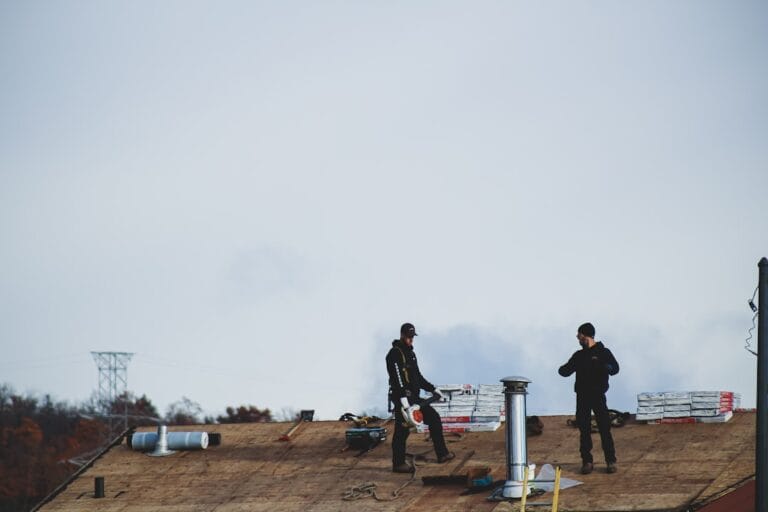
A flat roof requires a bit more attention than a sloped shingle roof. Because water does not shed instantly, small issues can quickly turn into major leaks if left unaddressed.
The Major Culprits of Flat Roof Failures
- Ponding Water: If water stands on your roof for more than 48 hours after a rainfall, it is considered ponding. This standing water puts immense pressure on the seams and can accelerate the degradation of TPO and modified bitumen membranes.
- Alligatoring: Under intense sun, asphalt-based roofs (like modified bitumen or BUR) can lose their plasticizers, causing the surface to crack and resemble alligator skin.
- Seam Separation: As a home expands and contracts, poorly glued or taped seams can pull apart, creating direct entry points for water.
- Flashing Failures: The metal flashings around chimneys, skylights, and vents are common leak areas. If the sealant cracks or the metal rusts, water will find its way inside.
Your Flat Roof Maintenance Checklist
To maximize the lifespan of your roof, we recommend performing a basic inspection at least twice a year (in the spring and fall) and immediately after major weather events.
- Clear the Drains: Sweep away leaves, branches, and loose gravel that could block scuppers, gutters, or internal drains.
- Check the Seams: Look for any signs of peeling, lifting, or cracking along the membrane seams.
- Inspect the Flashings: Ensure the sealant around all roof penetrations is intact and free of cracks.
- Look for Bald Patches: On modified bitumen roofs, check for areas where the protective mineral granules have washed away.
- Schedule Professional Inspections: Have a licensed roofing contractor perform a comprehensive inspection every few years to catch hidden moisture issues before they rot your roof deck.
If you suspect your roof has suffered storm damage, do not wait. Learn more about our Roof Repair and Hurricane Damage Repair services.
Frequently Asked Questions About Residential Flat Roofs
Can you use shingles on a flat roof?
No, you should never use traditional shingles on a flat roof. Shingles are designed to shed water using gravity on a sloped surface. On a low-slope or flat roof, water will easily seep underneath the shingles, rotting the wooden deck beneath.
If you love the look of shingles but have a low-slope roof, we recommend using a self-adhering modified bitumen system with color-matched granules, or transitioning to a dedicated low-slope membrane. You can explore our traditional options here: Asphalt Shingle Roofing.
How long do different flat roof materials typically last?
- EPDM Rubber: 30 to 50 years (longest lasting)
- TPO Single-Ply: 15 to 25 years
- Modified Bitumen: 15 to 20 years
- Built-Up Roofing (BUR): 15 to 30 years (depending on the number of plies)
- Liquid-Applied / GRP: 25 to 30+ years
What are the pros and cons of choosing a flat roof for a home?
- Pros: Modern architectural aesthetics, extra usable space (rooftop gardens, patios), easier and safer maintenance access, and ideal placement for hidden solar panels.
- Cons: Increased risk of ponding water, requires more frequent maintenance than sloped roofs, and requires specialized installation expertise to prevent premature failure.
Conclusion
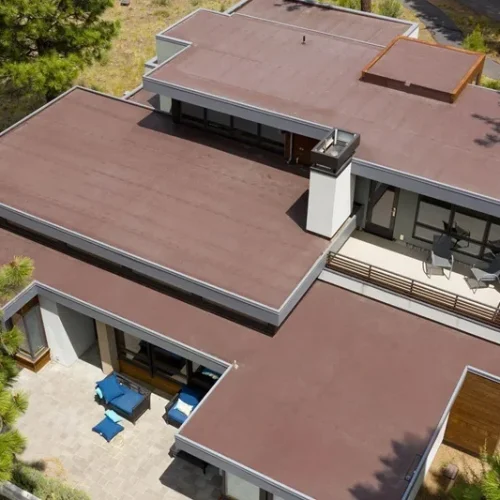
A residential flat roof is a beautiful, modern, and highly functional addition to any home. Whether you choose the incredible longevity of EPDM, the energy-saving reflectivity of TPO, the rugged multi-layer protection of modified bitumen, or the seamless reliability of a liquid-applied system, the key to success is professional installation.
At Thunder Bay Roofing, we have spent years protecting homes across Wesley Chapel FL, Lutz FL, and Land O’ Lakes FL from the unique challenges of the Florida climate. We do not believe in one-size-fits-all solutions; we work with you to design a custom roofing system that fits your budget, your home’s architecture, and your lifestyle.
If you are ready to explore your options, we invite you to browse our Residential Roofing services or request a Free Roof Quote today.