
How to Seal Your Roof During a Storm Without Getting Soaked
When Your Roof Takes a Hit: What to Do First for Severe Weather Roof Repair
Severe weather roof repair is the process of safely assessing, temporarily protecting, and professionally restoring a storm-damaged roof — and the steps you take in the first 24 hours determine how much damage you ultimately pay for. Thunder Bay Home Solutions provides expert Florida roofing services to help homeowners navigate the aftermath of high-wind events.
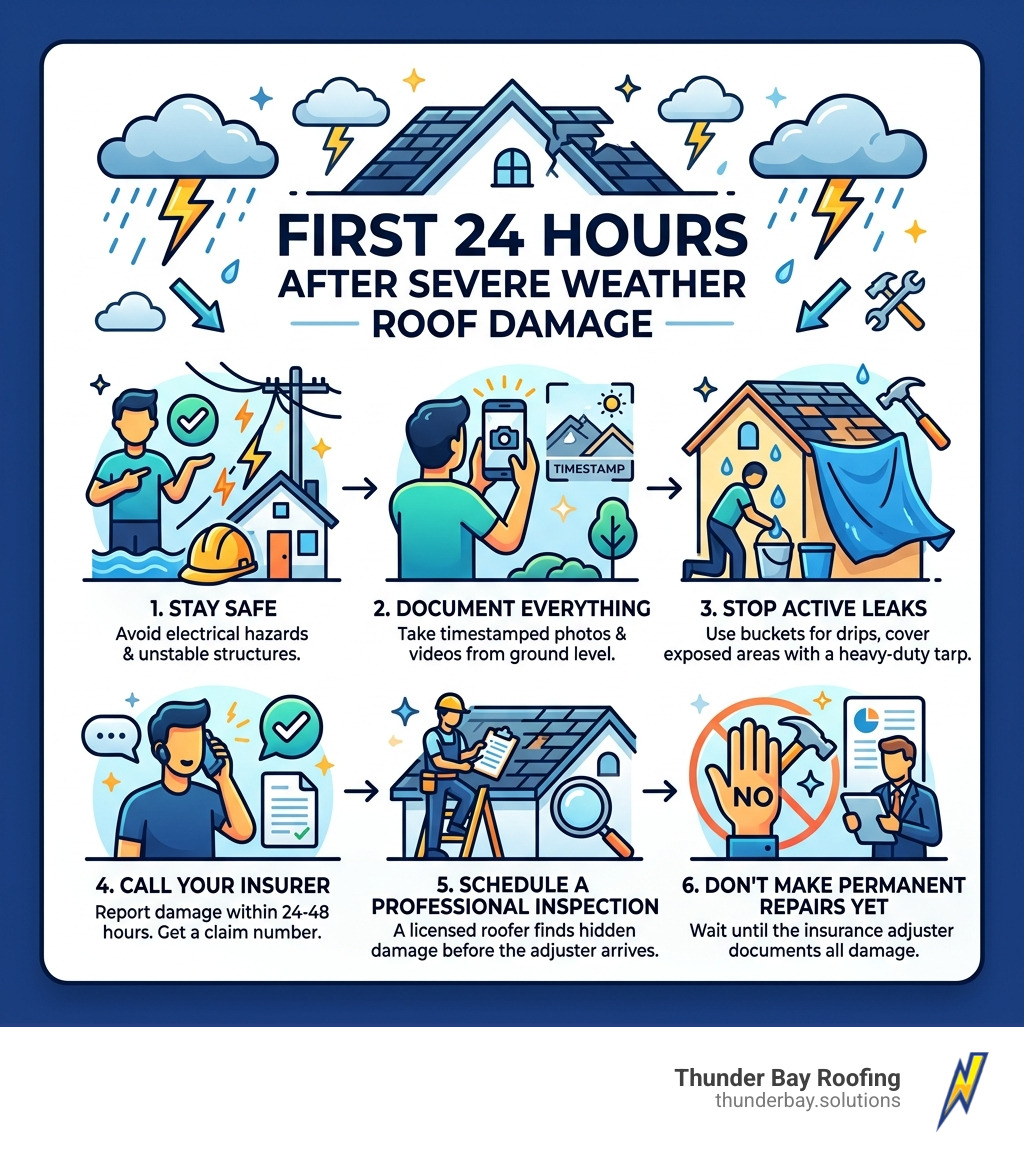
Here’s what to do immediately after storm damage:
- Stay safe — avoid downed power lines, flooded areas, and unstable structures
- Document everything — take timestamped photos and videos from ground level before touching anything
- Stop active leaks — place buckets under drips and cover exposed areas with a heavy-duty tarp
- Call your insurer — report damage within 24–48 hours and get a claim number
- Schedule a professional inspection — a licensed roofer can find hidden damage before the adjuster arrives
- Don’t make permanent repairs yet — wait until the adjuster has documented everything
Florida homeowners know better than most how fast a storm can go from “watch” to “warning.” With forecasters predicting up to 23 named storms and 7 major hurricanes in 2026, the window between a storm passing and water entering your home can be measured in minutes — not days. Whether you’re dealing with a fast-moving squall in Wesley Chapel or the tail end of a named hurricane, professional roofing support is the difference between a quick repair and a full replacement.
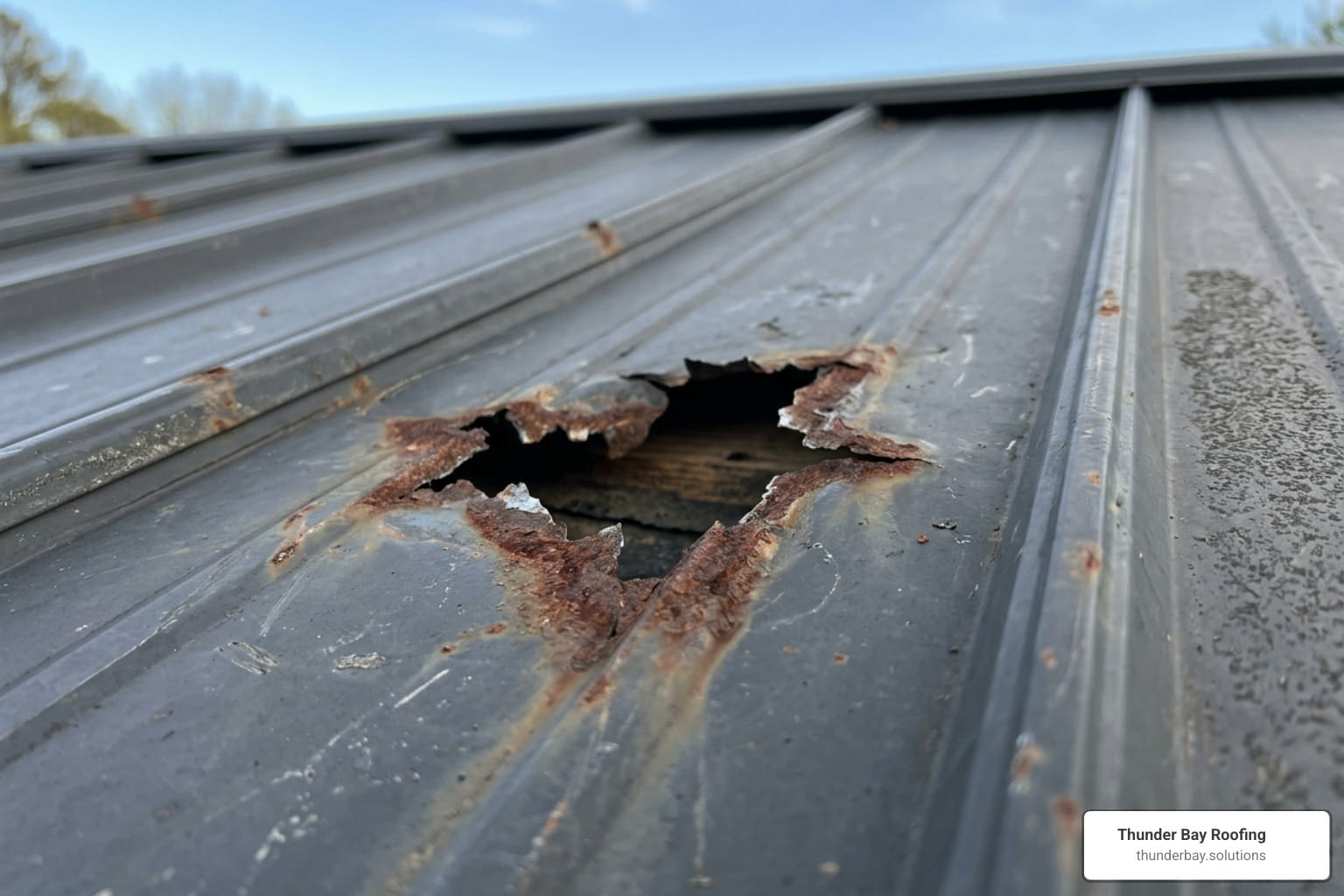
Even small ceiling stains or missing shingles can quietly become thousands of dollars in structural damage. Studies show that up to 70% of hail damage is invisible without a professional inspection — meaning what you can’t see is often more dangerous than what you can.
I’m Tyler Wood, owner of Thunder Bay Home Solutions in Wesley Chapel, Florida, and through years of leading roofing and commercial HVAC/R operations across the Tampa Bay area, I’ve seen how fast Florida weather can turn a manageable severe weather roof repair into a full roof replacement when homeowners wait too long. The guide below walks you through every step — from the first 24 hours to long-term resilience upgrades — so you can protect your home and your wallet.
Immediate Safety and Severe Weather Roof Repair Steps
When a storm clears in West Central Florida, the instinct is to grab a ladder and start fixing. However, safety must remain your absolute priority. The first rule of severe weather roof repair is to never climb onto a wet, wind-lifted, or visibly damaged roof. Slips and falls are common, and the structural integrity of the decking may be compromised by fallen debris or heavy saturation.
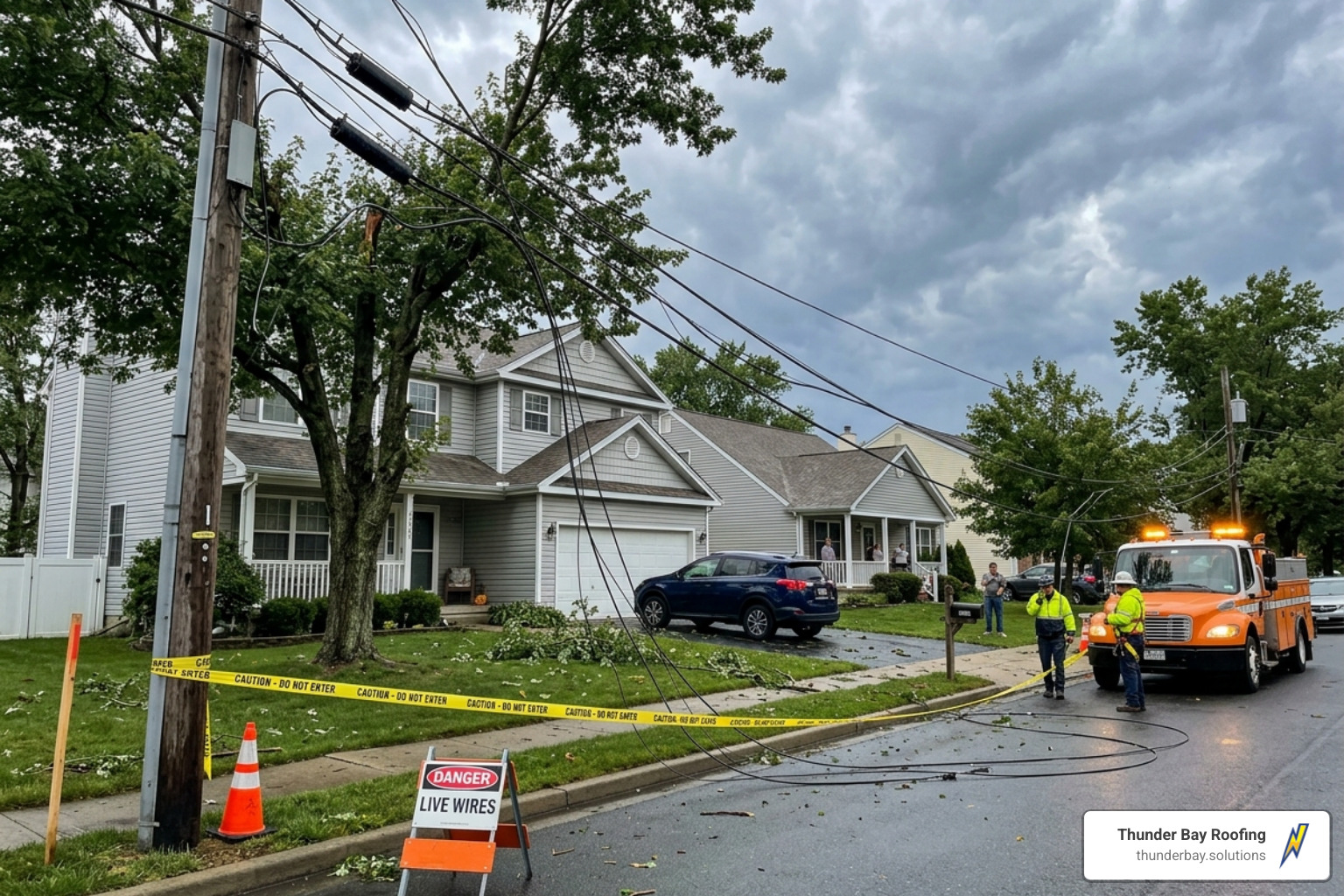
Before stepping outside, check for downed power lines. In Lutz and Land O’ Lakes, heavy oak limbs frequently take down lines during summer squalls. If a line is touching your house or even near a metal fence, stay inside and call your utility provider immediately. Inside the home, if you notice water dripping near light fixtures or outlets, shut off the main breaker to avoid electrical fires.
If the structure is safe, your legal obligation under most insurance policies is to mitigate further damage. This is where emergency tarping becomes critical. Professionals use a 100% tie-off safety system to secure these temporary barriers, ensuring that no one is injured while trying to save the living room carpet. According to a Severe Storm Roof Damage Guide, prompt action in the first 24 hours can prevent mold growth, which often begins within 24 to 48 hours of moisture intrusion. If your home has suffered significant impact from a falling tree, you should also seek a hurricane damage roof repair specialist who understands the structural nuances of wind-driven damage.
Once the immediate threat is contained, scheduling professional roof inspections is the only way to ensure hidden fractures in the roof’s seal aren’t ignored.
Best Sealants for Severe Weather Roof Repair
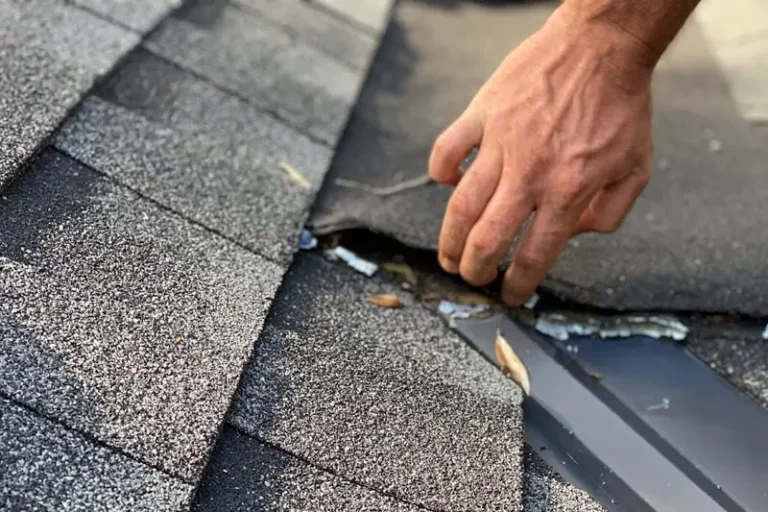
If you have a minor leak and the weather allows for a quick patch, choosing the right material is vital. For severe weather roof repair, we often recommend high-performance sealants like Henry 209XR Extreme Rubberized Wet Patch. This specific product is a lifesaver because it can be applied in standing water and extreme temperatures ranging from -20 to 120 °F. Its UV-modified rubber formula creates a waterproof bond that lasts much longer than standard asphalt plastic cement.
Using the right sealant is a key part of roof leak detection and mitigation. While a “wet patch” is a temporary fix, it can buy you weeks of time while waiting for a full repair crew. As noted in a guide on 5 urgent steps for storm damage, stopping the water at the source is the only way to protect your home’s interior from escalating costs.
Temporary Tarping for Severe Weather Roof Repair
For larger areas of damage, such as a section of shingles ripped away by 75+ mph winds, a sealant isn’t enough. You will need a heavy-duty polyethylene tarp. When performing a temporary severe weather roof repair, the tarp should extend at least four feet past the damaged area on all sides and be wrapped over the ridge of the roof to prevent water from running underneath it. For high-wind areas, GAF recommends using shingles with reinforced nail zones to prevent blow-offs during future events.
Secure the tarp using 2×4 wooden strips (battens) and galvanized nails. Never just “nail the tarp down” directly, as the wind will catch the edges and rip it away, potentially causing more holes. In high-wind scenarios typical of Florida, sandbags can also be used to weigh down edges on flat roofs. This process is essential for wind damage repair to ensure the home remains watertight until permanent shingles can be installed. For more on this, the Mississippi Homeowners Guide offers excellent insights into managing high-wind events.
Identifying Visible and Hidden Storm Damage
Not all storm damage looks like a fallen tree. In fact, the most expensive damage is often the kind you can’t see from the driveway. We recommend the IOU method (Inside, Outside, Up the ladder) for a systematic assessment:
- Inside: Check the attic for “daylight” peeking through boards, damp insulation, or water stains on rafters.
- Outside: Walk the perimeter with binoculars. Look for dented gutters, cracked shingles, or “bruises” that indicate hail impact.
- Up the ladder: Only once the roof is dry and safe, a professional will check for “zippering” (where wind breaks the adhesive seal of a row of shingles) or structural sagging roof repair needs.
Hail damage is particularly deceptive. It often appears as dark, round spots where granules have been knocked away, exposing the asphalt mat underneath. This weakens the shingle’s UV protection, causing it to fail months later. If you suspect your roof was hit, hail damage repair should be addressed before the next rainy season.
Navigating the Insurance Claim Process
Filing a claim for severe weather roof repair can feel like a second storm. The most important thing to understand is the difference between Actual Cash Value (ACV) and Replacement Cost Value (RCV). ACV pays you what the roof was worth at the time of the storm (depreciated based on age), while RCV covers the actual cost to replace it with a new roof today.
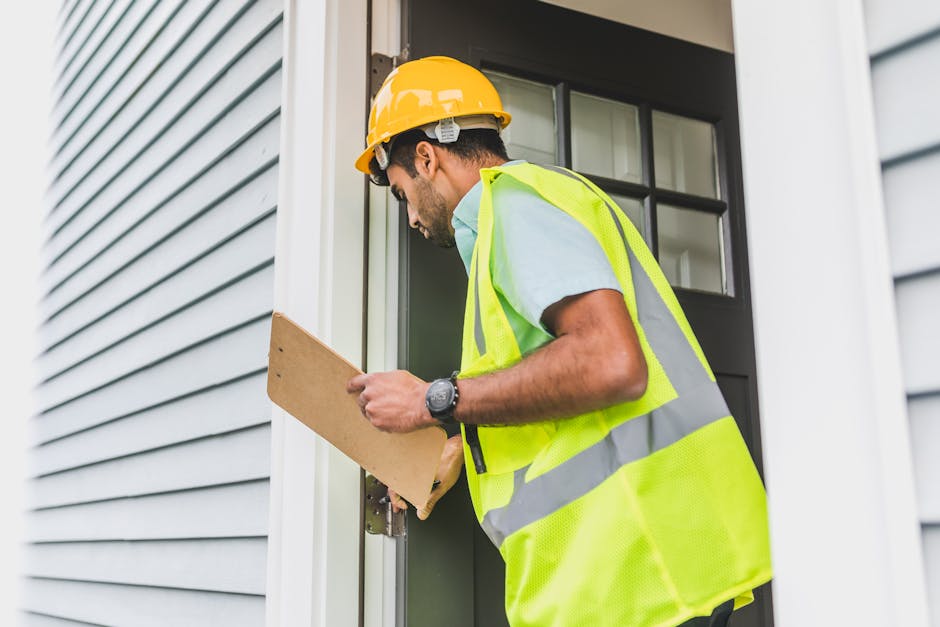
When you meet the adjuster, have your roofing contractor present. We act as your advocate, pointing out local building code requirements (like the “25% Rule” which often dictates a full replacement if a certain percentage of the roof is damaged) that an adjuster might miss. According to the Missouri Homeowners Guide, having a professional on-site can significantly increase the accuracy of the claim payout.
Repair vs. Replacement Cost Comparison
| Damage Type | Estimated Repair Cost | Estimated Full Replacement |
|---|---|---|
| Minor Hail (few shingles) | $1,000 – $3,000 | N/A |
| Moderate Wind (15-25% surface) | $3,000 – $8,000 | $12,000 – $25,000+ |
| Severe Storm/Hurricane | $8,000 – $15,000 | $15,000 – $40,000+ |
Note: Costs vary based on square footage, pitch, and materials.
If the damage is localized, a simple roof repair may suffice. However, if your roof is over 15 years old, patching it may cause more harm than good, as old shingles become brittle and crack when handled.
Long-Term Resilience and Material Upgrades
If a storm has forced you into a replacement, don’t just put back what you had. Florida’s climate in 2026 demands better. Upgrading to UL 2218 Class 4 Impact-Resistant Shingles can often earn you a significant discount on your homeowners insurance. These shingles are tested by dropping a 2-inch steel ball from 20 feet; if they don’t crack, they earn the rating. The Insurance Institute for Business & Home Safety (IBHS) provides standards for ‘FORTIFIED’ roofing that can withstand severe weather.
For the ultimate in storm protection, many Wesley Chapel residents are switching to metal roofing. Metal roofs can last 50 years or more and are virtually immune to hail and high-wind uplift when installed correctly. If you prefer the look of traditional materials, modern asphalt shingle roofing now comes in “high-wind” variants rated for speeds up to 130 mph.
The Kansas Homeowner’s Guide emphasizes that choosing the right roof installation partner is just as important as the material. A roof is only as strong as its weakest seam, and in Florida, those seams are tested every single afternoon.
Frequently Asked Questions about Storm Damage
How long do I have to file an insurance claim after a storm?
Most Florida policies require you to file “promptly.” While some carriers allow up to one year, we strongly recommend filing within 24 to 48 hours. Waiting too long allows the insurance company to argue that leaks were caused by neglect or a different, later event, which can lead to a denial.
Will my homeowners insurance cover severe weather roof repair?
Yes, standard policies typically cover “sudden and accidental” damage from wind, hail, and falling debris. However, they do not cover “wear and tear” or damage caused by a lack of maintenance. Your payout will depend on your deductible—keep in mind that many Florida policies have a separate, higher deductible for hurricanes (often 2% to 5% of the home’s total insured value).
What is the average cost of storm-related roof repairs?
The average cost for storm or hail repair in the U.S. is approximately $12,315. For basic severe weather roof repair, costs typically range between $8.89 and $11.24 per square foot. This includes the removal of damaged shingles, minor deck repairs, and the installation of new underlayment and shingles.
Conclusion
At Thunder Bay Home Solutions, we don’t just fix roofs; we build peace of mind for our neighbors in Wesley Chapel, Lutz, and Land O’ Lakes. Florida’s weather is unpredictable, but your roof’s performance shouldn’t be. Whether you need a minor hail damage repair or a complete roof replacement after a major hurricane, our team brings local expertise and customized solutions to every project.
Don’t let a small leak turn into a structural disaster. We are licensed, insured, and ready to provide the professional documentation you need for a successful insurance claim.
If your home was hit by recent storms, contact us today for a free, no-obligation inspection. Let’s get your home protected before the next clouds roll in.