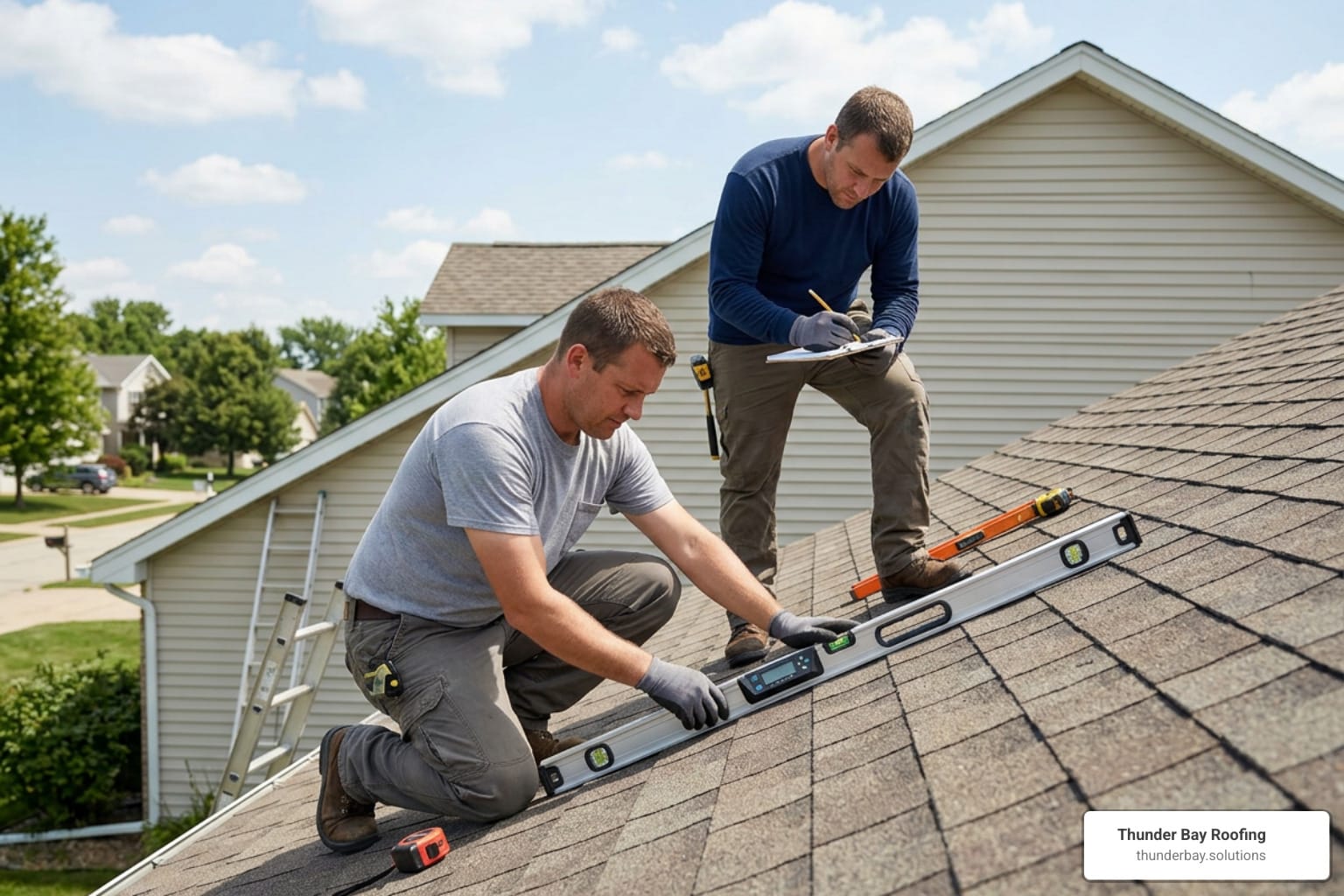

Don’t Get Burned: A Guide to Hiring Chimney Leak Repair Experts
When Your Chimney Leaks, Who Do You Call?
If you’ve noticed water stains on your ceiling, a musty smell near your fireplace, or dripping sounds after a rainstorm, you need chimney leak repair experts — and you need them fast. Securing a reliable local roofing company is the first step to protecting your home from severe water damage.
Here’s the short answer on who to call and why:
- Call a certified chimney repair specialist first. They have the tools and training to find the exact source of the leak.
- A roofing contractor can help — but only if they have specific chimney experience (not all do).
- Don’t DIY it. Improper repairs can cause mold, structural damage, and even carbon monoxide hazards inside your home.
- Act quickly. Water damage gets worse over time — it never fixes itself.
Chimney leaks are more common than most homeowners realize. In fact, industry inspectors find leaks in the flashing or flue cap in 4 out of 5 chimneys they inspect. And roughly 1 in 5 homes with masonry chimneys has experienced water damage linked directly to chimney failure.
Florida homeowners face a particular challenge. Heavy rain, severe storms, and intense UV exposure put constant pressure on every part of your roof system — including your chimney. That’s where working with the right professional roofing services makes all the difference.
I’m Tyler Wood, owner of Thunder Bay Home Solutions in Wesley Chapel, Florida — and while my focus is on building roofing systems that stand up to Florida’s toughest weather, I work closely with chimney leak repair experts and understand exactly where roof systems and chimney systems overlap. In this guide, I’ll walk you through everything you need to know to protect your home.
Chimney leak repair experts terminology:
Why You Need Chimney Leak Repair Experts
You need chimney leak repair experts because chimney leaks are complex, multi-system problems that require specialized masonry, roofing, and ventilation knowledge to solve permanently.
A leaking chimney is never just a cosmetic issue. When water enters your chimney, it slowly destroys the structural integrity of your home from the inside out. Because chimneys penetrate both your roofline and your home’s interior envelope, water intrusion here can damage your framing, rot your roof decking, and ruin your interior drywall.
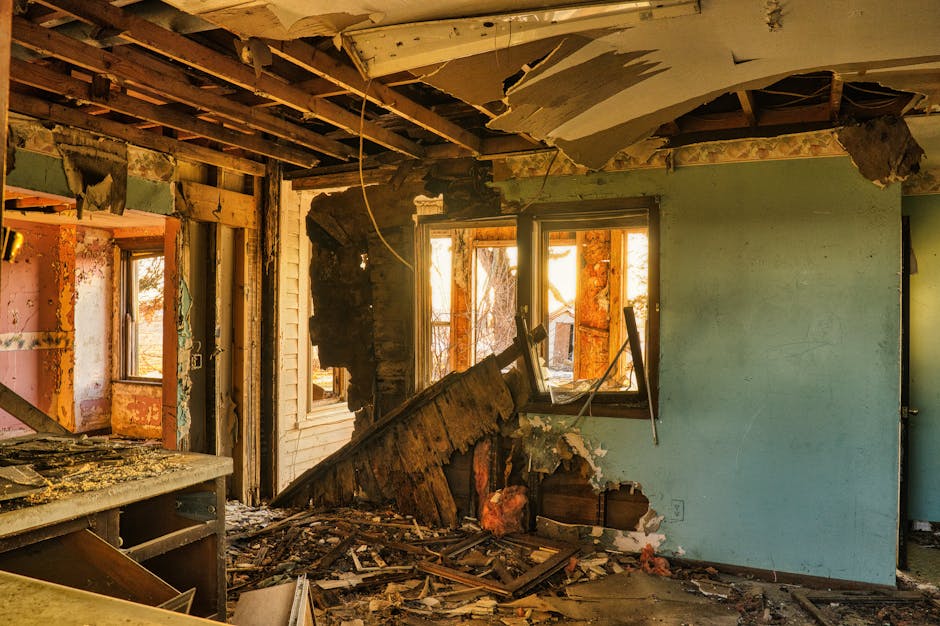
According to data compiled by the Federal Emergency Management Agency (FEMA), even minor water intrusion can lead to rapid toxic mold colonization within 24 to 48 hours. In the humid, warm climate of West Central Florida—including Lutz, Land O’ Lakes, and Wesley Chapel—this mold growth is accelerated, posing serious health risks to your family.
Furthermore, if the water damages your chimney’s clay flue liner, it can allow highly toxic carbon monoxide gas to leak into your living spaces instead of venting safely outside.
In West Central Florida, we also experience unique environmental stressors. While we don’t have the severe northern winters, our chimneys still experience thermal expansion and contraction during our winter nights, combined with extreme summer heat and driving tropical rains. If water is trapped inside the brickwork, it degrades the structural stability of the chimney.
To determine if your roof or chimney is the root cause of your water issues, professional roof leak detection is the essential first step to prevent catastrophic structural failures.
Key Water Damage Statistics (FEMA & Industry Data)
- Mold Growth Timeline: Mold spores germinate and multiply within 24–48 hours of initial water exposure.
- Structural Degradation: Unresolved masonry leaks can reduce the service life of a brick chimney by 20 to 30 years.
- The 80% Rule: Approximately 80% of active chimney leaks stem from failing flashing or cracked concrete crowns at the roof intersection.
- Recurring Issues: Homeowners who hire certified chimney professionals experience 70% fewer recurring issues compared to those who attempt DIY or hire uncertified handymen.
Common Causes and Signs of a Leaking Chimney
The most common causes of chimney leaks are deteriorated metal flashing, cracked concrete crowns, missing chimney caps, and porous brick masonry absorbing driving rain.
To protect your home, you must first understand the primary vulnerabilities of your chimney. Here is a detailed breakdown of why chimneys leak:
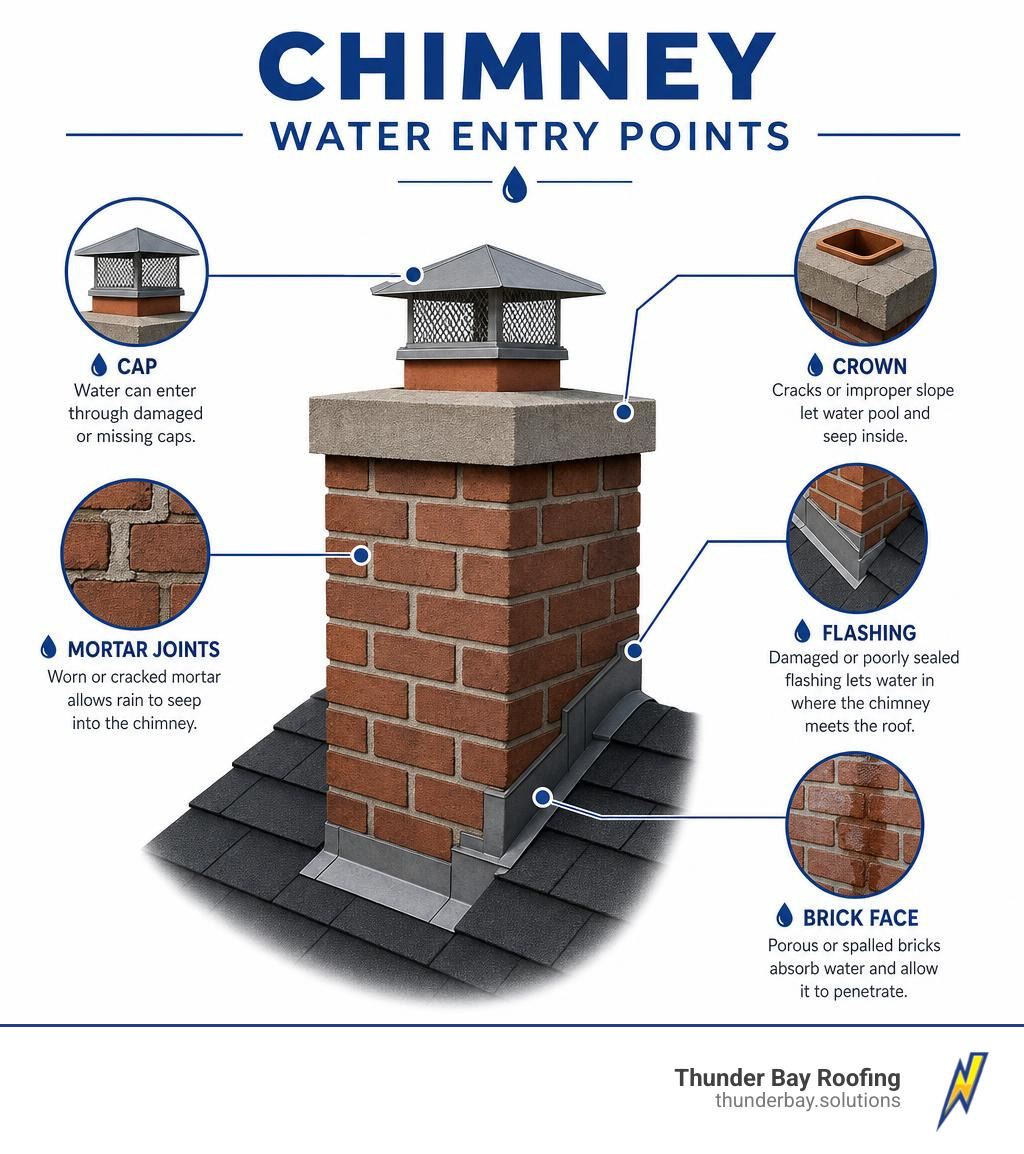
- Failing Chimney Flashing: Flashing is the sheet metal transition that seals the gap between your chimney and your roof. Over time, the sealant degrades, or the metal rusts, allowing water to pour directly into your attic. If your flashing is warped or rusted, you need a professional chimney flashing replacement to restore your roof’s watertight seal.
- Cracked Chimney Crowns: The concrete slab at the top of your masonry chimney is called the crown. It is designed to shed water away from the bricks. When it cracks due to weather exposure, rainwater flows directly into the interior brickwork.
- Missing or Damaged Chimney Caps: Without a high-quality stainless steel or copper cap covering your flue, rainwater falls straight down your chimney liner, rusting your fireplace damper and rotting your firebox.
- Porous Brick and Mortar: Bricks act like sponges. During heavy Florida downpours, they absorb water. When saturated, moisture migrates inward, causing interior drywall stains and musty odors.

Our local weather plays a massive role in these failures. High winds, intense thunderstorms, and tropical events can tear away shingles, crack crowns, and warp flashing. If your home has recently been exposed to severe weather, you may require targeted repairs such as storm-damaged roofing services, hail damage repair, wind damage repair, or even comprehensive hurricane damage roof repair to secure your home.
Often, a leaking chimney is accompanied by other roof damage, requiring missing shingle replacement or structural stabilization like structural sagging roof repair. If you have an active, severe leak during a storm, we highly recommend utilizing our emergency tarping services to mitigate damage before permanent repairs can begin.
Common Signs Your Chimney is Leaking
- Water dripping or pooling inside your fireplace firebox.
- Rust on your fireplace damper or metal firebox walls.
- Damp, musty odors coming from the fireplace, especially after heavy rain.
- Discolored, yellow, or brown water stains on ceilings or walls adjacent to the chimney.
- White, powdery crystalline deposits (known as efflorescence) on the exterior brick.
- Cracking, crumbling mortar joints or pieces of brick falling onto your roof or hearth.
How Chimney Leak Repair Experts Diagnose Water Intrusion
Chimney leak repair experts diagnose water intrusion using a systematic process of elimination that includes visual inspections, moisture meters, chimney cameras, and controlled water testing.
Because water can travel several feet away from the actual leak entry point before showing up on your ceiling, finding the exact source of a leak requires professional diagnostic tools:
- Visual Inspections: Experts look for hairline cracks in the crown, missing mortar, deteriorated flashing sealant, and spalling bricks.
- Moisture Meters: These electronic devices measure the exact moisture level of the brickwork and surrounding drywall to map the water’s path.
- Chimney Camera Flue Inspections: A specialized, high-definition camera is lowered down the flue to inspect the clay liner or metal system for internal cracks that are invisible from the outside.
- Controlled Water Testing: When a leak is highly elusive, professionals will perform a systematic water test—spraying specific zones of the chimney starting from the bottom up—to isolate the exact failure point.
For a complete picture of your home’s health, we recommend pairing these diagnostics with comprehensive roof inspections to ensure your entire roofing envelope is secure.
The Professional Chimney Leak Repair Process
The professional chimney leak repair process involves a multi-step restoration sequence: identifying the leak source, performing structural masonry repairs, replacing flashing, and applying vapor-permeable waterproofing sealants.
When you hire certified chimney leak repair experts, they follow a strict, non-negotiable protocol to ensure your repairs are permanent:
- Staging and Safety Setup: Setting up safe ladder access, scaffolding, and roof protection.
- Crown Repair or Rebuilding: If the concrete crown is cracked, it is either sealed with a flexible elastomeric membrane or completely demolished and repoured with fiber-reinforced concrete.
- Tuckpointing and Masonry Repair: Crumbling mortar is ground out to a depth of at least twice its width and replaced with fresh, color-matched Type N mortar. Spalling (crumbling) bricks are cut out and replaced.
- Flashing Replacement: Old, failing flashing is torn away. New metal step flashing and counter flashing are layered into the shingles and embedded directly into the brick mortar joints.
- Vapor-Permeable Waterproofing: A professional-grade, breathable siloxane sealer is applied to the entire exterior brickwork to prevent future water absorption.
Whether you need a minor flashing touch-up or a major structural overhaul, our team at Thunder Bay Home Solutions coordinates seamlessly with masonry experts to provide top-tier roof repair and residential roofing solutions. Explore our complete range of services, contact our office directly, or request a free roof quote to get started today.
Why DIY Fixes Fail and When to Call Chimney Leak Repair Experts
DIY chimney repairs almost always fail because homeowners use incorrect, non-breathable sealants like silicone caulk, which trap moisture inside the chimney and accelerate brick destruction.
While a quick trip to the hardware store for a tube of silicone caulk or a can of spray sealant is tempting, it is the worst thing you can do for your chimney.
Silicone, urethane, and latex sealers form a solid plastic-like film over the brick. This film traps water vapor inside the masonry. When temperatures rise and fall, this trapped water expands, causing the faces of your bricks to pop off (a destructive process called spalling).
Professional chimney leak repair experts use specialized, vapor-permeable siloxane sealers. These sealers act like Gore-Tex: they block liquid water molecules from entering from the outside while allowing internal moisture vapor to escape harmlessly.
For local homeowners in Land O’ Lakes, you can check Angi’s guide to chimney repair to find qualified local help. Additionally, you should always ensure your chosen contractor adheres strictly to the national CSIA chimney safety and maintenance guidelines to guarantee your fireplace is safe to use.
| Feature / Repair Method | DIY Chimney Repair | Professional Chimney Repair |
|---|---|---|
| Safety Risk | High (working at heights, steep roof slopes) | Low (trained pros with safety harnesses & scaffolding) |
| Sealant Used | Film-forming silicone/latex (traps moisture) | Vapor-permeable siloxane (breathable protection) |
| Diagnostic Accuracy | Guesswork (often misses hidden flue damage) | High (uses moisture meters and flue cameras) |
| Warranty Coverage | None | 10-Year to Lifetime Warranties |
| Long-Term Cost | High (temporary patches lead to worse damage) | Low (fixed right the first time, extends chimney life) |
Frequently Asked Questions About Chimney Leaks
How much do chimney leak repair experts typically charge?
Professional chimney leak repairs typically cost between $500 and $4,500, depending on the height of the chimney, scaffolding requirements, and the severity of the masonry or flashing damage.
Minor repairs, such as installing a new stainless steel chimney cap or sealing minor crown cracks, generally range from $300 to $800. Mid-range repairs, including professional tuckpointing of deteriorated mortar joints and counter-flashing replacement, usually run between $1,400 and $2,400.
If your chimney has suffered severe structural damage, is leaning, or requires a complete rebuild from the roofline up, costs can range from $4,500 to $15,000.
To explore average pricing structures and budgeting tips, consult the HomeAdvisor chimney repair cost guide.
That if your chimney leak was caused by a sudden, accidental event like a lightning strike, a fallen tree limb, or hail damage from a severe storm, your homeowner’s insurance policy may cover the repair costs. Age-related wear and tear, however, is rarely covered.
Why is my chimney leaking through the brick itself?
Your chimney is leaking through the brick because clay bricks and mortar are highly porous materials that absorb water during heavy rain, eventually allowing moisture to saturate the wall and seep into your home.
In West Central Florida, our heavy summer storms throw driving rain against your chimney at speeds exceeding 40 mph. This pressure forces water deep into the brick’s pore structure. When the brick becomes fully saturated, gravity pulls the water downward and inward, showing up as damp spots on your interior walls or fireplace hearth.
To prevent this, the Masonry Institute of America waterproofing standards recommend applying a professional-grade, clear, breathable water repellent. This treatment coats the microscopic pores of the masonry without sealing them shut, reducing water absorption by over 95% while allowing the masonry to “breathe” out any internal condensation.
Can a general roofer or chimney leak repair experts fix my issue?
While a general roofer can replace the metal flashing around your chimney, you should hire specialized chimney leak repair experts if the leak stems from cracked masonry, crown failure, or internal flue liner damage.
Roofers are masters of shingles, metal panels, and flashing. However, they are generally not trained in historic masonry preservation, tuckpointing, firebox physics, or flue liner safety.
If you hire a general roofer to fix a masonry leak, they may attempt to patch it with roofing tar or silicone, which will destroy the brick over time.
For the best results, look for a roofing contractor who works in tandem with certified chimney sweeps and masons. You can review the GAF roof leak prevention resources to learn more about how proper roof-to-wall transitions should be handled to prevent leaks at these critical junctions.
Conclusion
A leaking chimney is a ticking clock. What starts as a small damp spot on your ceiling can quickly escalate into rotted structural framing, toxic mold growth, and expensive masonry rebuilding.
By hiring certified chimney leak repair experts, you protect your home’s structural integrity, preserve your chimney’s lifespan by up to 30 years, and ensure your fireplace remains safe for your family to enjoy.
At Thunder Bay Home Solutions, we specialize in keeping Florida homes dry. Whether you are dealing with storm damage, failing flashing, or suspect your chimney is letting water in, we are here to help. We serve Wesley Chapel, Lutz, Land O’ Lakes, and the surrounding West Central Florida areas with honest, reliable, and expert service.
Don’t wait for the next heavy rainstorm to turn a minor drip into a major disaster. Schedule your professional roof repair services with our team today to find the permanent solution your home deserves!