
The Definitive Guide to Metal Roof Cost in Austin
Essential Factors to Estimate Metal Roof Installation Costs
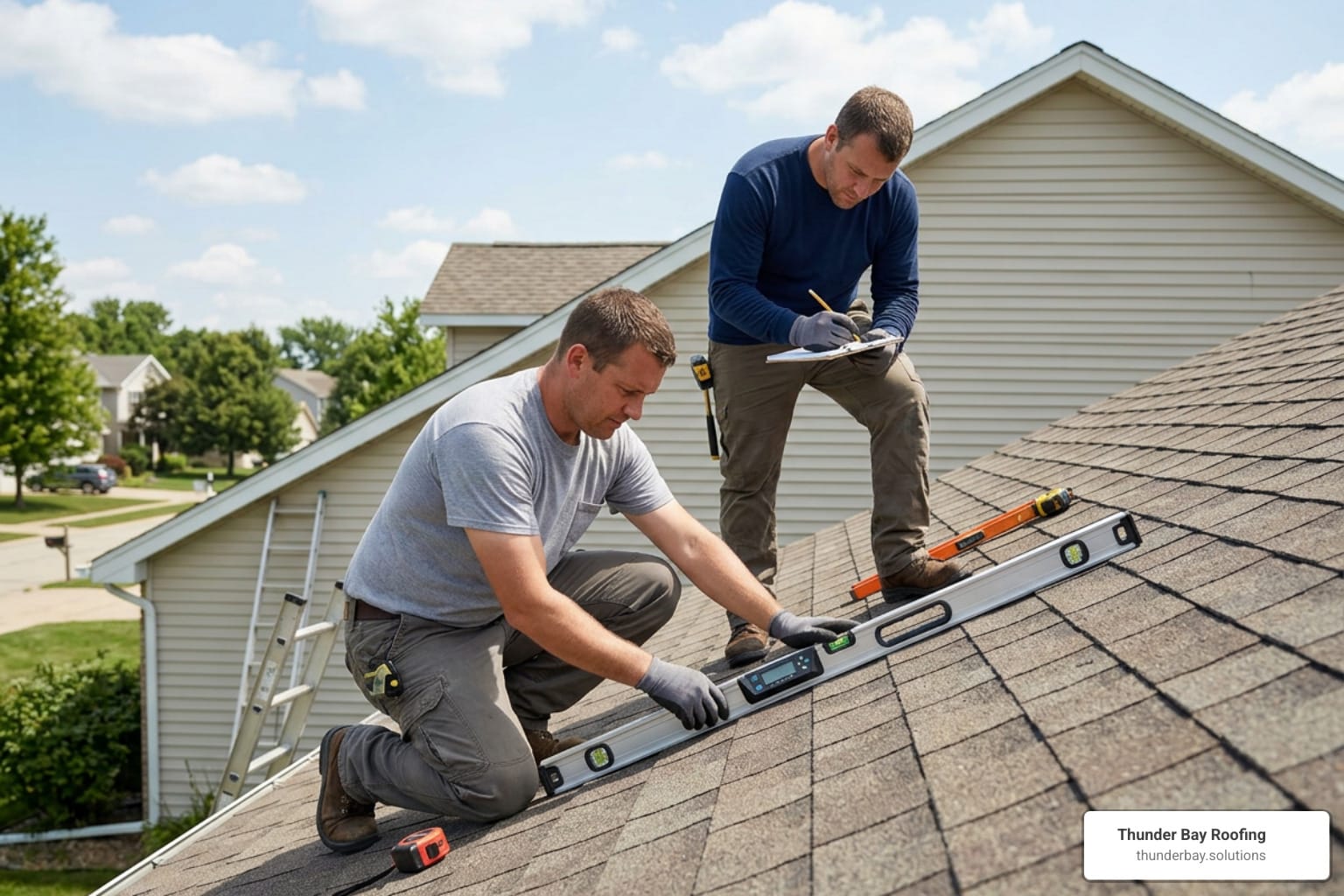
To accurately estimate metal roof installation costs and calculate the total expense of a new system, you must determine your home’s true roof surface area rather than relying on interior square footage. When consulting experienced roofing contractors, an interior floor plan does not account for roof slope, eaves, overhangs, dormers, or attached porches. A standard 1,700-square-foot residential footprint routinely translates to over 2,000 square feet of actual roof surface once pitch multipliers and architectural details are applied.
Estimating professionals use a structured mathematical approach to convert ground measurements into precise material orders and labor allowances. Using online estimating software like the Metal Roof Calculator – Estimate Panels, Cost & Materials helps homeowners see how slope and geometry alter overall square footage requirements before field measurements take place.
Mathematical Formulas to Estimate Metal Roof Installation
The primary formula for estimating roof area starts with the ground footprint multiplied by a slope-specific pitch multiplier:
- Footprint Area: Length × Width = Base Footprint Square Footage.
- True Roof Surface Area: Base Footprint × Pitch Factor = Total Roof Square Footage.
- Material Requirement with Waste: Total Roof Square Footage × 1.10 to 1.15 (10% to 15% waste factor).
Common roof pitch multipliers include:
- 3:12 to 4:12 Pitch (Low Slope): Multiplier of 1.031 to 1.054.
- 5:12 to 6:12 Pitch (Moderate Slope): Multiplier of 1.083 to 1.118.
- 7:12 to 9:12 Pitch (Steep Slope): Multiplier of 1.158 to 1.250.
- 12:12 Pitch (Very Steep / 45-degree angle): Multiplier of 1.414 (adds 41.4% more surface area than a flat plane).
Once you establish the adjusted square footage, the total panel count depends on the panel coverage width. Standard standing seam profiles provide 16 inches (1.33 feet) of coverage, whereas corrugated profiles generally deliver 24 to 26 inches of net coverage after accounting for side-lap overlaps. Dividing the roof plane’s width by the panel’s effective exposure width indicates the precise panel quantity required for each slope.
Accessory and Trim Calculations
Trim and flashing components protect vulnerable transitions and account for 15% to 25% of total material expenses on exposed-fastener projects, rising to 30% to 40% on architectural standing seam installations. Estimating trim requires linear footage measurements rather than square footage:
- Eave / Drip Edge Trim: Measured along the bottom perimeter edges where water drains into gutters ($2.00 to $5.00 per linear foot).
- Gable / Rake Trim: Measured along the sloped outer edges of the roof profile ($2.00 to $5.00 per linear foot).
- Ridge Caps & Hip Caps: Measured along the horizontal peaks and intersecting downward hips ($4.00 to $8.00 per linear foot).
- Valleys & Sidewall Flashing: Measured along internal drainage channels and intersections where vertical walls meet roof planes ($3.00 to $7.00 per linear foot).
Failing to budget for specialty transition trims, starter cleats, and vented ridge closures leads to mid-project change orders and inaccurate initial estimates.
Average Metal Roofing Costs by Panel Type and Material
Metal roofing costs range from $4.00 to $16.00+ per square foot installed, depending primarily on the panel profile and fastener engineering. Exposed-fastener options provide budget-friendly utility, while concealed-fastener standing seam systems deliver long-term protection in high-wind and severe storm environments.
| Metal Roofing System | Material Cost / Sq. Ft. | Labor Cost / Sq. Ft. | Total Installed Cost / Sq. Ft. | Expected Lifespan | Fastener Style |
|---|---|---|---|---|---|
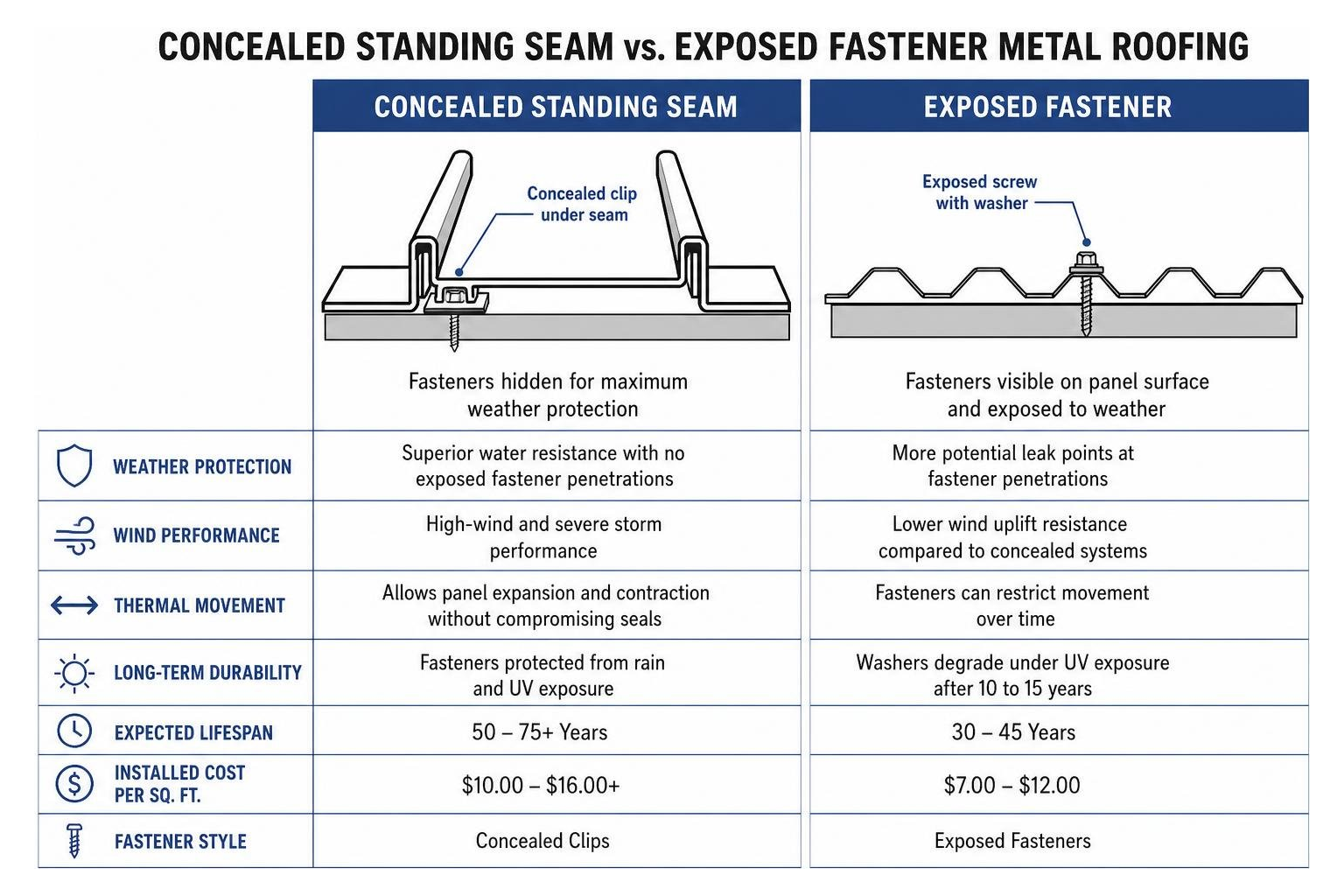
| Corrugated / R-Panel | $1.50 – $3.50 | $2.50 – $4.50 | $7.00 – $12.00 | 30 – 45 Years | Exposed Fasteners |
| Standing Seam | $4.50 – $7.50 | $3.50 – $8.50 | $10.00 – $16.00+ | 50 – 75+ Years | Concealed Clips |
| Metal Shingles / Tile | $3.50 – $6.00 | $3.00 – $6.00 | $8.00 – $14.00 | 40 – 60 Years | Concealed / Direct |
| Stone-Coated Steel | $4.00 – $8.00 | $3.50 – $6.00 | $8.00 – $14.00 | 45 – 60 Years | Interlocking Concealed |
For homeowners evaluating long-term exterior upgrades, investing in premium metal roofing protects structural decking against heavy rain, hail strikes, and relentless UV breakdown.
Standing Seam vs. Corrugated Metal Pricing
Standing seam systems feature raised vertical ribs with concealed fasteners anchored beneath interlocking seams. Because fasteners remain protected from rain and direct sun exposure, the system accommodates thermal expansion and contraction without compromising water resistance. This design eliminates puncture points directly over the living space, making standing seam the preferred choice for residential properties subject to tropical systems and severe wind.
Corrugated metal systems use overlapping sheets fastened directly through the face of the metal into the structural decking or purlins. While corrugated panels require lower upfront material investments, the exposed neoprene or EPDM rubber washers degrade under sustained UV rays after 10 to 15 years. This requires periodic screw replacement and tightening to prevent water intrusion during heavy Florida storms.
Substrate Materials: Steel, Aluminum, and Copper
The raw substrate metal significantly influences both material costs and corrosion resistance:
- Galvalume & Galvanized Steel: The most common residential substrate, costing $1.50 to $4.00 per square foot for raw materials. Steel offers high structural strength and impact resistance against falling debris and hail.
- Aluminum: Running $3.50 to $6.50 per square foot for panels, aluminum is naturally immune to rust. It is the premier choice for coastal environments exposed to salt air.
- Copper and Zinc: Premium architectural metals running $13.00 to $25.00+ per square foot for raw materials. Copper forms a protective patina over time, lasts over 100 years, and never rusts, but commands substantial initial capital.
You can compare how different alloys shift overall project budgets by reviewing the Metal Roof Cost Calculator 2026 — Pricing by Panel Type.
Core Variables Affecting Total Project Pricing
Beyond surface area and panel selection, specific engineering details and structural factors determine the final installation invoice.
Panel Thickness, Coatings, and Underlayment
Metal panel thickness is classified by gauge numbers, where lower numbers represent thicker, sturdier metal.
- 29-Gauge Steel: The thinnest option, best suited for agricultural barns, sheds, and temporary structures. It is more susceptible to denting from hail or branches.
- 26-Gauge Steel: The baseline standard for residential metal roofing, balancing structural rigidity with cost-effectiveness.
- 24-Gauge Steel: The heavy-duty architectural choice recommended for high-wind hurricane corridors. 24-gauge panels cost 25% to 40% more than 26-gauge options, but they minimize visible “oil canning” (surface waviness) and offer high uplift resistance.
Paint finishes also dictate performance. Standard Siliconized Modified Polyester (SMP) coatings offer 15- to 25-year fade resistance, whereas Polyvinylidene Fluoride (PVDF/Kynar 500) resin coatings provide 30- to 40-year protection against chalking, fading, and intense solar degradation.
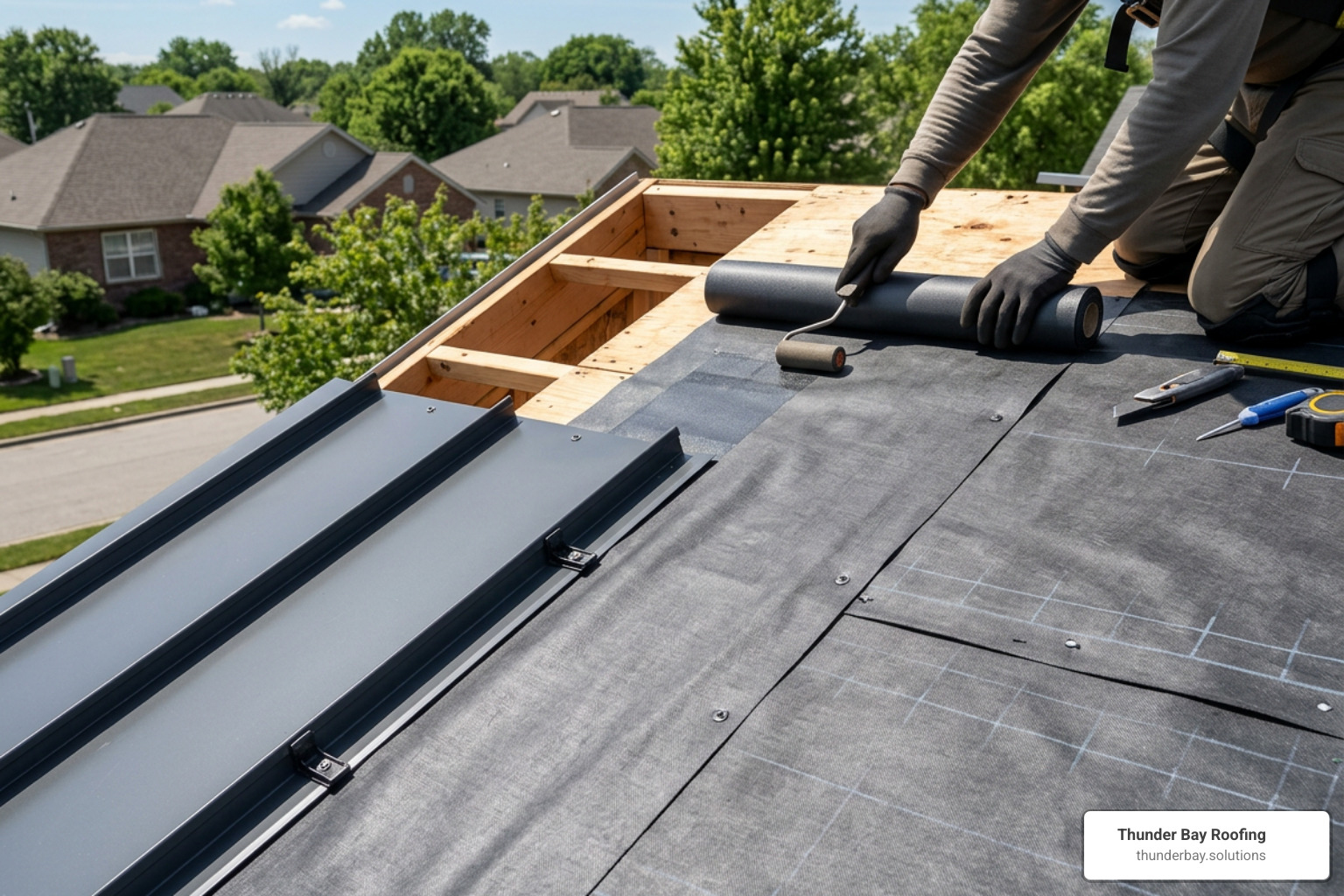
Underlayment selection is critical. Metal roofs conduct intense heat directly to the sub-roof assembly. Basic organic asphalt felt quickly dries out and degrades under metal panels. Professional installations require high-temperature synthetic underlayments ($0.25 to $0.55 per sq. ft.) or self-adhering, direct-to-deck peel-and-stick waterproof membranes ($1.10 to $1.80 per sq. ft.) that seal around fasteners and provide secondary water barriers during wind-driven storms.
Labor Ratios, Structural Decking, and Tear-Off Expenses
Installation labor makes up roughly 60% to 70% of the total cost of a metal roofing project due to the precision cutting, custom flashing fabrication, and safety rigging required.
- Tear-Off and Disposal: Removing existing asphalt shingles costs $1.00 to $2.20 per square foot, depending on whether there are multiple shingle layers to haul and dispose of.
- Roof Complexity and Slope: Steeper pitches (7:12 and above), multi-story buildings, and complex hips, valleys, and dormers slow down panel staging and increase safety staging costs.
- Decking Repairs: Once old materials are stripped, any water-damaged, rotted plywood decking must be replaced before installing underlayment, typically running $70 to $150 per 4×8 sheet installed.
Long-Term Value: Metal Roofs vs. Asphalt Shingles
While an asphalt shingle roof carries a lower upfront price tag, metal roofing provides superior long-term financial returns over a 30- to 50-year building lifecycle.
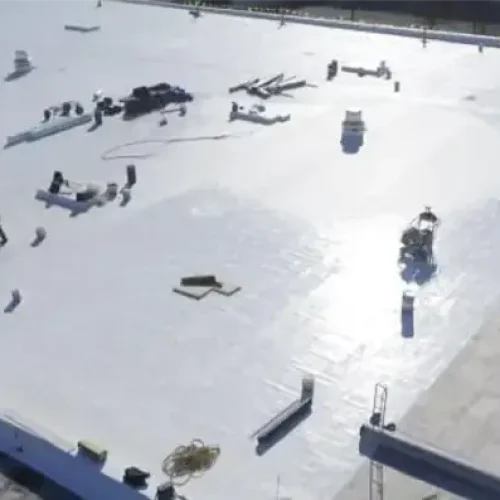
40-Year Total Cost of Ownership and ROI
A standard asphalt shingle roof in hot, humid climates lasts roughly 15 to 20 years before UV exposure and wind-driven rain demand complete replacement. Over a 40-year timeline, a property owner will pay for two full shingle roof replacements at inflated future labor and material costs.
In contrast, a properly installed 24-gauge standing seam metal roof lasts 50 to 75+ years with minimal maintenance. Homeowners also recover 50% to 70% of the installation cost in added property resale value, making it a sound long-term investment.
Energy Efficiency and Hazard Protection
Metal roofs act as radiant barriers. Panels coated with reflective cool-roof pigments reflect solar radiant heat back into the atmosphere rather than absorbing it into attic spaces, lowering household cooling costs by 10% to 25% during hot summer months.
Furthermore, metal roofs provide Class 4 impact resistance against hail and wind ratings up to 140–160 mph when engineered to local building standards. Many regional insurance providers extend policy discounts of 10% to 35% for certified impact- and wind-resistant metal installations.
Contractor Checklist to Accurately Estimate Metal Roof Installation
Before accepting a metal roofing bid or signing an agreement, verify that your prospective contractor’s written quote explicitly items the following components:
- [ ] Exact Metal Gauge & Alloy: Verify whether the estimate specifies 24-gauge or 26-gauge Galvalume steel, aluminum, or copper built to resist intense UV degradation.
- [ ] Fastener Engineering: Ensure the proposal states whether the system uses exposed screws or concealed standing seam clips designed for severe wind uplift.
- [ ] Underlayment Type: Confirm that a high-temperature self-adhering synthetic membrane is itemized rather than standard felt paper to safeguard against daily afternoon storms and wind-driven rain.
- [ ] Trim and Flashing Scope: Ensure ridge caps, eave drip edges, sidewall flashings, and valley metals are fully itemized in linear feet.
- [ ] Tear-Off & Substrate Inspection: Verify that removal of existing roofing layers, jobsite debris hauling, and per-sheet decking replacement pricing are clearly defined.
- [ ] Local Permitting & Wind-Mitigation Standards: Confirm that the contractor pulls all mandatory permits and installs the system in full compliance with Pasco and Hillsborough County permit and wind-mitigation requirements to withstand the Florida hurricane season.
- [ ] Warranty Specifics: Verify separate written coverages for the substrate (25–50 years), paint finish (30–40 years), and contractor workmanship (5–10+ years).
Frequently Asked Questions About Metal Roofing Costs
Can you install a metal roof over existing shingles?
Yes, installing metal roofing over a single sound layer of existing asphalt shingles is permitted by certain local building codes and can save $1,500 to $3,000 in tear-off and disposal fees. However, installing directly over shingles prevents contractors from inspecting the wood decking for hidden rot, soft spots, and structural water damage.
Additionally, direct contact can cause panel scratching and uneven surfaces; installing vented furring strips or completing a full tear-off down to clean decking is the recommended best practice for warranty compliance.
How long does a metal roof last compared to asphalt shingles?
A professionally installed standing seam metal roof lasts 50 to 75+ years, whereas corrugated systems last 30 to 45 years. In contrast, traditional architectural asphalt shingles typically last 15 to 25 years in regions subject to intense sun exposure, heavy rainfall, and tropical storm activity.
What gauge metal is best for residential roofing?
For residential standing seam roofing, 24-gauge steel is the industry standard for superior hail resistance, structural durability, and resistance to high-wind uplift. 26-gauge steel is an acceptable, budget-conscious choice for residential corrugated and exposed-fastener profiles. 29-gauge steel is generally too thin for primary residences and should be reserved for outbuildings and sheds.
Conclusion
Estimating a metal roof installation requires balancing initial material investments, structural roof measurements, labor overhead, and long-term energy savings. While metal roofing requires a larger upfront investment than asphalt shingles, its multi-decade durability, high wind resistance, and low maintenance make it one of the most cost-effective exterior investments for residential properties.
If you need an accurate, itemized proposal for your home in Wesley Chapel, Lutz, Land O Lakes, or Oldsmar, our team at Thunder Bay Roofing provides comprehensive on-site inspections, material recommendations, and clear project scopes. Request your Free Roof Quote today to get started.