
The Simple Way to Patch a Leaky Flat Asphalt Roof
Why Asphalt Flat Roof Repair Can’t Wait in Florida’s Climate
Asphalt flat roof repair is the process of sealing, patching, or reinforcing damaged areas on a flat or low-slope asphalt roof to stop leaks and extend the roof’s life. For homeowners seeking professional roofing services, maintaining these systems is critical for long-term structural integrity. According to GAF, proper maintenance can significantly extend the service life of asphalt-based membranes. Here’s a quick overview of what it involves:
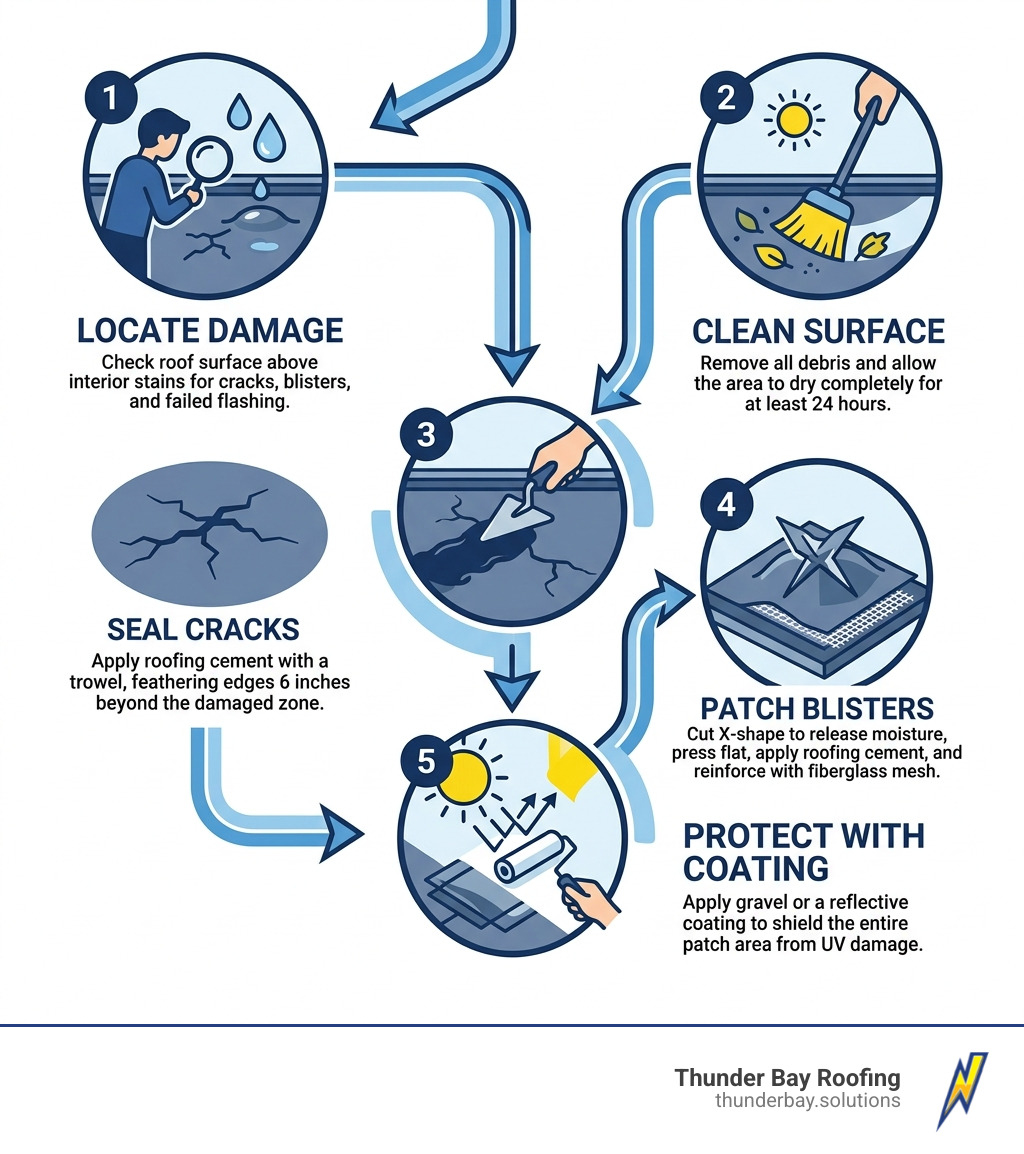
How to repair an asphalt flat roof (quick steps):
- Locate the damage – Check for interior water stains, then inspect the roof surface above for cracks, blisters, or failed flashing.
- Clean and dry the area – Remove debris and let the surface dry for at least 24 hours before applying any material.
- Seal small cracks – Apply roofing cement with a trowel, feathering the edges at least 6 inches beyond the damaged zone.
- Patch blisters – Cut an X-shape to release trapped moisture, press flat, apply roofing cement, and reinforce with fiberglass mesh.
- Patch larger damage – Cut out the damaged section, apply a base coat, embed fiberglass mesh, then apply a top coat and overlap the patch by at least 2 inches on all sides.
- Protect the repair – Add gravel or a reflective coating to shield the patch from UV damage.
- Call a professional – If damage covers more than 10% of the roof, or if you see structural sagging, get a licensed roofer involved.
Florida’s weather makes all of this more urgent. Intense UV exposure, heavy seasonal rain, and hurricane-force winds put asphalt flat roofs under constant stress. A small crack or blister left untreated in Wesley Chapel can become a major interior water damage problem within a single storm season. A Thunder Bay Home Solutions inspection can catch these problems before they escalate.
Built-up roofing (BUR) systems – the most common type of asphalt flat roof – can last 20 to 35 years with proper maintenance. Leading manufacturers like Owens Corning provide detailed specifications for these multi-layered systems. But that lifespan depends entirely on catching problems early and using the right repair methods. Modified bitumen roofs typically last 15 to 25 years under similar conditions, according to CertainTeed.
I’m Tyler Wood, owner of Thunder Bay Home Solutions in Wesley Chapel, Florida, and I’ve built my company around helping Florida homeowners and businesses protect their properties through code-compliant asphalt flat roof repair, inspections, and full replacements built for our local climate. In this guide, I’ll walk you through everything you need to know – from spotting damage to deciding whether a patch or a full replacement makes more sense for your situation.
Identifying Common Issues Requiring Asphalt Flat Roof Repair
Finding the source of a leak on a flat roof is often more difficult than the repair itself. Because water can travel horizontally along the roof’s internal structure before dripping into your living room, the spot where you see a ceiling stain might be 20 feet away from the actual hole.
When we perform roof inspections in areas like Land O’ Lakes or Lutz, we look for several “usual suspects” that signal it’s time for asphalt flat roof repair.
Ponding Water
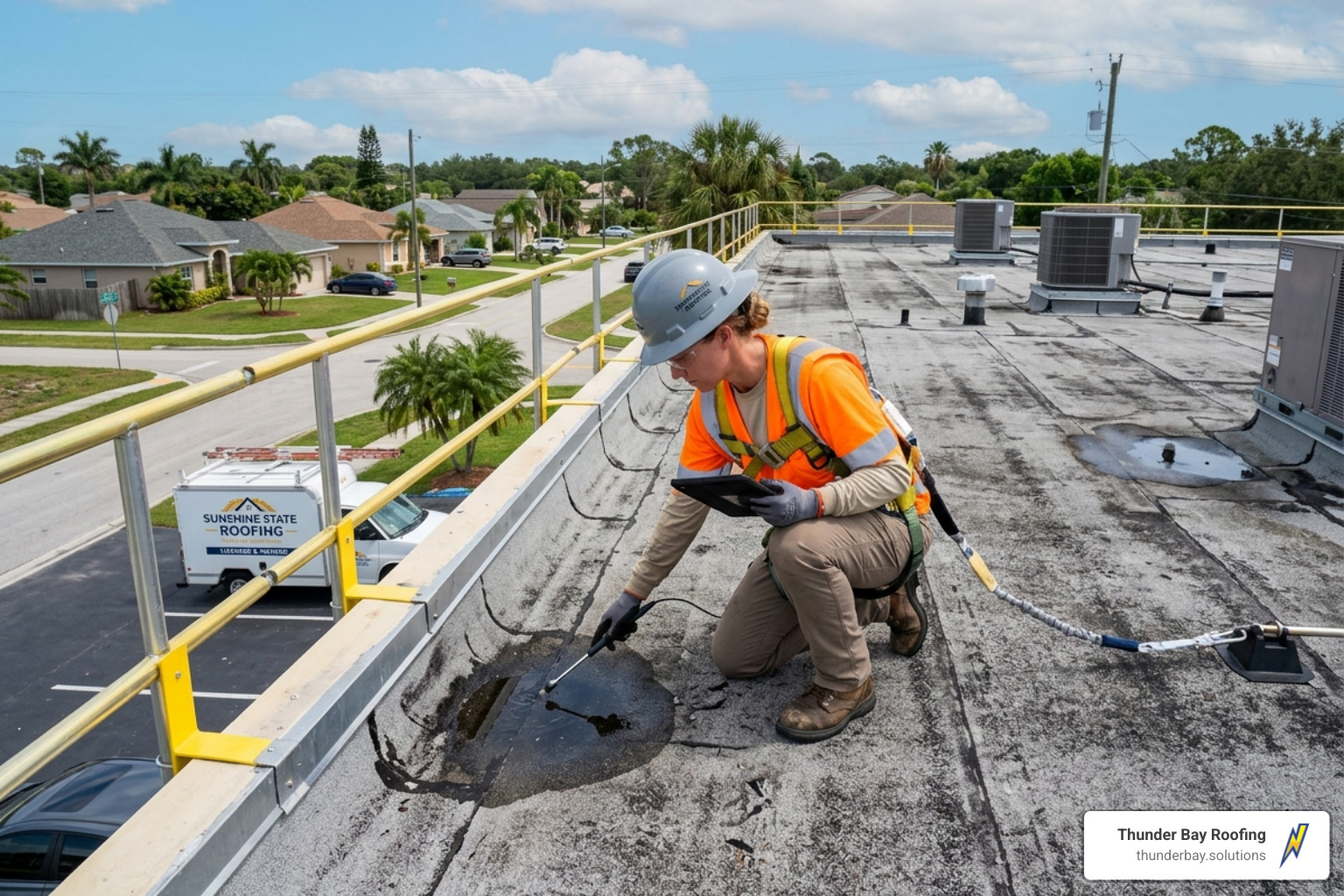
Ponding water is defined as water that remains on the roof surface for more than 48 hours after a rainfall. On a flat roof, this is a major red flag. Standing water adds immense weight and accelerates the degradation of the asphalt membrane. If you see birds treating your roof like a local swimming hole, you likely have drainage issues or structural low spots that need attention.
Alligatoring
As asphalt ages and loses its natural oils due to intense Florida UV rays, it begins to crack in a pattern that looks like reptile skin. This “alligatoring” means the bitumen has become brittle and can no longer expand and contract with the heat. Once this happens, water can easily seep into the underlying felt layers.
Membrane Blisters
Blisters are raised bubbles filled with air or moisture. They usually form when moisture gets trapped between the layers of the flat roof systems during installation or through a tiny puncture. In the hot Wesley Chapel sun, that trapped moisture expands, stretching the membrane until it eventually pops and creates a leak.
Flashing Failure
Most leaks don’t happen in the middle of the roof; they happen at the edges. Flashing is the metal or membrane material used to seal penetrations like vents, chimneys, and the roof perimeter. Over time, thermal expansion causes these joints to pull away. According to the Asphalt Flat Roof Repair Guide – New England Metal Roof, flashing deterioration is one of the most common causes of flat roof failure.
Safety Protocols for Asphalt Flat Roof Repair
Before you grab a ladder, safety is the most important part of any roofing project. Even though flat roofs feel safer because they aren’t steep, the edges are still a major fall hazard.
- Fall Protection: Always use a safety harness if you are working near the perimeter.
- Non-Slip Boots: Florida roofs can be incredibly slippery, especially if there is algae or morning dew. Wear high-traction, non-slip footwear.
- Weather Windows: Only attempt repairs on dry, sunny days. Moisture is the enemy of adhesion; if the surface is damp, your patch will fail within weeks.
- Personal Protective Equipment (PPE): Asphalt roofing cement is messy and can irritate the skin. Wear gloves, long sleeves, and safety goggles.
If you aren’t comfortable on a ladder or if the damage looks extensive, it is always safer to call for professional roof leak detection services.
Essential Materials for Patching and Sealing
To perform a lasting asphalt flat roof repair, you need the right “ingredients.” Using the wrong sealant – like standard hardware store caulk – is a recipe for a recurring leak because it won’t bond properly with the bitumen.
For most low-slope roofing repairs, we recommend the following materials:
- Bitumen Primer: This is a thin, liquid asphalt that helps the thicker patching cement “grip” the old roof surface.
- Roofing Cement (Mastic): Also known as “bull” or “flashing cement,” this is a thick, trowel-grade asphalt used to fill holes and cracks.
- Fiberglass Mesh (Roofing Fabric): This acts like the “rebar” in concrete. It provides structural strength to the patch so it doesn’t crack as the building moves.
- Utility Knife and Trowel: For cutting out damaged membrane and spreading the cement.
- Liquid-Applied Membranes: For larger areas, a liquid-applied silicone or update coating can provide a seamless waterproof barrier.
- Reflective Coatings: Especially in West Central Florida, applying a white reflective coating over your repair helps prevent UV degradation.
As noted in the guide How to Repair Asphalt Flat Roof? | DVR Roofing, ensuring material compatibility is vital. Leading manufacturers like Johns Manville emphasize that using incompatible mastics can lead to membrane degradation. If you have a modified bitumen roof, you must use materials designed for that specific polymer-modified system to ensure a chemical bond. This is particularly important for commercial roof repairs where the roof surface area is much larger.
Step-by-Step Guide to Patching Cracks and Blisters
Ready to fix that leak? Follow this “three-course” method for a professional-grade repair.
1. Preparation and Cleaning
You cannot patch a dirty roof. Use a stiff-bristle broom or a low-pressure washer to remove all loose gravel, dust, and debris. If you are working on a tar and gravel roof, you must scrape away the gravel until you reach the smooth bitumen surface. Ensure the area is bone-dry; even a hint of moisture will prevent the cement from sticking.
2. Repairing Small Cracks
For cracks under 1/4 inch, apply a generous layer of roofing cement (about 1/8 inch thick) using a trowel. Smooth the cement at least 6 inches beyond the crack in all directions. This is called “feathering” the edges.
3. Fixing Blisters (The X-Cut Technique)
Never just smear cement over a blister. You have to “pop” it first.
- The Cut: Use a utility knife to make an X-shaped cut through the blister. Be careful not to cut into the underlying roof deck.
- Dry it Out: Peel back the four flaps and dry the inside thoroughly. If there is damp insulation underneath, it must be replaced.
- Seal: Apply roofing cement under the flaps, press them back down flat, and then apply more cement over the top.
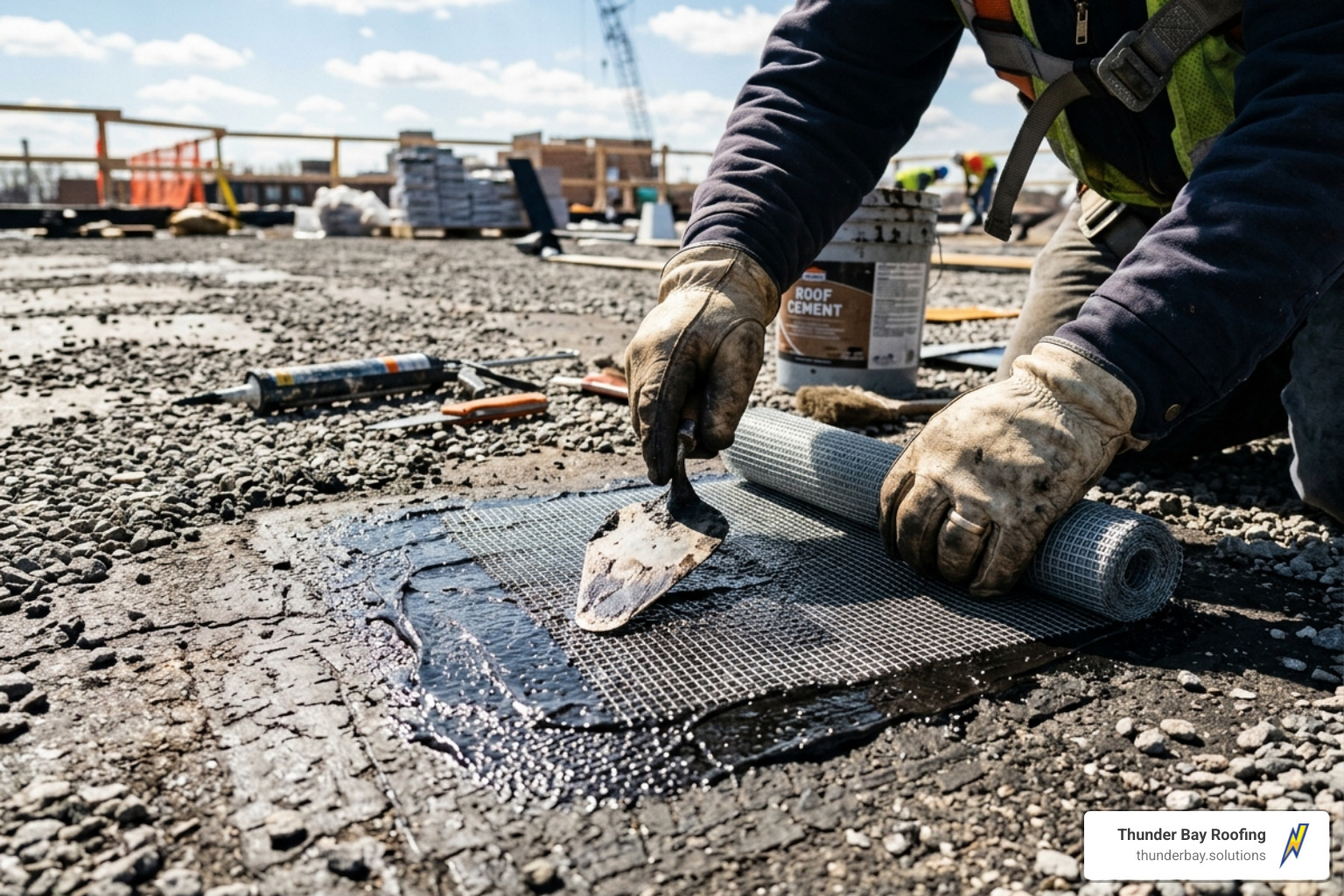
4. The Three-Course Method
For any repair larger than a hairline crack, use the three-course method:
- Course 1: Apply a layer of roofing cement.
- Course 2: Embed a piece of fiberglass mesh into the wet cement.
- Course 3: Apply a second layer of cement over the mesh, completely hiding the fabric.
5. Finishing Touches
To protect your asphalt flat roof repair from the Florida sun, sprinkle some of the original gravel back into the wet cement or apply a UV-protective coating once the patch has cured.
| Sealant Type | Typical Drying Time | Best Use Case |
|---|---|---|
| Asphalt Cement | 24–48 Hours | Small cracks, blisters, and flashing |
| Acrylic Coating | 4–8 Hours | Reflective top-coating for UV protection |
| Silicone Sealant | 24 Hours | Areas with persistent ponding water |
| Polyurethane | 12–24 Hours | High-movement areas and seams |
Whether you are handling residential roofing on a garage or a large commercial warehouse, these steps remain the gold standard for temporary and semi-permanent fixes.
When to Choose Repair vs. Full Replacement
One of the most common questions we get at Thunder Bay Home Solutions is: “Can I keep patching this, or do I need a new roof?” While we love helping homeowners save money with repairs, there comes a point where patching is just throwing good money after bad.
The 10% Rule
A general rule of thumb in the roofing industry is that if more than 10% to 15% of your roof surface is damaged or covered in patches, it’s time for a roof replacement. At this stage, the overall integrity of the membrane is compromised, and new leaks will likely pop up as fast as you can fix the old ones.
Age of the Roof
If your built-up roofing (BUR) system is approaching the 25-30 year mark, the bitumen has likely lost its elasticity. No amount of asphalt flat roof repair can restore the chemical properties of aged asphalt. Similarly, modified bitumen roofs over 20 years old are often candidates for commercial roof replacement.
Structural Sagging
If you notice that your roof is sagging or if there are soft spots when you walk on it, the problem is no longer just the membrane — it’s the wooden or metal deck underneath. This usually happens when a leak was ignored for too long, allowing water to rot the structure. In these cases, a full tear-off is required to ensure the building is safe.
Energy Efficiency and Codes
Modern building codes often require specific R-values (insulation thickness) during a replacement. If your current flat roof systems are poorly insulated, a replacement can significantly lower your cooling bills in the Wesley Chapel heat.
Professional Asphalt Flat Roof Repair Costs
Understanding the budget is key to making a decision. Here are the typical costs you can expect in the West Central Florida market:
- Small Patch Repairs: Typically range from $150 to $1,500 depending on accessibility and the number of leaks.
- Overlays (Partial Replacement): If the substrate is in good shape, a new layer can be installed over the old one for $3.50 to $7.50 per square foot.
- Full Replacement: A complete tear-off and replacement with premium materials usually starts at $7.00 to $12.00+ per square foot.
When you hire a professional for commercial roofing, you aren’t just paying for materials; you are paying for a warranty and the peace of mind that the repair meets local Florida building codes.
Frequently Asked Questions about Asphalt Flat Roof Repair
How long do asphalt flat roof repairs typically last?
A high-quality asphalt flat roof repair using the three-course method can last anywhere from 5 to 15 years. The longevity depends heavily on the condition of the surrounding roof and how well the patch is protected from UV rays. Regular roof repair and maintenance can push a repair toward that 15-year mark.
Can ponding water be fixed without a full replacement?
Yes, in many cases. We can often resolve ponding by installing tapered insulation to create a slight slope toward the drains. Other solutions include installing roof crickets (small peaks that divert water) or adding additional roof drains and scuppers. Improving your low-slope roofing drainage is one of the best ways to prevent future leaks.
What is the difference between BUR and Modified Bitumen repairs?
Built-Up Roofing (BUR) is the traditional “tar and gravel” system made of multiple layers of asphalt and felt. Repairs usually involve hot tar or cold-applied mastic. Modified Bitumen is a modern evolution that uses polymer-modified asphalt sheets (like rubberized asphalt). Repairs for “mod-bit” often require specific “peel-and-stick” patches or specialized adhesives that match the chemistry of the asphalt shingle roofing or membrane.
Conclusion
Taking care of your roof in Florida is a full-time job, but it doesn’t have to be a stressful one. Whether you’re dealing with a minor blister or a major leak after a summer storm, timely asphalt flat roof repair is the single best way to protect your investment.
At Thunder Bay Home Solutions, we specialize in the unique challenges of the West Central Florida climate. From our headquarters at 7140 Quail Hollow Blvd. in Wesley Chapel, we provide expert inspections, storm damage response, and customized roofing solutions for homeowners and businesses in Land O’ Lakes, Lutz, and beyond.
Don’t wait for the next hurricane season to test your roof’s integrity. If you’ve spotted ponding water, alligatoring, or interior stains, contact us today. We offer licensed, insured, and professional roof repair services designed to keep your property dry and secure for years to come.
Ready for a professional evaluation? Schedule your free inspection and get an honest, no-obligation quote from the experts at Thunder Bay Home Solutions.