
The Ultimate Storm Damage Repair Checklist
When a Storm Hits, the Clock Starts Ticking
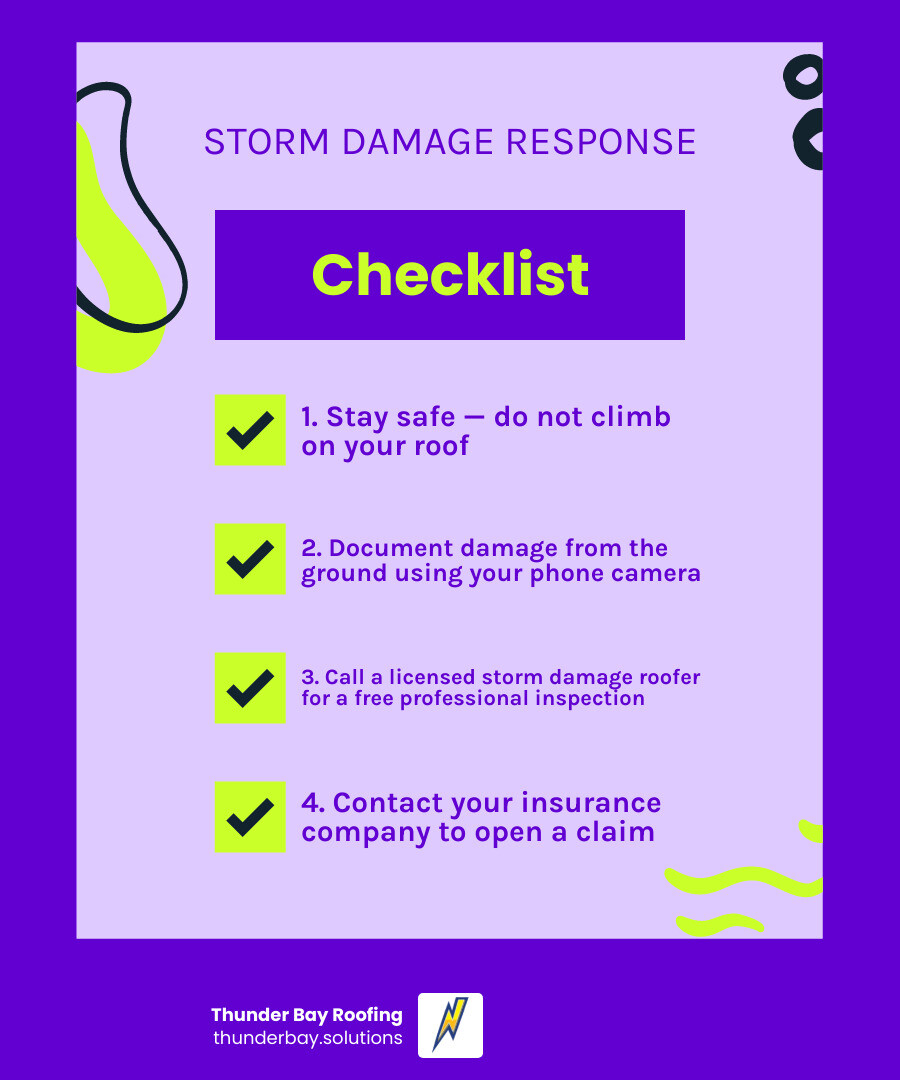
Storm damage roofers are licensed roofing professionals who specialize in inspecting, documenting, and restoring roofs after hail, wind, hurricanes, and other severe weather events. If your roof was just hit by a storm, here’s what to do right now:
- Stay safe – do not climb on your roof
- Document damage from the ground using your phone camera
- Call a licensed storm damage roofer for a free professional inspection at (813) 278-7007
- Contact your insurance company to open a claim
- Request emergency tarping if your roof is actively exposed to the elements
If you’re in Wesley Chapel or the surrounding Tampa Bay area, Thunder Bay Home Solutions provides expert roofing solutions in Florida and offers free storm damage inspections with no obligation.
Florida’s weather doesn’t forgive hesitation. In April 2026, homeowners across the state are still dealing with the aftermath of a brutal storm season – missing shingles, ceiling stains, and hidden structural damage that gets worse every day it goes unaddressed.
The reality is simple: a $5,000 roof repair left untreated can become a $20,000 interior damage nightmare once water works its way through the roof deck and into your walls and insulation. Hailstorms rarely last longer than 15 minutes, but the damage they leave behind – cracked shingles, lost granules, compromised underlayment – can quietly destroy a roof over the following months.
That’s why knowing how to act fast, choose the right contractor, and navigate the insurance process is so critical for Florida homeowners.
I’m Tyler Wood, owner of Thunder Bay Home Solutions in Wesley Chapel, Florida – a veteran-owned roofing company built specifically to handle the demands of Florida’s extreme UV exposure, heavy rainfall, and hurricane-force winds. Our team works with storm damage roofers and homeowners every day to deliver fast, code-compliant roof restorations with zero runaround.
Identifying Signs of Roof Damage After a Storm
Identifying damage isn’t always as simple as seeing a tree limb through the living room ceiling. Often, the most dangerous damage is the kind you can’t see from your driveway. After a severe weather event, it is vital to check for both obvious and subtle signs that your roof’s structural integrity has been compromised.
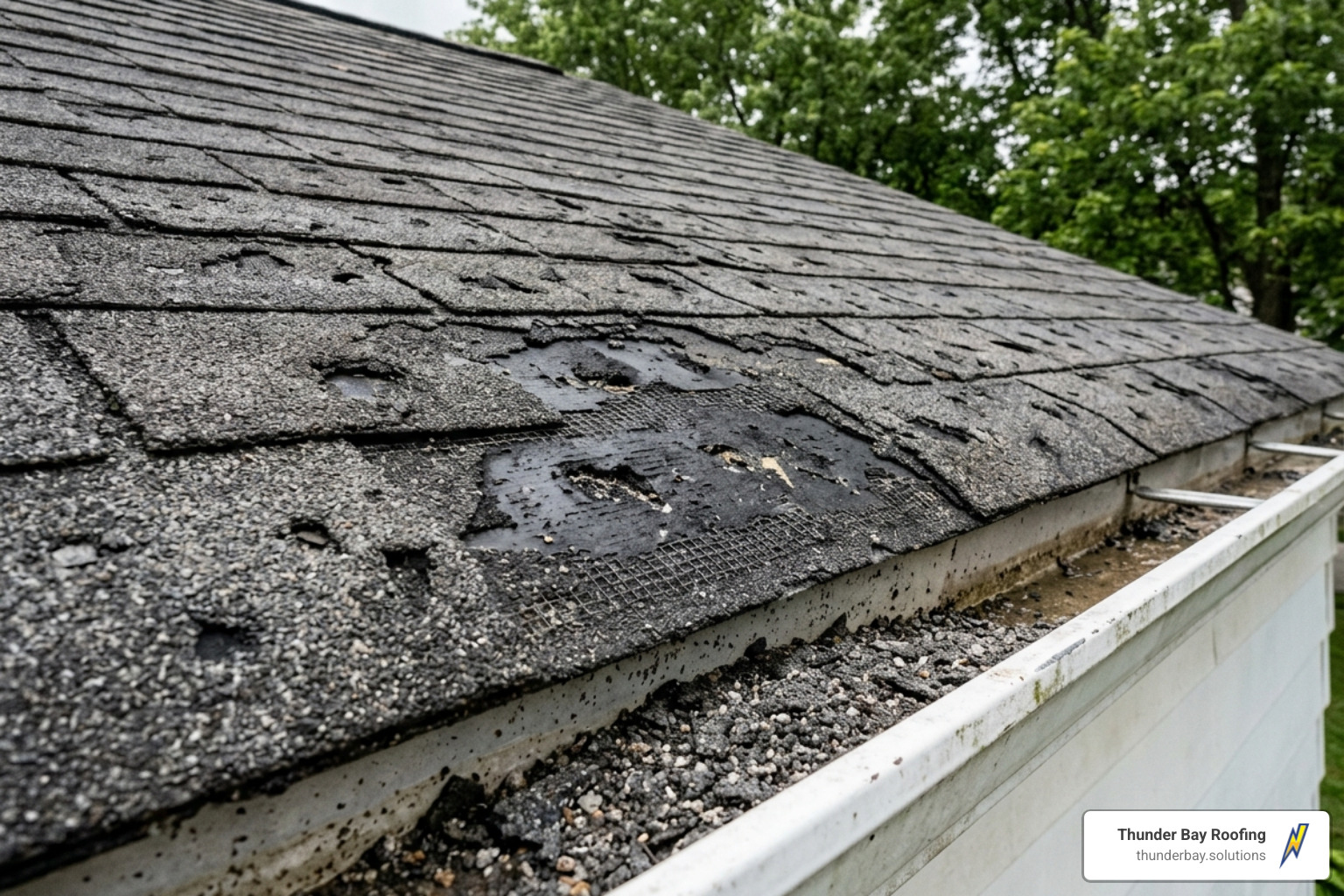
Common signs of damage include:
- Granule Loss: Hailstones knock the protective mineral granules off asphalt shingles. If you see what looks like dark sand piling up at the end of your downspouts, your shingles have lost their UV protection.
- Pockmarks and Dents: Hail leaves “bruises” or circular indentations. While they look cosmetic, they actually weaken the shingle’s matting, leading to leaks later.
- Missing or Lifted Shingles: High winds create a “suction” effect that can peel shingles back or blow them off entirely, exposing the underlayment.
- Water Stains: Check your ceilings and attic for damp spots. If you see yellow or brown rings, you likely need Hurricane Damage Roof Repair to address water intrusion.
According to the National Roofing Contractors Association (NRCA), even if a storm seems minor, the cumulative effect of debris impact and wind can lead to premature roof failure.
Assessing Hail and Wind Damage
Hail and wind require different investigative approaches. Hail damage is often characterized by shingle bruising—soft spots that feel like the skin of a bruised apple. This often requires a professional Hail Damage Repair specialist to identify accurately.
Wind damage, on the other hand, is about velocity and lift. Gale-force winds (39-54 mph) are strong enough to tear shingles or break the adhesive seal that holds them together. Once that seal is broken, the roof is vulnerable to wind-driven rain. Hurricane-force winds (74 mph or greater) can remove entire sections of roofing, necessitating immediate Wind Damage Repair.
Safe Ground-Level Inspections
We cannot stress this enough: Stay off the roof. A roof that has been hit by a storm may have loose shingles or weakened decking that could collapse under your weight. Instead, perform a Roof Inspection from the safety of the ground.
Grab a pair of binoculars and do a perimeter walk. Look for:
- Dents in metal flashing, vents, or gutters.
- Splattered patterns on the fence or mailbox (signs of large hail).
- Debris like branches or shingles in the yard.
- Inside, use a flashlight in the attic to look for pinpricks of light or wet rafters.
If you notice any of these “red flags,” it’s time to call in the experts for a comprehensive look at your Storm Damaged Roofing.
Immediate Steps and Emergency Services for Homeowners
Once the storm passes, your primary goal is “loss mitigation.” This is a fancy insurance term that means you must do everything in your power to stop the damage from getting worse. If you fail to take reasonable steps to protect your home after a storm, your insurance carrier might actually deny part of your claim.

We recommend the following immediate actions:
- Stop the Water: If you have active leaks, use a shop vac to remove standing water and place buckets under drips.
- Document Everything: Before any repairs are made, take photos of the damage, the debris, and even the hailstones (place a coin next to them for scale).
- Emergency Tarping: If shingles are missing, you need Emergency Tarping immediately. A professional tarp job prevents rain from entering the home until a permanent Roof Repair can be performed.
- Clear Debris: Safely remove small debris from the yard, but hire a professional for large tree limbs on the roof to avoid further structural decay.
Following FEMA Emergency Preparedness guidelines ensures you have a plan in place before the next Florida squall hits.
Navigating the Insurance Claims Process for Storm Damage
The insurance process is often the most stressful part of storm recovery. Understanding the terminology is half the battle. Most homeowners have one of two types of policies: Actual Cash Value (ACV) or Replacement Cost Value (RCV).
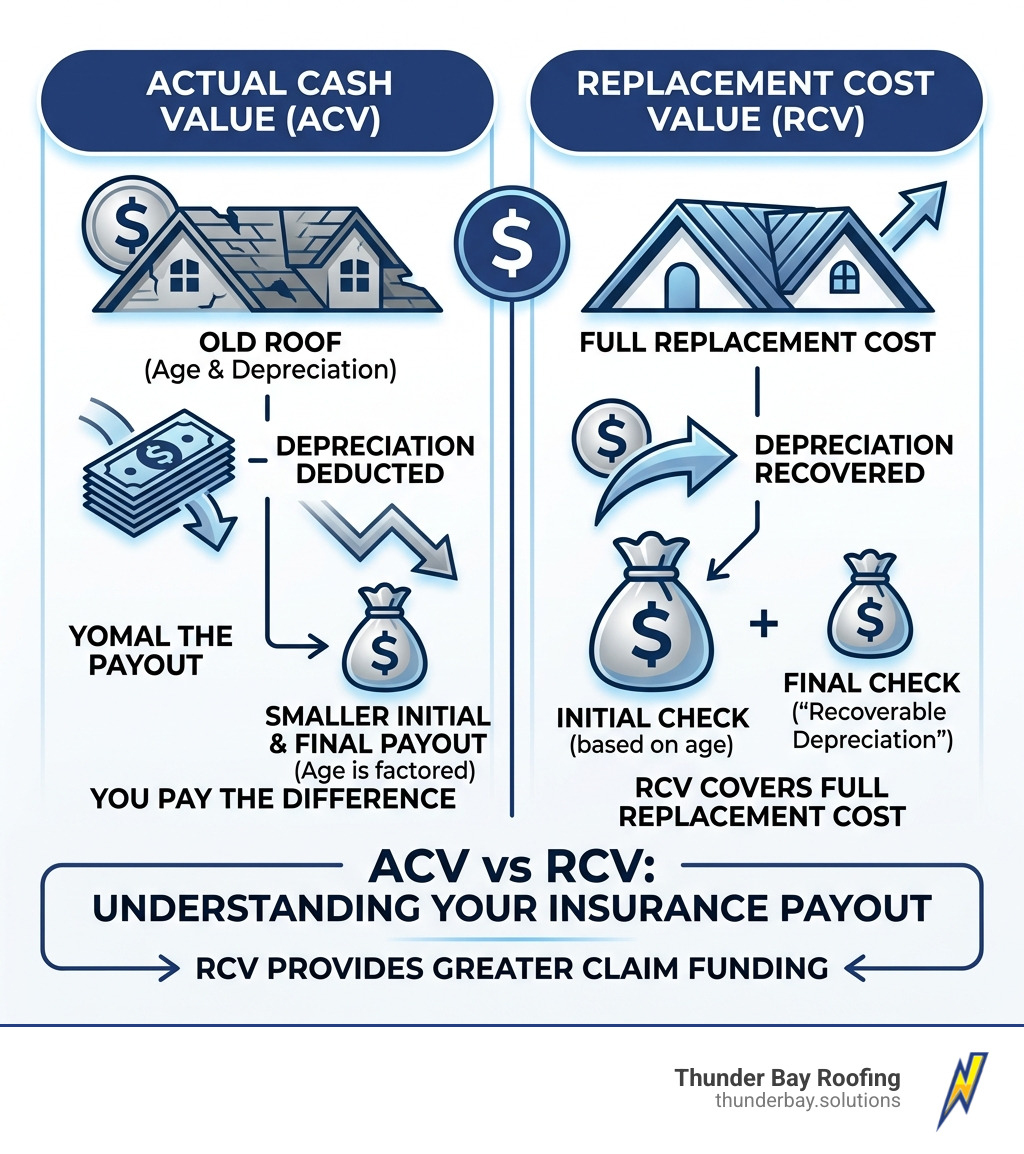
| Feature | Actual Cash Value (ACV) | Replacement Cost Value (RCV) |
|---|---|---|
| Payout Basis | Replacement cost minus depreciation | Full cost to replace at today’s prices |
| Initial Check | Value of the roof based on its age | Value of the roof based on its age |
| Final Check | None (you pay the difference) | “Recoverable Depreciation” is released after work is done |
| Deductible | You pay this out of pocket | You pay this out of pocket |
For example, if you have a 19-year-old roof with a 25-year lifespan, an ACV policy might only pay out roughly 24% of the replacement value after heavy depreciation. With an RCV policy, you eventually get the full amount needed for a Roof Replacement, minus your deductible.
In Florida, “Act of God” laws generally protect you from being singled out for a rate increase just because you filed a weather-related claim. The process typically takes 2-6 weeks from the initial inspection to the final check being cut. Working with Insurance Information Institute resources can help you understand your rights as a policyholder.
Why You Must Hire Professional Storm Damage Roofers
When a major storm hits Wesley Chapel or Land O’ Lakes, “storm chasers” often flood the area. These are out-of-state contractors who follow storms, sign up as many homeowners as possible, do sub-par work, and disappear before the first leak develops.
Hiring professional storm damage roofers like us ensures you are working with a company that has a local reputation to uphold. We specialize in Residential Roofing and hold elite certifications that most roofers don’t. For instance, only 5% of roofers nationally qualify as Owens Corning Top of the House® Certified Preferred Contractors.
Avoiding Storm Chaser Scams
Be wary of anyone knocking on your door offering a “free roof.” Red flags include:
- Out-of-state license plates.
- High-pressure sales tactics.
- Asking you to sign a contract before they even provide an estimate.
- Offering to “cover your deductible” (this is insurance fraud in many jurisdictions).
Always verify local licenses and check for a BBB A+ rating. If they can’t handle Commercial Roof Repairs or provide a local address, keep looking.
Selecting Certified Storm Damage Roofers
Quality matters. Look for contractors who use premium materials like GAF Timberline or Owens Corning Duration shingles. Certifications like GAF Master Elite, Owens Corning Platinum Preferred, or CertainTeed ShingleMaster indicate that the crew has been factory-trained. This is especially important for Commercial Roofing where specialized knowledge of Asphalt Shingle Roofing and flat systems is required.
Upgrading to Impact-Resistant Roofing Materials
If you’re already replacing your roof due to storm damage, now is the perfect time to upgrade. Many Florida homeowners are switching to Class 4 impact-resistant shingles or Metal Roofing.
These materials pass the UL 2218 Impact Rating tests, meaning they can withstand the impact of a 2-inch steel ball dropped from 20 feet without cracking. The benefits are massive:
- Insurance Discounts: In states like Texas and Florida, installing Class 4 shingles can save you up to 20% on your homeowner’s insurance premiums.
- Future-Proofing: These roofs are designed to survive the very storms that destroyed your old roof.
- Energy Efficiency: Modern impact-resistant materials often come with “cool roof” technology, perfect for Flat Roof Systems or Multi-Family Roofing looking to lower cooling costs.
Frequently Asked Questions about Storm Damage Roofers
How long does the repair process take with storm damage roofers?
The timeline depends on the extent of the damage and insurance approval. Typically, we provide an inspection within 24-48 hours. Once the insurance claim is approved and materials arrive, a standard Commercial Roof Replacement or residential install takes just 1-3 days.
Can I perform DIY repairs after a storm?
We strongly advise against it. Aside from the safety risks, DIY repairs often void manufacturer warranties. Furthermore, if the repair isn’t done to Florida building code, your insurance company may refuse to cover future leaks. Professional Roof Installation ensures full compliance and safety.
What warranties should I expect from storm damage roofers?
A reputable roofer should provide a minimum 10-year workmanship warranty. This covers the labor and installation. Additionally, you should receive a lifetime manufacturer material warranty from brands like GAF or Owens Corning. Check the GAF Warranty Information to see if your warranty is transferable, which adds value if you sell your home.
Conclusion
At Thunder Bay Home Solutions, we don’t just fix roofs; we restore your peace of mind. As Wesley Chapel experts, we understand the nuances of Florida building codes and the specific challenges of our local climate. Whether you need a minor repair or a full replacement, we provide licensed and insured, customized solutions tailored to your home.
Don’t let a “small” leak turn into a structural disaster. Protect your home’s integrity by scheduling a professional assessment with our storm damage roofers today. Visit our Storm Damaged Roofing page to learn more about our restoration services.